The 12 Most Amazing Peaks around Walbach
Best mountain peaks around Walbach are found within the Vosges Mountains, a region characterized by rounded summits known as "ballons." Walbach, a commune in north-eastern France, serves as a gateway to these picturesque peaks. The area features extensive forests and well-marked hiking trails, offering diverse outdoor experiences. These mountains are part of the Ballons des Vosges Regional Natural Park, providing a range of activities from gentle walks to challenging hikes.
Best mountain peaks around Walbach
- The most popular mountain peaks…
Last updated: October 11, 2026
Le Tanet Summit
Highlight • Summit
Tip by

Gazon du Faing
Highlight • Summit
Translated by Google •
Tip by

Sign up now to discover places like this
Get recommendations on the best single tracks, peaks, & plenty of other exciting outdoor places.
Hans Rock
Highlight • Summit
Translated by Google •
Tip by

Belmont observatorium Viewpoint
Highlight • Summit
Translated by Google •
Tip by

Tête des Faux Summit and World War I Memorial
Highlight • Summit
Translated by Google •
Tip by

Sign up for free to discover even more peaks around Walbach.
Already have an account?
Start today with a free account
Your next adventure awaits.


Tips from the Community

Quite a steep climb. Sturdy footwear is recommended.
1
0

This rocky path from the Rocher Hans upwards is uniquely beautiful.
4
1
If you hike through up there, you're gripped by the naked horror. Bunkers, trenches and bomb craters alternate constantly.
3
0

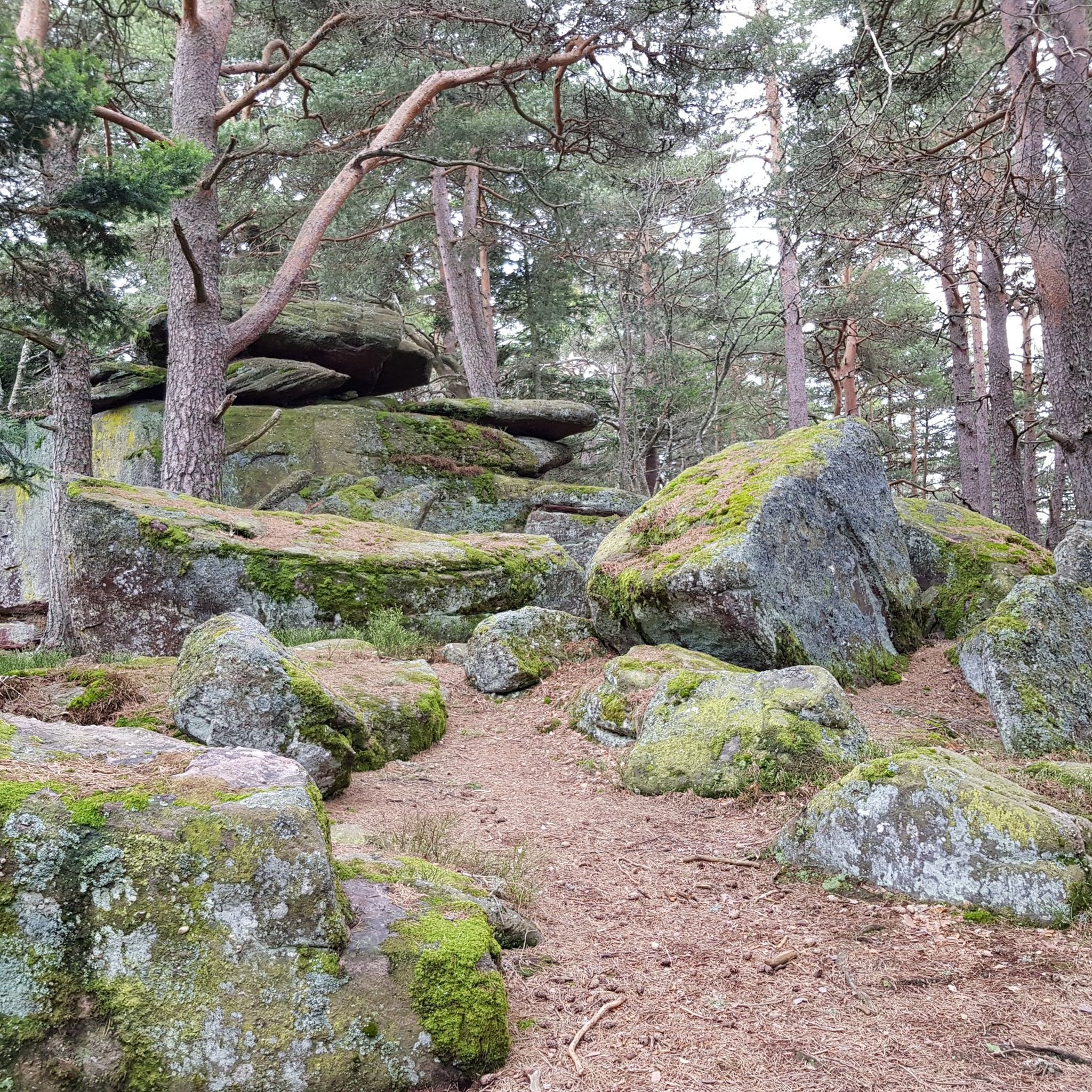
The rock is crowned with a statue of the Madonna 4 . This is a donation from 1977. There are several legends about the Hans Rock, including the assumption that an unbelieving prince named Hans saw his castle sink into the water of the lake.
5
0

Central spot good for a picnic.
1
0
Steep climb not to be underestimated.
5
0

The Tête des Faux is a peak culminating at 1208 meters above sea level with a rich military history. Its exposed position gave it a strategic position during the First World War, in the middle of the front lines. Today, remnants of battles that took place at the summit remain. The ruins of bunkers and forts are open on both sides of the summit.
3
1

Due to the exposed position and a good view from the summit, the mountain was strategically important in World War I and fought over accordingly. The front line ran right over the peak; the remains of military installations such as gun emplacements and bunkers are still visible today. On the "Roche de Corbeau" (Eng. Raven Rock) to the east is the former mountain station of a cable car that was used to transport material from Lapoutroie to the summit. To the west of the summit is the French military cemetery "Cimetière Duchesne". The German military cemetery further to the east was closed and the bones were transferred to Collet du Linge. The remains of the military installations in the summit area and on the Roche de Courbeau as well as the mountain station of the cable car have been listed as a monument historique since 1932. The GR 5 long-distance hiking trail leads over the summit. The massif is accessible via signposted hiking trails, mountain bike trails and, in winter, groomed cross-country ski runs. From Le Bonhomme, the ascent takes about two hours, with a little over 500 meters in altitude to be overcome. Source: https://de.wikipedia.org/wiki/T%C3%AAte_des_Faux
4
1
Frequently Asked Questions
What are some of the most popular mountain peaks to visit around Walbach?
The region around Walbach, nestled in the Vosges Mountains, offers several popular peaks. Among them, Le Tanet Summit is highly appreciated for its hiking and cycling routes, and even ski slopes. Another favorite is Gazon du Faing, a nature reserve known for its unique high stubble plateau and magnificent views over four lakes. The Tête des Faux Summit is also popular, offering a blend of natural beauty and significant World War I history.
Which mountain peaks offer the best panoramic views near Walbach?
For breathtaking panoramic views, the Grand Ballon, as the highest peak in the Vosges Mountains at 1,424 meters, is an excellent choice. Its summit provides expansive vistas. The Hohneck, the second-highest peak, is also highly recommended for its views of the Vosges valleys and Alsace. Additionally, Le Tanet Summit and Gazon du Faing are known for their great viewpoints.
Are there any mountain peaks with historical significance around Walbach?
Yes, the Tête des Faux Summit and World War I Memorial is a prominent historical site. At 1208 meters, this peak held strategic importance during World War I, and remnants of battles, including bunkers and forts, are still visible today. The Col du Wettstein (880m) is also historically significant, featuring a military cemetery commemorating WWI victims.
What kind of natural features can I expect to see on the mountain peaks near Walbach?
The mountain peaks around Walbach are part of the Ballons des Vosges Regional Natural Park, characterized by rounded summits known as "ballons," extensive forests, and high pastures. At Gazon du Faing, you'll find a unique nature reserve with a high stubble plateau, peatland, and typical Vosges shrubs. The region also features picturesque mountain passes and diverse wildlife, including Vosgian cows and chamois, especially around Hohneck.
What outdoor activities can I do near these mountain peaks?
The area offers a wide range of outdoor activities. You can enjoy various forms of cycling, including gravel biking and touring bicycle routes. For hikers, there are numerous mountain hikes, from gentle walks to challenging ascents. Winter sports are also popular, particularly around Grand Ballon and Le Tanet Summit, which has ski slopes.
Are there family-friendly mountain walks or easy hikes around Walbach?
While specific family-friendly routes aren't detailed for every peak, the Vosges Mountains generally offer trails suitable for various fitness levels, including gentle walks. The rounded summits, or "ballons," often provide more accessible terrain compared to jagged peaks. For specific easy mountain hikes, it's best to consult local trail information or the mountain hikes guide for routes with lower difficulty ratings.
When is the best time to visit the mountain peaks around Walbach?
The Vosges Mountains are beautiful year-round. Spring and summer are ideal for hiking and cycling, with lush greenery and pleasant temperatures. Autumn brings stunning fall foliage, making it a picturesque time for walks. Winter offers opportunities for snowshoeing and skiing, especially on peaks like Grand Ballon and Le Tanet Summit. Always check local weather conditions before your visit.
What are the highest mountain peaks in the Walbach area?
The highest peak in the Vosges Mountains, and thus in the Walbach area, is the Grand Ballon, standing at 1,424 meters. The Hohneck is the second highest at 1,363 meters. Other significant peaks include Gazon du Faing (1,302 meters) and Le Tanet Summit (1,292 meters).
Can I find challenging hiking trails near Walbach's mountain peaks?
Yes, the region offers challenging hikes for experienced adventurers. For example, the mountain hikes guide lists routes like the "Rochers de Hans Ascent – View of Lac Blanc loop from Rocher Hans" which is rated as difficult. Peaks like Grand Ballon and Hohneck also feature trails that can be quite demanding, providing a good physical challenge.
Are there any specific viewpoints or rock formations to look out for?
Absolutely. The Belmont observatorium Viewpoint, despite its name, is a notable lookout and rock formation near Lac Noir and Lac Blanc. Le Tanet Summit is also praised for its great views in all four directions. The eastern slope of Gazon du Faing offers magnificent views overlooking four lakes.
What do visitors enjoy most about the mountain peaks around Walbach?
Visitors frequently praise the stunning panoramic views, especially from peaks like Grand Ballon and Hohneck. The diverse hiking opportunities, ranging from easy walks to challenging trails, are also a major draw. Many appreciate the natural beauty of the Ballons des Vosges Regional Natural Park, the unique landscapes of areas like Gazon du Faing, and the rich historical context found at sites like Tête des Faux Summit.
Most popular routes around Walbach
Most popular attractions around Walbach

Get inspired with the komoot mobile app


Explore more
See even more amazing summits around Walbach with these guides:
