Attractions and Places To See around Azannes-Et-Soumazannes - Top 20
Best attractions and places to see around Azannes-Et-Soumazannes include significant historical sites related to World War I. This region, located in the Meuse department, is characterized by its preserved battlefields and memorials. The landscape bears witness to historical events, offering visitors insights into the past. It is a destination for those interested in historical exploration and remembrance.
Best attractions and places to see around Azannes-Et-Soumazannes
- The most popular attractions is Douaumont Ossuary, a man-made monument that serves as a…
Last updated: October 18, 2026
Douaumont Ossuary
Highlight • Monument
Let us never forget this horror!
Translated by Google •
Tip by

Verdun Memorial
Highlight • Historical Site
Translated by Google •
Tip by

Sign up now to discover places like this
Get recommendations on the best single tracks, peaks, & plenty of other exciting outdoor places.
Fort de Vaux
Highlight • Historical Site
Translated by Google •
Tip by

Bell Tower of the Douaumont Ossuary
Highlight • Monument
Translated by Google •
Tip by
Fleury-devant-Douaumont
Highlight • Other
Translated by Google •
Tip by

Sign up for free to discover even more attractions around Azannes-Et-Soumazannes.
Already have an account?
Start today with a free account
Your next adventure awaits.




Tips from the Community

An observation tower from which, apart from the cemetery, you can see the battlefield (now overgrown with trees) of Verdun.
3
0

The Ossuary of Douaumont is an impressive memorial that holds the remains of more than 130,000 unknown French and German soldiers who died during the Battle of Verdun (1916). The bones are visible through small windows in the base – a confronting reminder of the horrors of war. In front of the ossuary is the Nécropole nationale de Douaumont, the largest French military cemetery of the First World War, with 16,142 graves, including a Muslim and Jewish plot. The complex was recognized as a UNESCO World Heritage Site in 2023.
8
0
The Mémorial de Verdun, located near the ruined village of Fleury-devant-Douaumont, is a leading museum and commemoration site for the Battle of Verdun (1916). The museum displays more than 2,000 objects and uses authentic objects, photographs and audiovisual installations to show how French and German soldiers experienced this battle – in the exact same place where they fought.
8
3

The Ossuary tower, also known as the 'Lantern of Death', is 46 m high and offers a beautiful view of the battlefield. The bell tower was donated by the Americans and is, together with the chapel, one of the oldest parts of the monument. Halfway up the climb, you can see the equipment and some scenes highlighting the soldiers of each camp behind glass. At the top of the tower you can enjoy the view, signs indicate in which direction you are looking. Here you will also find the two symbols of the monument: the beacon and the bell. The red and white light of the beacon swings over the battlefield every night and can be seen from dozens of kilometres away. Louise Anne Charlotte, the bell of victory, was donated by the American Mrs. Thorburn Van Buren. She was cast in Orléans and is honoured in every procession through the towns in the vicinity of Douaumont. The bell was inaugurated in 1929 by the founder of the Ossuary, Monsignor Ginisty, and rings three times a day and during major ceremonies to remind everyone of the fate of the fallen soldiers.
2
0
This spot is the perfect place to travel back in time. From the beginning of the Battle of Verdun, Fort de Vaux was one of the priority targets of the German offensive. In early March 1916, the Germans came within a few hundred metres of the fort and began a siege that lasted 100 days. Inside the fort, under a barrage of artillery fire, resistance was organised despite the lack of food and water. On 1 June 1916, the Germans reached the fort: the French garrison, isolated and without outside support, fought a week of heroic fighting inside the fort before being defeated by exhaustion. Triggered? Buy a combined ticket and immerse yourself in the history of this episode in the war of 14-18 with a visit to Fort de Vaux. The tour gives an insight into the daily living conditions of the besieged soldiers in the heart of the fort. A must-see for any history buff.
4
0
As the starting point of the Battle of Verdun, the fort of Vaux remains one of the symbols of soldiers inspired by a sense of duty. A visit to the fort tells the admirable story of commander Raynal and his men. Besieged for 7 days, they fought, mercilessly, until they were overcome by thirst. Triggered? Read the full story at https://www.landofmemory.eu/nl/sites-historiques/fort-vaux/
5
0

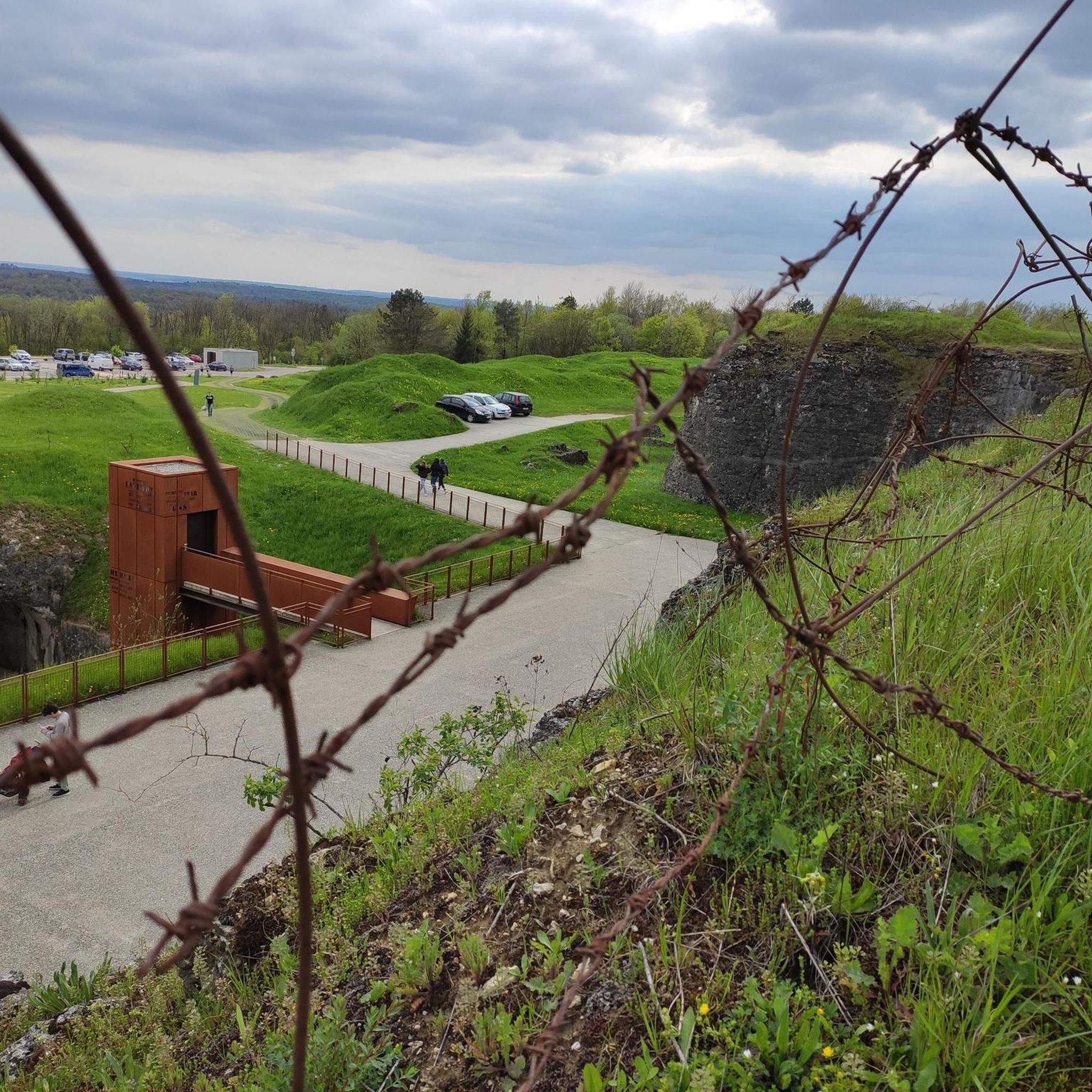
A landscape marked by the madness of destruction and even scarred by WW1
1
0

The Verdun Memorial is a museum dedicated to the history and memory of the Battle of Verdun in 1916. The museum is very comprehensive, with an immersive experience that offers a complete chronology of the First World War. Living conditions and technological advancements during the war are well illustrated. From the top floor, there is a beautiful view of Verdun, including the ossuary.
6
2
Frequently Asked Questions
What kind of attractions can I expect to find around Azannes-Et-Soumazannes?
The region around Azannes-Et-Soumazannes is primarily known for its significant historical sites related to World War I, particularly the Battle of Verdun. You will find preserved battlefields, memorials, forts, and museums that offer deep insights into this period. Key sites include the Douaumont Ossuary, Fort de Vaux, and the Verdun Memorial.
Are there family-friendly attractions in Azannes-Et-Soumazannes?
Yes, several historical sites around Azannes-Et-Soumazannes are considered family-friendly. The Douaumont Ossuary and the Verdun Memorial are both suitable for families, offering educational experiences about the region's history. The Verdun Memorial, for instance, provides an immersive experience detailing the chronology of the First World War.
What outdoor activities can I do near these attractions?
Beyond historical exploration, the area offers various outdoor activities. You can find numerous routes for cycling, gravel biking, and mountain biking. For example, there are several cycling routes like the 'Verdun Memorial – Douaumont Ossuary loop from Verdun' or mountain biking trails such as the 'Douaumont Ossuary loop from Douaumont'. You can explore more options on the dedicated guides for Gravel biking around Azannes-Et-Soumazannes, Cycling around Azannes-Et-Soumazannes, and MTB Trails around Azannes-Et-Soumazannes.
Are there any viewpoints to see the historical battlefields?
Yes, the Bell Tower of the Douaumont Ossuary, also known as the 'Lantern of Death', offers an impressive view of the surrounding battlefield, now largely overgrown with trees. From its 46-meter height, you can gain a perspective on the vastness of the historical landscape.
What is the significance of Fleury-devant-Douaumont?
Fleury-devant-Douaumont is a poignant historical site. It was once a small French farming village that was completely destroyed during the Battle of Verdun. Today, even after more than a century, the landscape still bears the scars of war, with visible bomb craters, serving as a powerful reminder of the destruction and human cost of the conflict.
What do visitors appreciate most about the attractions here?
Visitors are deeply moved by the historical significance and the preserved state of the sites. Many find the experience at places like the Douaumont Ossuary to be a powerful memorial against all wars, highlighting the immense suffering that occurred. The comprehensive and immersive exhibits at the Verdun Memorial are also highly praised for illustrating the living conditions and technological advancements during WWI.
Can I explore the grounds around Fort de Vaux?
Yes, in addition to visiting the interior of Fort de Vaux, it is highly recommended to take a tour of its surrounding grounds. This allows visitors to grasp the scale of the fortress and the extent of the destruction it endured during the Battle of Verdun. Be aware that the paths and trails should not be left, as there is a serious danger of encountering unexploded ordnance.
Are there any cafes or facilities available at the attractions?
The Verdun Memorial is noted to have a cafe and other facilities available for visitors, providing a place for refreshment and comfort during your visit.
What is the best way to understand the Battle of Verdun's context?
The Verdun Memorial offers a comprehensive and immersive experience that provides a complete chronology of the First World War, with a particular focus on the Battle of Verdun. It illustrates living conditions and technological advancements during the war, presenting the conflict from both French and German perspectives, which helps in understanding its full context.
Are there any easy walking trails near the historical sites?
While the immediate vicinity of some forts may have rugged terrain, the car park near Fort de Vaux is noted as ideal for walks, including paths that lead to the Vaux pond. When exploring, remember to stay on marked trails due to the historical nature of the area.
What should I be aware of when visiting the historical battlefields?
When visiting historical battlefield sites like Fort de Vaux or Fleury-devant-Douaumont, it is crucial to stay on marked paths and trails. The ground may still contain unexploded ordnance (duds or live ammunition) from World War I, posing a serious danger if you venture off the designated routes.
Most popular routes around Azannes-Et-Soumazannes

Get inspired with the komoot mobile app


Explore more
Still not found the Highlight you’re looking for? See guides of the top attractions in other regions:
