Attractions and Places To See around Béhoust - Top 20
Best attractions and places to see around Béhoust include a mix of historical sites and natural landscapes. This commune in the Yvelines department of France offers cultural landmarks such as ancient churches and a medieval donjon. Visitors can also explore natural features like serene ponds and parts of the Rambouillet forest, providing diverse outdoor experiences. The terrain around Béhoust features both historical architecture and natural beauty.
Best attractions and places to see around Béhoust
- The most popular attractions is Rompu…
Last updated: June 24, 2026
Saint Martin's Church, Beynes
Highlight • Religious Site
Today located in …
Translated by Google •
Tip by

Rompu Pond
Highlight • Lake
Translated by Google •
Tip by

Sign up now to discover places like this
Get recommendations on the best single tracks, peaks, & plenty of other exciting outdoor places.
Sign up for free
Notre-Dame du Chêne Chapel
Highlight • Religious Site
Translated by Google •
Tip by

The Donjon of Houdan
Highlight • Castle
Translated by Google •
Tip by

Villa Landru
Highlight • Historical Site
Translated by Google •
Tip by

Sign up for free to discover even more attractions around Béhoust.
Sign up for free
Already have an account?
Start today with a free account
Your next adventure awaits.
Login or Signup


Tips from the Community

Built at the end of the 12th century by the Counts of Montfort and listed as a Historic Monument since 1889, the Houdan Tower was used to watch for enemies and defend the territory. The Keep consists of a 15 m diameter and 21 m high tower, flanked by four turrets of the same height located at the four cardinal points. From the 16th century until the French Revolution, the Keep served as a prison, and executions took place at the foot of the Tower. The first water reservoir was installed in the tower in 1880. The second, built in 1952, is still visible. Tours are available on certain days.
0
0

Many houses of worship in France bear the title “Notre-Dame” (in German “Our Lady”) and are therefore dedicated to the Blessed Mother Mary. Sometimes the specific patronage is made clear by an additional name, such as “Assumption of Mary” or “Immaculate Conception”. Here in Les Mesnuls, the church or chapel bears the suffix "Notre-Dame du Chêne", i.e. "to the oak". This means that it is not an event in the life of the Mother of God that is referred to in the patronage, but rather a tree that gave the immediate surroundings of the church a formative shape. In fact, you can see a tree on the left and right of the building.
0
0

Church located in the Yvelines in Beynes, in the west of Paris. It dates from the 13th century and has seen various demolitions and reconstructions throughout history. Today located in the city center, you can stop there for a supply or simply catch your breath.
2
0

Monument dating from the end of the 12th century
1
0

Here at 36 rue de l'église, an old house different from the neighboring buildings. This is the "Tric" villa acquired in 1915 by Henri Désiré Landru to commit his macabre crimes. Within these walls, 7 women were murdered between 1915 and 1919 among the 11 officially recorded victims. The choice of the Gambais villa was motivated by its isolation, as it was 300 m from the nearest house (this is obviously no longer the case now), and by its outbuildings and the basement. Here were found supposedly human remains in a heap of ashes discovered in a shed, in the fireplace, and in the stove; one will also find clasps, pins, pieces of corset, partly burnt buttons. In all, the police found 4.176 kg of charred bone debris, including 1.5 kg undoubtedly coming from human bodies, as well as 47 teeth or tooth fragments. The medical examiner will announce to the press that these bones correspond to three heads, five feet and six hands. Having become a famous place on the occasion of the resounding trial, Villa Tric de Gambais was looted by the crowd, then sold to a restorer who renamed it "Au Grillon du Foyer" and converted part of the building into a museum. It even seems that the "Landru" rib steak was served there, grilled over a wood fire... The restaurant closed its doors in 1940 and the house was then sold to private individuals. The famous villa also gave rise to a series of postcards. Somewhat forgotten after several decades, the house came back into the news in 2018 when it was put up for sale with an announcement very discreetly stating "very beautiful house steeped in history"... The cook of the villa after a succession of transactions ended up being bought by Laurent Ruquier. Passionate about the character, he wrote a play on the subject, in 2005, with Régis Laspalès in the main role. No sign, no sign comes to announce the history of this house which undoubtedly wishes to fall back into oblivion.
3
0

The Tower (commonly called "The Dungeon"), built in the 12th century under the reign of the Counts of Montfort, and classified as a Historic Monument since 1840, had the function of watching out for enemies and defending the territory. But in reality, it mainly had a dissuasive role since it was reputed to be impregnable. Built on the site of an old Merovingian necropolis, it originally consisted of an enclosure and a main tower. The enclosure, which has now disappeared, had a circular turret intended for the defense of the gate. The access door, located 4 meters from the ground then raised in the 15th century to 6 meters, was the only access to the large room on the 1st floor reserved for the military chief. It was accessed via a drawbridge.
0
0

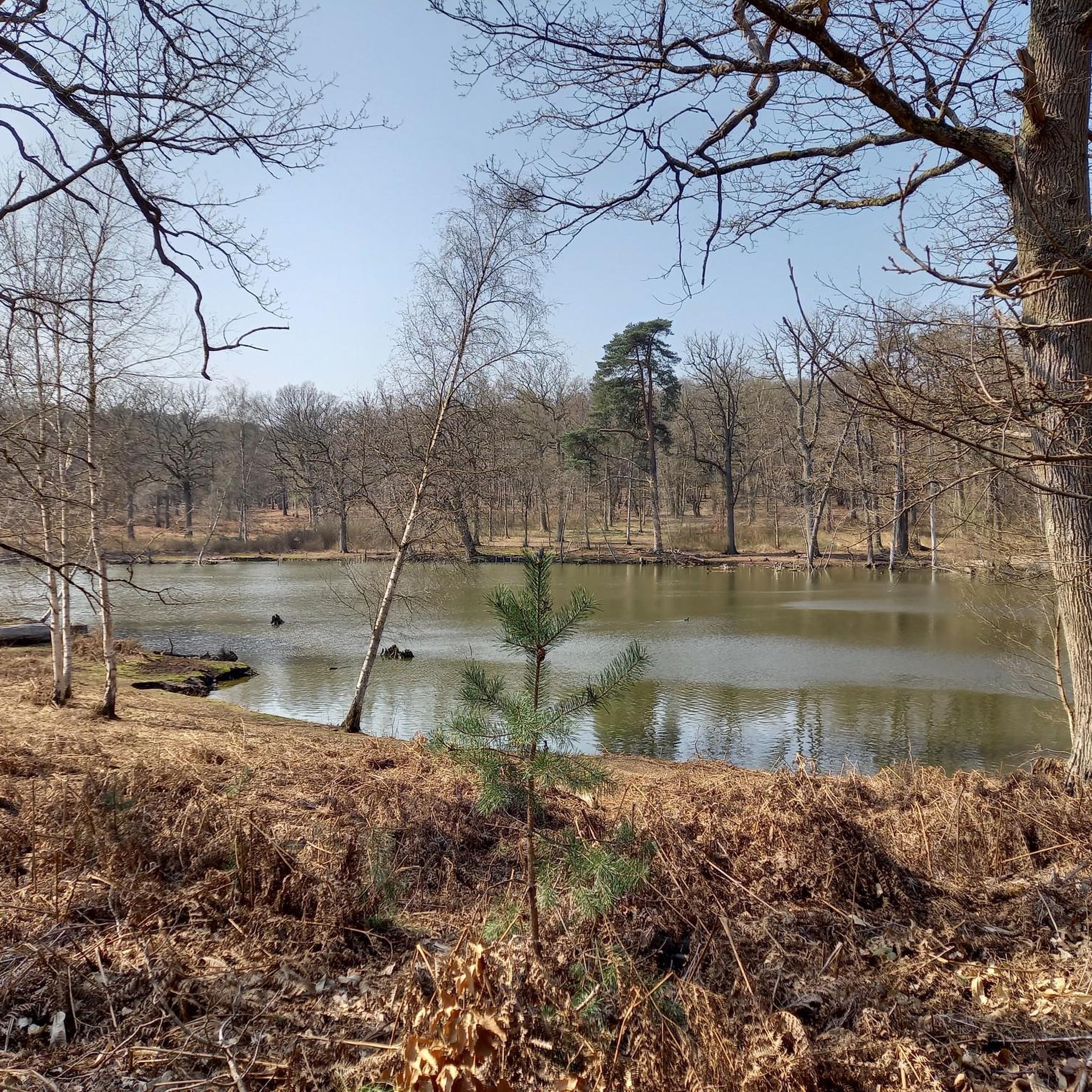
Located at an altitude of 154 meters1, the pond covers an area of 0.8 hectares. The “Ponts-Quentin stream” flows into the Rompu pond — coming from the Holland ponds located about 1 km upstream to the east — and comes out to flow, about ten kilometers further to the west, in the Vesgre, having previously changed its name twice: first under the name of “Etang-Neuf stream” then under that of “Grapelin”. The Ponts-Quentin stream passes under departmental road 138 before flowing into the pond, which justifies the undulation of the road and its bend. The pond is part of the Rambouillet national forest, a private state domain. As such, its management is ensured by the National Forestry Office (ONF). Wikipedia
1
0

From the 8th century, Beynes is a land owned by the abbey of Saint-Germain-des-Prés. It is therefore monks who clear and cultivate the land of Beynes. They build a first place of worship, probably in wood. At the beginning of the 11th century, King Robert II the Pious (972 / 1031) gave the fiefdom of Beynes to Guillaume de Hainaut, first lord of the Montfort family. In 1072, it is attested that Beynes depends on the priory of Saint Laurent de Montfort-L'Amaury. In 1159, a papal bull from Pope Adrian IV, the only English pope in history, attests that King Robert the Pious granted the patronage of the church and the main tithe to Saint Magloire Abbey in Paris. The construction of the current church is dated from the middle of the 12th century, date of the appearance of the parish, consecrated to Saint Martin in 1183. The church has undergone various episodes of demolitions and alterations over the centuries, and appears to have been partly rebuilt in 1773, then remodeled and extended in the 1830s to 1880s. Subsequently, numerous consolidations and repairs took place. The choir, the oldest part, dates from the 12th century, while the nave and the side aisles on the basilica plan are from the 18th and 19th centuries. The Virgin and Child: polychrome stone statue from the 14th century, listed as a historical monument since 1907. The tabernacle: the 18th century sculpted wooden altar, surmounted by a 17th century altarpiece, has been listed as a historical monument since 1907. This tabernacle was sculpted by monks who reproduced certain elements of the portal of the Saint Gervais church from Paris. The two small wooden statues adorn the sides: Saint Vincent and Saint Nicolas. The capitals of the choir: vestiges of the primitive church of the 12th century have been updated: columns, Romanesque capitals, departure of a double roller arch and slightly broken Romanesque arcades.
1
0
Frequently Asked Questions
What historical landmarks can I explore around Béhoust?
The area around Béhoust is rich in history. You can visit Saint Martin's Church, Beynes, a 13th-century religious building with a 12th-century choir and a 14th-century polychrome stone statue of the Virgin and Child. Another significant site is The Donjon of Houdan, a 12th-century tower that served as a watchtower and defensive structure, later becoming a prison. Additionally, the Château de Béhoust, though largely rebuilt in the 18th century, has vaulted cellars from its original 11th-century structure.
Are there any natural attractions or scenic spots near Béhoust?
Yes, nature lovers will enjoy Rompu Pond, a charming body of water located in the Rambouillet forest. It offers picturesque reflections throughout the seasons and is a rewarding spot for hikers. The broader Forêt de Rambouillet and Vallée de Chevreuse also provide beautiful natural landscapes for exploration. You can also find the Fontaine à Madame, a spring known for its pure water, sheltered by a small chapel-like structure in the private forest of Béhoust.
What outdoor activities can I do near Béhoust's attractions?
The region offers various outdoor activities. For hiking, you can explore trails around the Rompu Pond, with options like the easy "Étang de la Pimardière loop from Béhoust." Cyclists can find routes like the "Château and Church of Béhoust – Château de Béhoust loop from Orgerus." Mountain biking enthusiasts have trails such as the "Rompu Pond – Ponts Quentin Stream loop from Tacoignières - Richebourg." You can find more details and routes in the dedicated guides for hiking, cycling, and MTB trails around Béhoust.
Are there family-friendly attractions in the Béhoust area?
Absolutely. Many attractions are suitable for families. Rompu Pond in the Rambouillet forest is a great spot for a family outing, offering easy walks and scenic views. Saint Martin's Church, Beynes, and Notre-Dame du Chêne Chapel are also considered family-friendly historical sites where children can learn about local heritage.
What is the significance of the Notre-Dame du Chêne Chapel?
The Notre-Dame du Chêne Chapel is a significant pilgrimage site located between Les Mesnuls and Montfort l'Amaury. It was erected in 1646 around an oak tree that housed a venerated image of the Virgin Mary. Queen Marie-Antoinette was among the pilgrims who visited this site. The current building replaced the original chapel, which was destroyed during the French Revolution.
Can I find any unique or lesser-known historical sites around Béhoust?
For those interested in unique historical narratives, the Villa Landru in Gambais offers a fascinating, albeit dark, piece of local history. This house gained notoriety as the site where Henri Désiré Landru committed his crimes between 1915 and 1919. Its isolated nature was a key factor in its choice. After his trial, it was even briefly converted into a museum.
What kind of terrain can I expect on hiking trails around Béhoust?
The terrain around Béhoust varies, offering a mix of historical architecture and natural beauty. Hiking trails often lead through wooded areas, particularly within the Forêt de Rambouillet where Rompu Pond is located. You can expect relatively gentle paths suitable for easy to moderate walks, with some routes featuring slight elevation changes as you explore the forest and countryside.
Are there any specific historical details about Saint Martin's Church in Beynes?
Saint Martin's Church, Beynes, dates from the 13th century, with its choir being the oldest part from the 12th century. It has undergone various demolitions and reconstructions over time. Inside, you can find a 14th-century polychrome stone statue of the Virgin and Child and an 18th-century sculpted wooden altar, both classified as historical monuments. The capitals of the choir are vestiges of the primitive 12th-century church.
What is the history behind The Donjon of Houdan?
The Donjon of Houdan is a remarkable 12th-century tower, classified as a Historic Monument since 1840. Built under the Counts of Montfort, it served primarily as a watchtower and defensive structure, known for being impregnable. From the 16th century until the French Revolution, it functioned as a prison. The tower is 21 meters high with a 15-meter diameter, flanked by four turrets.
What do visitors enjoy most about the attractions around Béhoust?
Visitors particularly appreciate the blend of historical sites and natural beauty. The serene atmosphere of Rompu Pond and the historical depth of places like Saint Martin's Church, Beynes, and The Donjon of Houdan are highly rated. The komoot community has shared over 100 upvotes and 3 photos, highlighting the area's appeal for both cultural exploration and outdoor adventures.
Are there any specific walking routes recommended for beginners around Béhoust?
Yes, for beginners or those looking for an easy stroll, the "Étang de la Pimardière loop from Béhoust" is a recommended hiking route. It covers a distance of approximately 2.26 km and is classified as easy, making it suitable for a relaxed walk to enjoy the natural surroundings. You can find more easy routes in the hiking guide for Béhoust.
Can I find information about the Château de Béhoust?
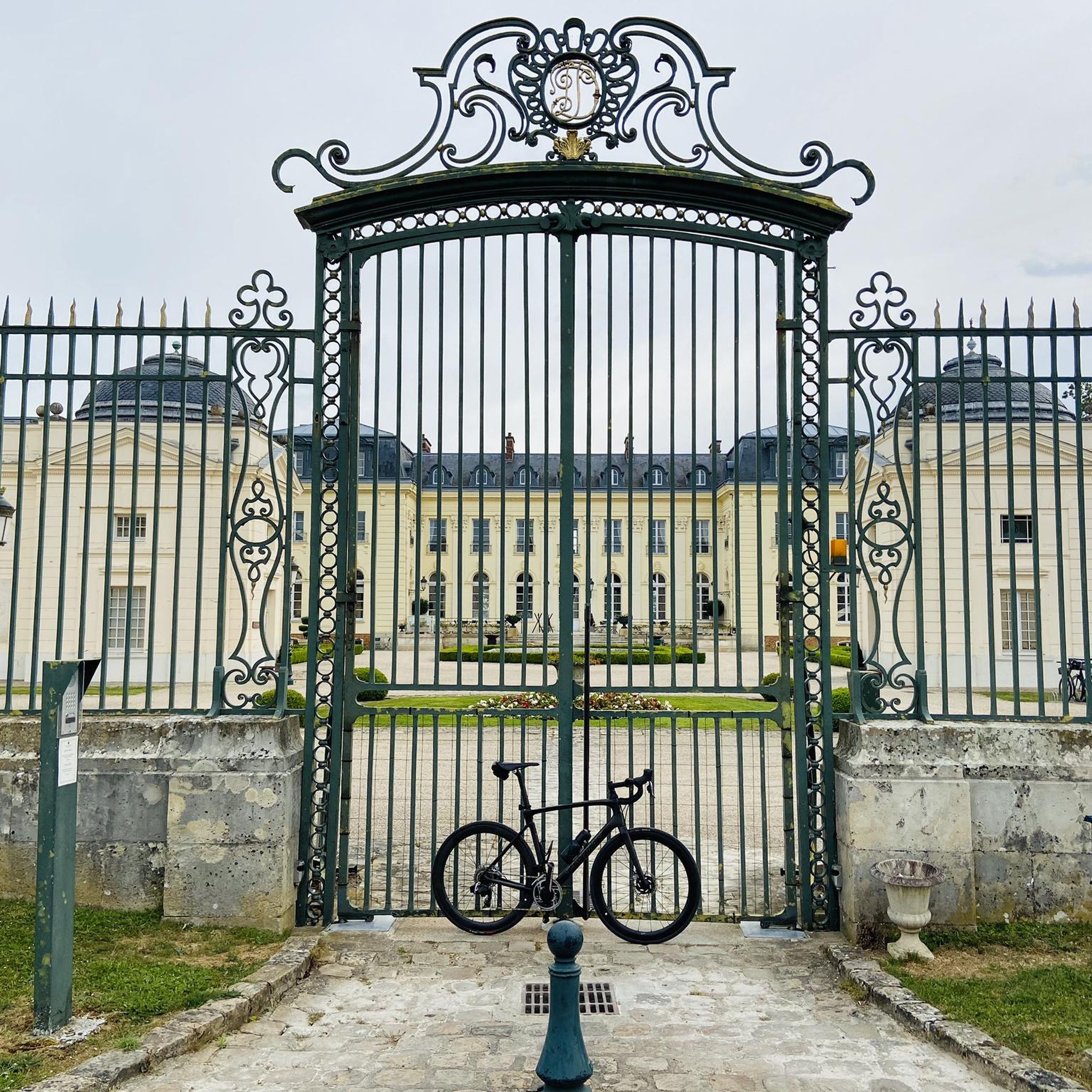
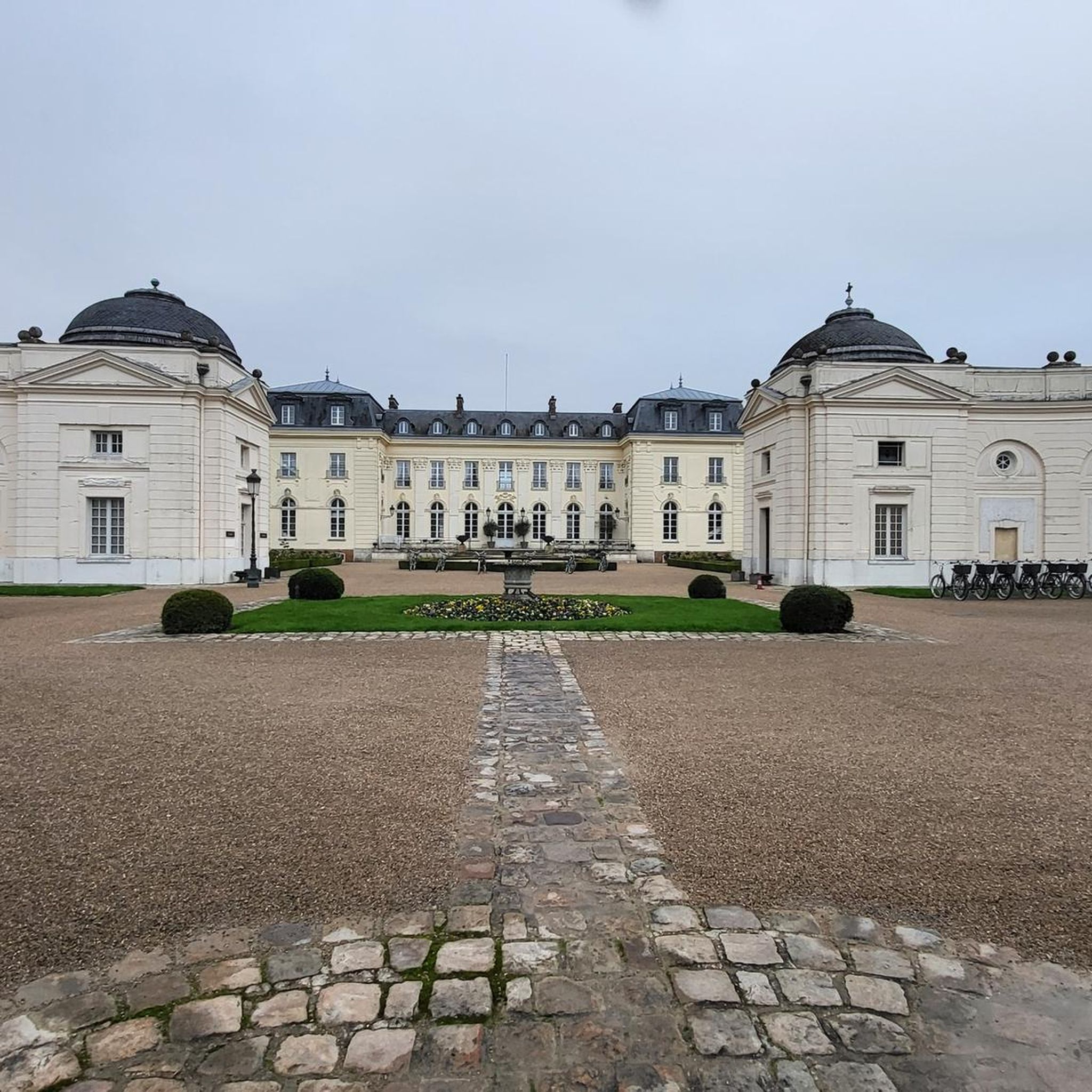
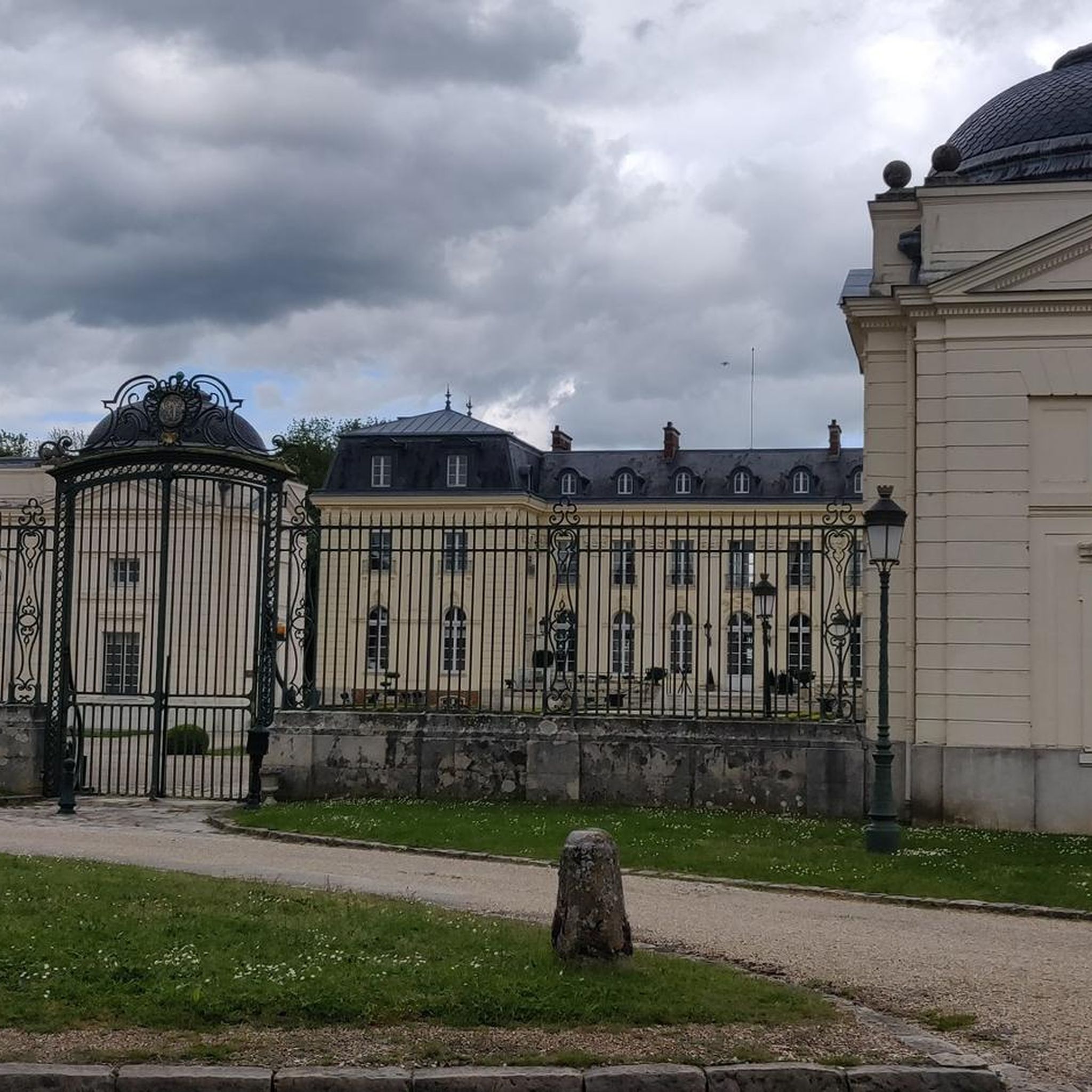
The Château de Béhoust is an elegant castle with origins dating back to the 11th century, though its current structure largely reflects 18th-century construction and later additions. Only the vaulted cellars remain from the original medieval castle. It features large stables and an extensive, partly wooded park. Currently, it is used for business seminars and is listed in the Inventory of Historical Monuments.
Most popular routes around Béhoust
Most popular attractions around Béhoust

Get inspired with the komoot mobile app


Explore more
Still not found the Highlight you’re looking for? See guides of the top attractions in other regions:
