Attractions and Places To See around Saint-Théodorit - Top 20
Best attractions and places to see around Saint-Théodorit include a mix of historical sites, charming villages, and natural features within the Gard department of France. The area is characterized by its rich Protestant history, agricultural traditions, and proximity to the medieval city of Uzès. Visitors can explore ancient structures, unique geological formations, and picturesque settlements.
Best attractions and places to see around Saint-Théodorit
- The most popular attractions is Mer des Rochers, a natural rock formation that features a unique…
Last updated: June 24, 2026
Mer des Rochers
Highlight • Other
Translated by Google •
Tip by

Sauve Village Center
Highlight • Settlement
In the center you will find some small breweries that will allow you to quench your thirst.
The perfect place for a break.
Translated by Google •
Tip by

Sign up now to discover places like this
Get recommendations on the best single tracks, peaks, & plenty of other exciting outdoor places.
Sign up for free
Quissac
Highlight • Settlement
Translated by Google •
Tip by

View of Sauve
Highlight • Settlement
To get there, a path is clearly visible from the main …
Translated by Google •
Tip by

Ancient Roman Quarry
Highlight • Historical Site
Tip by

Sign up for free to discover even more attractions around Saint-Théodorit.
Sign up for free
Already have an account?
Start today with a free account
Your next adventure awaits.
Login or Signup

Tips from the Community

A pleasant hike in a karst landscape (for the initiated) but also imbued with a certain magic. The loop from the center of the village took us about two with a picnic among the rocks, in a place once planted with cherry trees and other fruit trees. Note the presence of an original sundial... in perfect working order! The sinkhole, at the beginning of the trail, is hardly visible because it is overgrown with vegetation. But the ruins of the castle for their part allow for beautiful photos. The trail is quite shaded regardless of the season, we did it in 28 degrees without any discomfort (but we are from the South!). However, be sure to wear proper footwear because the route is very stony!
0
0

A beautiful little medieval village! Things to see: - Source du Vidourle (Sauve fountain) - The Sea of Rocks - The great Aven de Sauve (Be careful, don't get too close, it's over 40 meters high in places). - The shops/bars/restaurants, especially La Servanne, which I recommend. - The green trail, very pleasant.
0
0

Lens limestone was primarily reserved for intricately decorated works, as its composition allows for fine and in-depth work. It was shipped to Arles or Beaucaire before being exported to construction sites all around the Mediterranean. But in Nîmes, it was of course used for all the ornamentation of the arenas, the Maison Carrée, and the Temple of Diana. https://echosdeleinsgardonnenque.fr/en-visite-aux-carrieres-romaines/
0
0
Avoid doing the sea of rocks the day after rain, it is dangerously slippery and spoils a lot of the fun.
1
0
Charming village with old stones full of history
1
0
Beautiful view of Sauve from the tower overlooking the sea of rocks (the isolated tower, not the Roquevaire castle). To get there, a path is clearly visible from the main path. You will have to climb a little at the foot of the tower.
2
0
The sea of rocks is located on the heights of the village of Sauve. Although short, the well-marked path offers a beautiful view. The path is uneven, sometimes with high steps, but is quite easy to do on foot, and seems to be intended for everyone, with a little care. A sundial is located at the end of the crossing (or at the beginning depending on where you are coming from). Not far from there, 10/15 minutes on foot, is the Grand Aven de Sauve, which I was able to descend a few years ago.
2
0

Frequently Asked Questions
What historical sites can I visit in Saint-Théodorit and nearby?
In the village of Saint-Théodorit, you can explore the Protestant Temple (Temple au Livre), notable for its open Bible sculpted into the facade, and local heritage sites like Moulin de la Mouleyrette, Tour Saint Jean, and Lavoir de Carnas. Nearby, the city of Uzès offers the impressive Cathédrale Saint-Théodorit d'Uzès with its unique 12th-century Tour Fenestrelle, the Uzès Medieval Garden, and the charming Medieval Center of Uzès. Don't miss the Ancient Roman Quarry for a glimpse into the region's past.
Are there natural attractions to explore around Saint-Théodorit?
Yes, the region boasts several natural wonders. A must-see is Mer des Rochers, a unique natural rock formation near Sauve, where you can also find the ruins of the castle of Roquevaire. Further afield, you can visit the remarkable Pont du Gard, the impressive cave systems of Grotte des Demoiselles and Grotte de la Cocaliere, or the scenic Cascades du Sautadet.
What outdoor activities and trails are available around Saint-Théodorit?
The area around Saint-Théodorit is excellent for outdoor enthusiasts. You can find numerous trails for various activities. For running, explore routes like the 'Puech Ricard loop from Moulézan' or 'Running loop from Aigremont'. Gravel biking options include the 'Historic Village of Vézénobres – Confluence des Gardons loop' or the longer 'Quissac – Arènes de Nîmes loop'. Mountain biking trails range from 'Notre-Dame du Château Chapel – The Bridge of Chance loop' to 'Sauve Village Center – The Old Bridge of Sauve loop'. You can find more details on these activities in the dedicated guides for Running Trails, Gravel Biking, and MTB Trails around Saint-Théodorit.
What family-friendly activities are available near Saint-Théodorit?
Families will enjoy exploring the charming Sauve Village Center with its medieval streets and the Source du Vidourle. The town of Quissac, with its bridge over the Vidourle and weekly market, also offers a pleasant family outing. For a unique natural experience, consider visiting the Bambouseraie de Prafrance (The Bamboo Cevennes), a remarkable garden that appeals to all ages.
Are there any local events or markets in the Saint-Théodorit area?
Yes, the village of Saint-Théodorit hosts an annual Fête de l'Agriculture in June, celebrating local traditions with demonstrations, animal husbandry, and a market. Additionally, the town of Quissac holds a weekly market every Wednesday morning, and Uzès features a vibrant market on Saturday mornings in the Place aux Herbes, offering local products.
What is the significance of the Cathédrale Saint-Théodorit d'Uzès?
The Cathédrale Saint-Théodorit d'Uzès is a significant historical and architectural landmark. Originally built around 1090, it has been rebuilt multiple times due to conflicts like the Wars of Religion. Its most distinctive feature is the 12th-century Tour Fenestrelle, a unique round bell tower reminiscent of the Leaning Tower of Pisa. Inside, you'll find a blend of architectural styles, renovated ceilings, an imposing organ, and historical tombstones.
What can I expect when visiting Sauve Village Center?
The Sauve Village Center is a charming medieval village with narrow streets, local shops, and restaurants. Visitors can explore the Source du Vidourle, relax at small breweries, and enjoy the historic atmosphere. It's also a great starting point to discover the nearby Mer des Rochers.
What is the best time to visit the attractions around Saint-Théodorit?
The region generally enjoys a Mediterranean climate. Spring (April-June) and early autumn (September-October) are ideal, offering pleasant temperatures for exploring historical sites, villages, and engaging in outdoor activities without the intense heat of summer. If you're interested in local events, the annual Fête de l'Agriculture in Saint-Théodorit takes place in June.
Are there any unique architectural features in the area?
Absolutely. Beyond the distinctive Tour Fenestrelle of the Cathédrale Saint-Théodorit d'Uzès, the village of Saint-Théodorit features the Protestant Temple (Temple au Livre) with its unique open Bible facade. The medieval center of Uzès itself is an architectural gem, with Renaissance facades, cobbled streets, and the impressive Duchy of Uzès.
What is the Mer des Rochers and how can I visit it?
The Mer des Rochers is an unmissable natural rock formation near Sauve, characterized by a unique rocky landscape. Strolling through this 'sea of rocks' also allows you to discover the ruins of the castle of Roquevaire. While a loop path is not fully passable, you can explore a significant portion of this area. It's a great spot for a scenic walk.
What can I find in the town of Quissac?
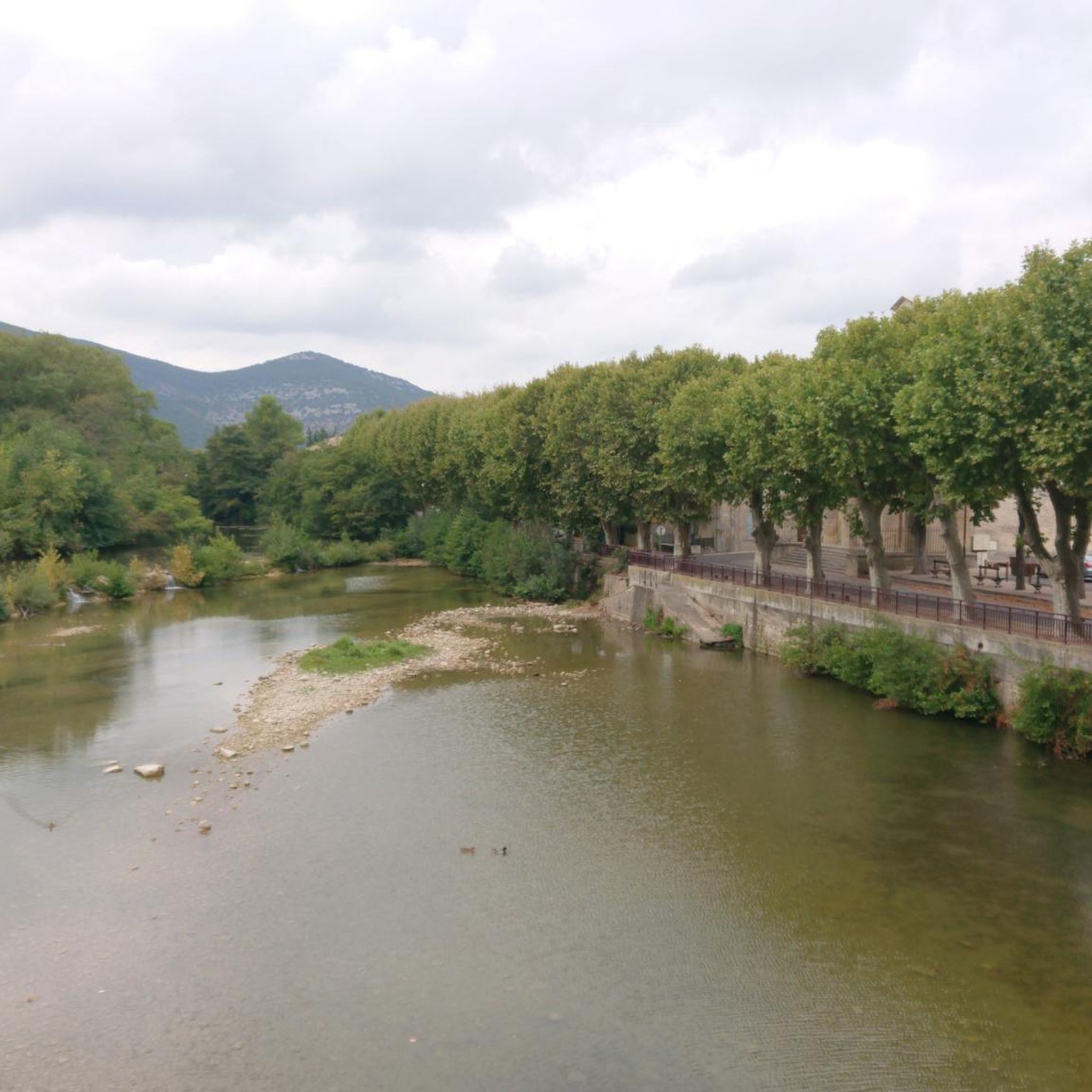
Quissac is a town situated on the edge of the Vidourle river, featuring a magnificent bridge spanning the river in its southern part. It's a small town with shops and places to eat, and it hosts a lively weekly market every Wednesday morning, offering local goods and a chance to experience local life.
Most popular routes around Saint-Théodorit

Get inspired with the komoot mobile app


Explore more
Still not found the Highlight you’re looking for? See guides of the top attractions in other regions:
