The best road cycling routes around Tollevast
4.4
(168)
5,722
riders
388
rides
Road cycling routes around Tollevast traverse a landscape characterized by rolling hills, river valleys, and proximity to the Normandy coast. The region features a mix of agricultural land, historical sites, and small villages. Road cyclists can expect varied terrain, from flat sections along riverbanks to moderate climbs through the countryside. The area offers a network of roads suitable for different levels of road cycling experience.
Best road cycling routes around Tollevast
- The most popular road cycling route is Le bon ravto !!! – La Dielette Mills loop from Saint-Martin-le-Gréard, a 16.6 miles (26.7 km) trail that takes 1 hour 10 minutes to complete. This easy route explores the area around the historic La Dielette Mills.
- Another top favourite among local road cyclists is For refreshment 💦 – Banks of the Gloire loop from Le Beau Parlé, a moderate 24.7 miles (39.8 km) path. This route follows the scenic banks of the River Gloire.
- Local road cyclists also love the Portbail - Notre-Dame Church – Bridge of 13 Arches loop from Le Beau Parlé, a 47.2 miles (76.0 km) trail leading through coastal areas and past historical landmarks, often completed in about 3 hours 23 minutes.
- Road cycling around Tollevast is defined by river valleys, historical sites, and rural roads. The network offers options for different ability levels, from easy loops to more challenging long distance road bike routes Tollevast.
- The routes in Tollevast are highly rated by the komoot community with an average score of 4.3 stars from over 140 reviews. More than 5,000 road cyclists have used komoot to explore Tollevast's varied terrain.
Last updated: July 5, 2026
5.0
(1)
34
riders
Moderate road ride. Good fitness required. Mostly well-paved surfaces and easy to ride.
50
riders
Hard road ride. Very good fitness required. Mostly well-paved surfaces and easy to ride.

Sign up for free
5.0
(1)
36
riders
73.0km
03:13
670m
670m
Moderate road ride. Good fitness required. Mostly well-paved surfaces and easy to ride.
13
riders
72.1km
03:13
740m
740m
Moderate road ride. Good fitness required. Mostly well-paved surfaces and easy to ride.
12
riders
55.0km
02:32
600m
600m
Moderate road ride. Good fitness required. Mostly well-paved surfaces and easy to ride.
Get access to more routes and recommendations from other explorers.
Sign up for free
Already have an account?
Our route recommendations are based on thousands of hikes, rides, and runs completed by other people on komoot.
Start today with a free account
Your next adventure awaits.
Login or Signup


Tips from the Community


A small, tricky section on the small alternative path. Nothing too serious.
0
0

To see the phenomenon of the white marshes, you have to go there in winter (January - February - March for example). The roads can be greasy and / or flooded, mudguards are good to have. Otherwise beautiful region pleasant and calm to do also the rest of the time.
1
0

While the Sainte-Trinité church was the only church in Cherbourg, and faced with the development of the working-class district of Roule, Father Cabart, chaplain of the civil hospital of Cherbourg, launched a subscription in December 1825 to build a chapel on the right bank of the Divette. The sub-prefect and five priests contributed their contribution. In February 1827, a plot of land was donated along Avenue Carnot (now Avenue de Paris), and during the visit of the Duchess of Angoulême to Cherbourg, she gave a thousand francs in response to the petition for the construction of the building by the poet-barber of Roule, Michel Legoupil, who would become treasurer of the factory. After the death of Father Cabart, his sister ordered his successor, Father Régnet, in 1831 to implement the chapel and school project. Charles-Louis-Napoléon Robert (1804-1885), a naval engineer, acted as architect and project manager, and delivered a sanctuary inspired by the Gothic style, 25 meters long and 8.5 meters wide, which was blessed on September 8, 1832, by Abbé Briquet, priest of Cherbourg in the presence of the mayor of Cherbourg. In 1836, under the aegis of Abbé Godefroy, chaplain of La Bucaille and church architect, two chapels were added to form a transept, and this annex of the Trinity was erected as a branch by royal decree of December 12. On September 23, 1839, Mgr Robiou, bishop of Coutances, informed the municipal council of Cherbourg that he was appointing a vicar to the church. The floor area of the latter was increased to 407 m2 by extending the nave by 11 metres in 1842, with a new portal above which a bell tower was built according to the plans of Abbot Godefroy. The City, which had always refused to finance the building, favouring the construction of the Saint-Clément church, became the owner of the place of worship in 1870 (or 1873, depending on the documents), after the individuals who had built the church had donated it to it (on condition that the City ensure its maintenance; the deed was apparently passed before Me Gosse in 1874). It had to add buttresses to the eastern wall in 1911. The "Battle of Cherbourg" during the Second World War left only the walls of the church. It was rebuilt until 1952 by Levavasseur and Lebreton who widened the entrance to the two chapels and the door of the Saint-Joseph chapel, enlarged the gallery, and removed the pulpit. Bishop Guyot blessed the church on February 24, 1952.
0
0

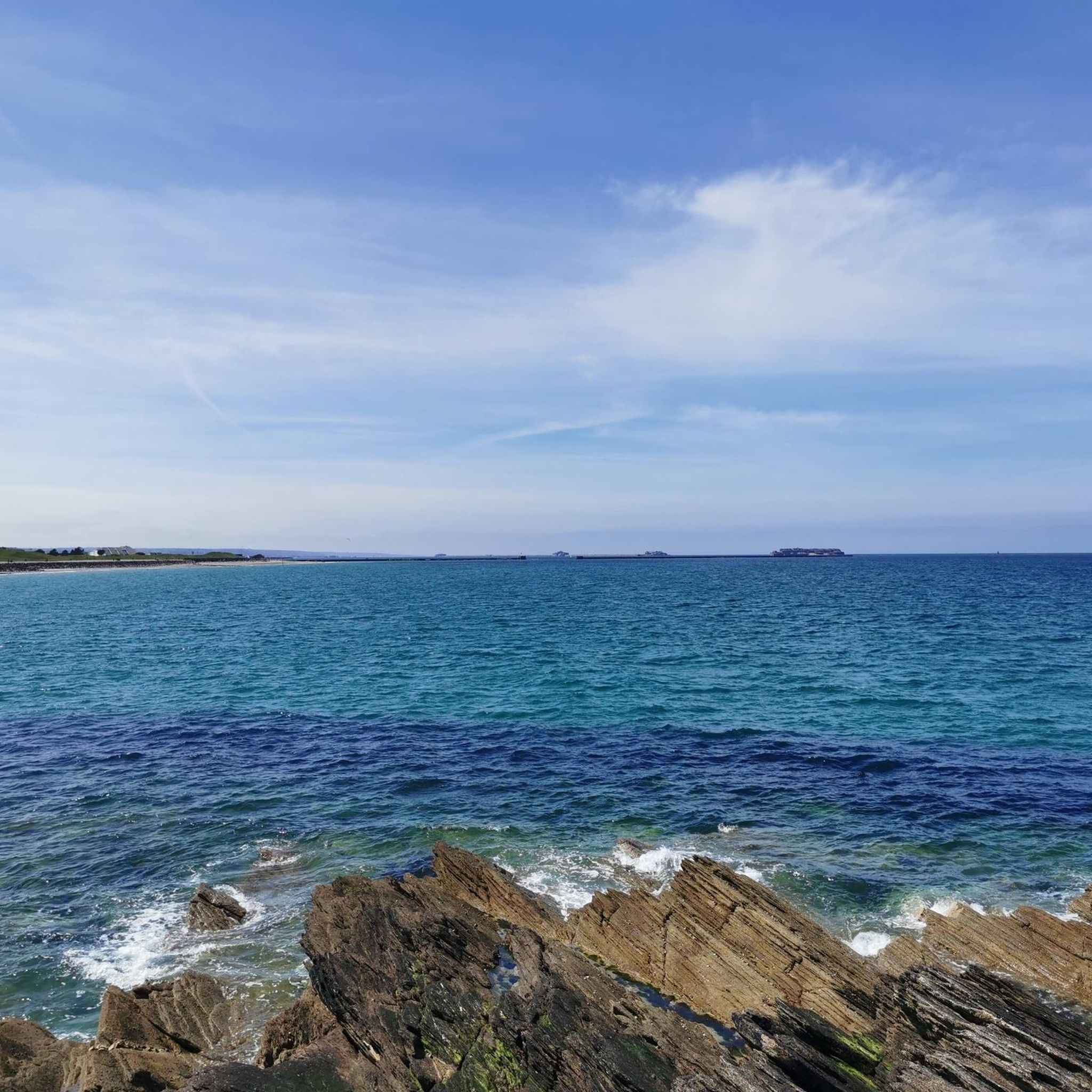
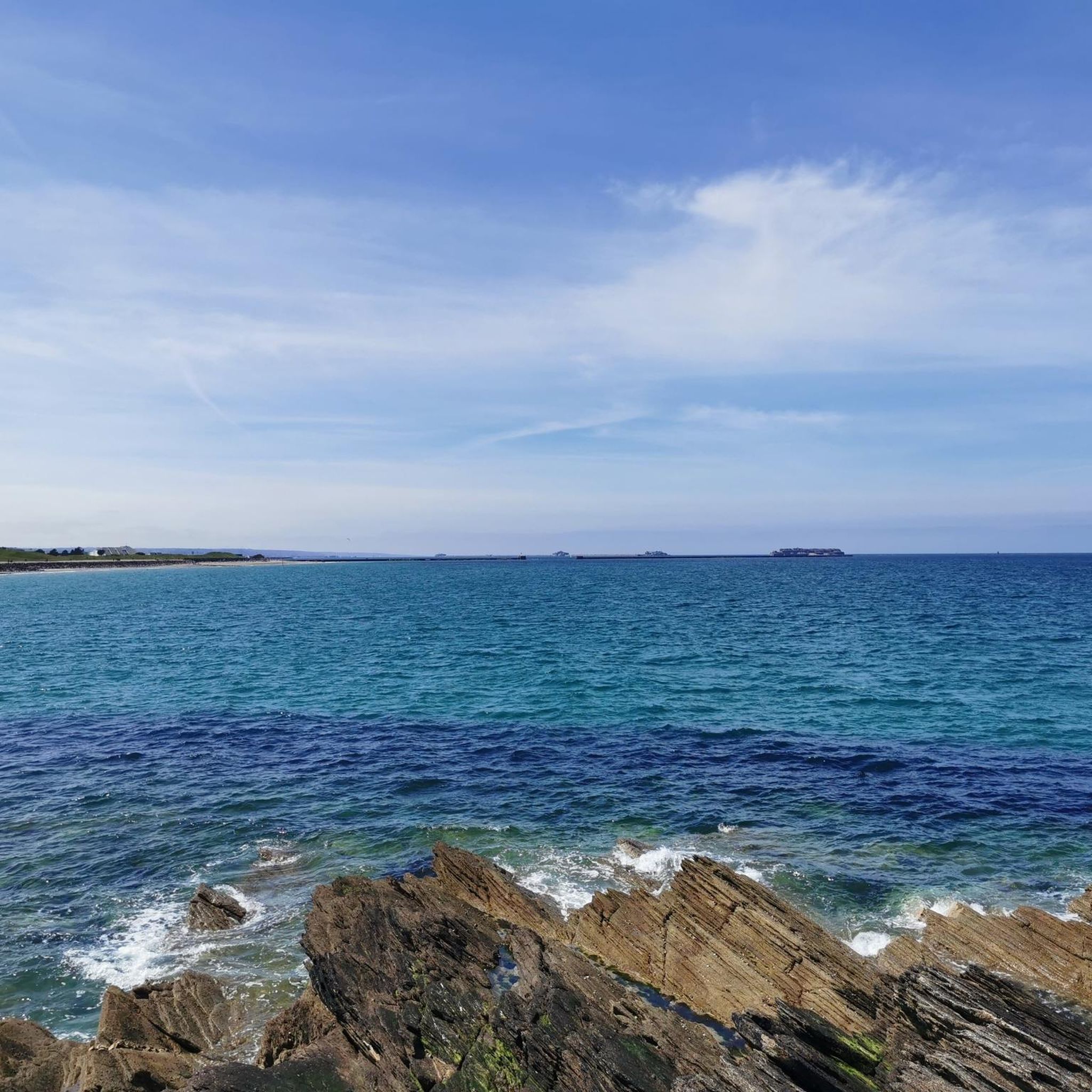
Beautiful beach of fine sand and pebbles. At high tide the sea almost completely covers the sand.
0
0

A new cycle path to safely connect the station to the city's seafront. It should be noted that the city of Cherbourg has been making enormous efforts for several years to facilitate travel by bicycle. Many developments have been created, the network of cycle paths is dense and pleasant. A great success!
1
0

La Voie du Homet is a street located in Cherbourg-en-Cotentin, in the Manche department, in Normandy. It takes its name from the Homet district, which is a historic and maritime part of Cherbourg. Points of Interest: Proximity to the Military Port: La Voie du Homet is located near the arsenal and the military port of Cherbourg, a key place in the maritime and military history of France. This sector was crucial for coastal defense and the development of the French fleet. Maritime Ambiance: La Voie du Homet, with its buildings and environment, is steeped in the maritime history of Cherbourg. Walkers can feel the influence of the sea and the importance of the port in the daily life of the city. Why visit La Voie du Homet? Historical Immersion: The street is anchored in the history of Cherbourg and offers a direct link to the military and maritime past of the city. Proximity to the Sea: The Voie du Homet leads to the beach of the same name, offering a beautiful getaway for those who want to enjoy the sea while remaining close to the city. Local Charm: With its houses and gardens, the Voie du Homet is representative of the quiet and historic charm of Cherbourg, offering an authentic and relaxing atmosphere. In summary, the Voie du Homet is a picturesque and historic passage in Cherbourg, ideal for those interested in local history and wish to discover a lesser known but equally charming part of the city.
1
0

Located in the town of Bricquebec, this superb castle was built between the 10th and 11th centuries. The exterior of the remains of the castle are freely accessible and are worth the detour!
0
0
Frequently Asked Questions
How many road cycling routes are available around Tollevast?
There are over 390 road cycling routes around Tollevast, offering a wide variety of options for different skill levels and preferences. The region's landscape, characterized by rolling hills and river valleys, provides diverse terrain for exploration.
What kind of terrain can I expect on road cycling routes near Tollevast?
Road cycling routes around Tollevast traverse a landscape of rolling hills, river valleys, and agricultural land, with proximity to the Normandy coast. You can expect varied terrain, from flat sections along riverbanks to moderate climbs through the countryside, passing through historical sites and small villages.
Are there road cycling routes suitable for beginners in Tollevast?
Yes, Tollevast offers 46 easy road cycling routes. An excellent option for beginners is Le bon ravto !!! – La Dielette Mills loop from Saint-Martin-le-Gréard, an easy 16.6-mile (26.7 km) trail that explores the area around the historic La Dielette Mills.
What are some challenging or long-distance road cycling routes in the Tollevast area?
For those seeking a challenge, there are 49 difficult road cycling routes around Tollevast. A longer moderate option is the Portbail - Notre-Dame Church – Bridge of 13 Arches loop from Le Beau Parlé, a 47.2-mile (76.0 km) trail leading through coastal areas and past historical landmarks.
Can I find circular road cycling routes around Tollevast?
Yes, many of the road cycling routes in Tollevast are designed as loops, allowing you to start and finish at the same point. For example, the popular For refreshment 💦 – Banks of the Gloire loop from Le Beau Parlé is a moderate 24.7-mile (39.8 km) circular path following the scenic banks of the River Gloire.
What is the best time of year for road biking in Tollevast?
The region's climate generally makes spring through early autumn ideal for road cycling, offering pleasant temperatures and less chance of harsh weather. While specific conditions vary, these seasons typically provide the most comfortable riding experience.
Are there any interesting landmarks or attractions to see along the road cycling routes?
Yes, road cycling routes around Tollevast often pass by historical sites and natural beauty. You might encounter attractions such as Ravalets Castle, the Place Napoléon in Cherbourg, or the serene Parc Emmanuel Liais. The For refreshment 💦 – Alauna Roman Baths loop from Le Beau Parlé specifically takes you near historical sites.
What do other road cyclists enjoy most about road cycling in Tollevast?
The road cycling experience in Tollevast is highly rated by the komoot community, with an average score of 4.3 stars from over 140 reviews. Cyclists often praise the varied terrain, the scenic river valleys, and the opportunity to explore historical sites and charming rural roads.
Are there routes that pass by significant historical sites?
Absolutely. Many routes in the Tollevast area incorporate historical elements. For instance, the Bike shop in Bricquebec – Château de Bricquebec loop from La Glacerie takes you past the historic Château de Bricquebec, offering a blend of cycling and cultural exploration.
Can I find routes that offer scenic viewpoints or natural monuments?
Yes, the region offers routes with beautiful views and access to natural monuments. While cycling, you might pass by spots like The Big Rock or the tranquil Bois des Roches, providing picturesque breaks during your ride.
Are there family-friendly road cycling options in Tollevast?
While specific 'family-friendly' designations for road cycling can vary, the 46 easy routes available around Tollevast are generally suitable for less experienced riders or families looking for a more relaxed pace. These routes typically feature gentler gradients and shorter distances.
Most popular attractions around Tollevast

Get inspired with the komoot mobile app


Explore more
Browse the best Road cycling routes in other regions.
