Attractions and Places To See around Bullecourt - Top 20
Attractions and places to see around Bullecourt, a village in northern France, are primarily known for their significant role in World War I. The area features numerous memorial sites, museums, and reconstructed architecture that reflect its past. Beyond its wartime heritage, Bullecourt also offers opportunities to explore the Artois countryside and discover ancient megalithic sites. The village is recognized as a "Village Patrimoine" for its historical, artistic, and landscape heritage.
Best attractions and places to see around Bullecourt
- The most…
Last updated: May 19, 2026
Les Bonnettes
Highlight • Other
Translated by Google •
Tip by

The Menhir of Lécluse or the Devil's Stone
Highlight • Summit
Translated by Google •
Tip by

Sign up now to discover places like this
Get recommendations on the best single tracks, peaks, & plenty of other exciting outdoor places.
Sign up for free
Sains-les-Marquion British Cemetery
Highlight • Other
Translated by Google •
Tip by

Hibers Trench Cemetery
Highlight • Other
Translated by Google •
Tip by

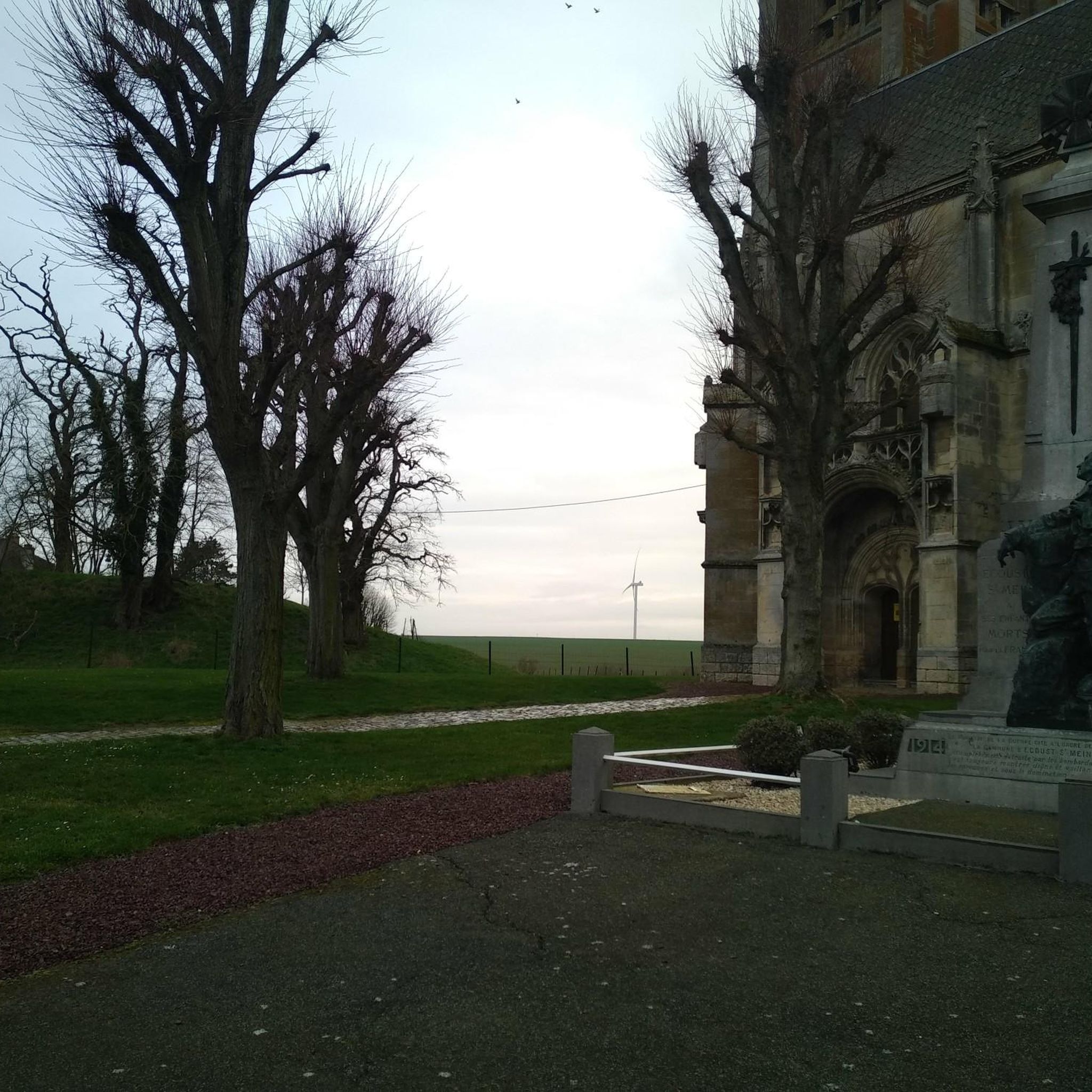
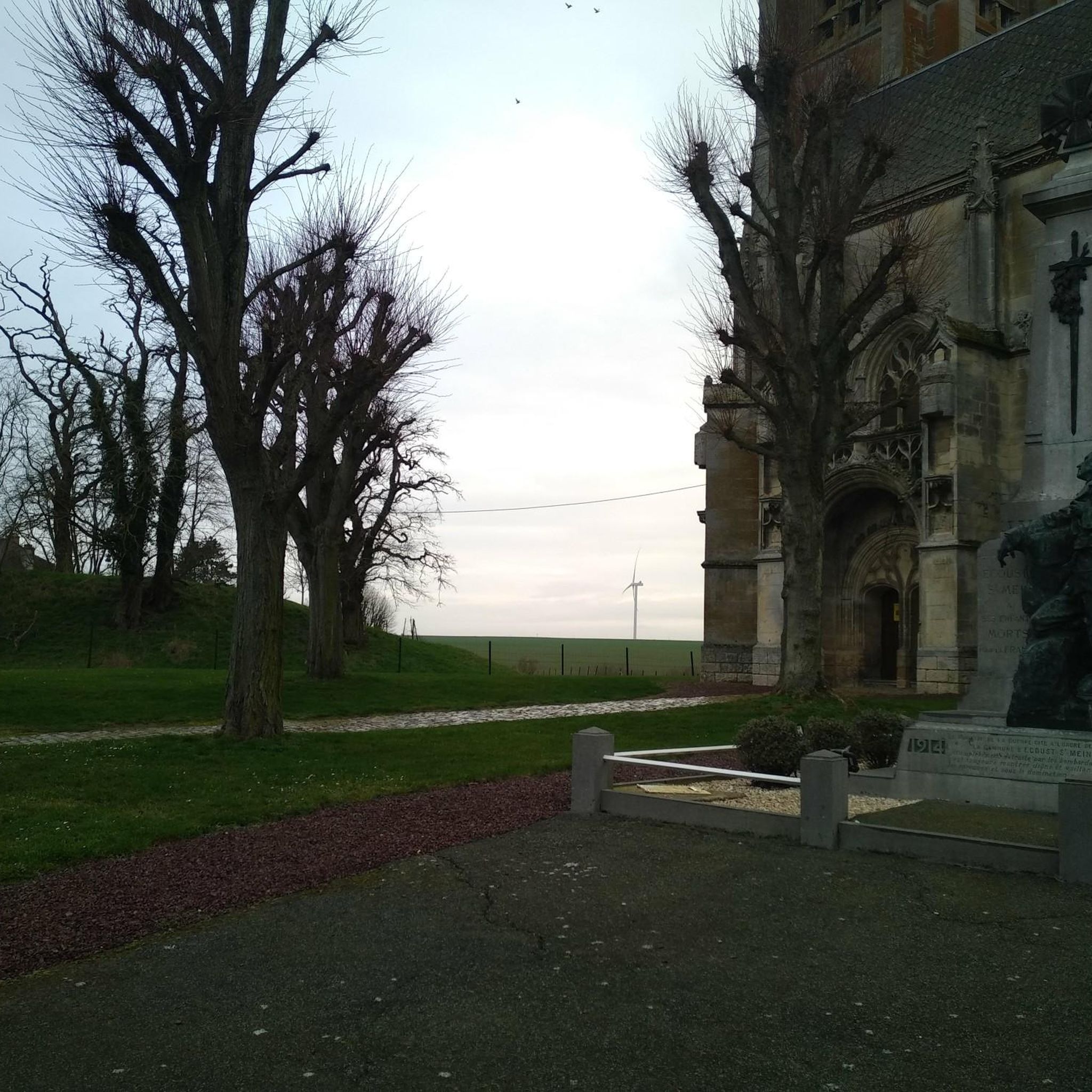
1917 — Écoust-Saint-Mein
Highlight • Other
Translated by Google •
Tip by
Sign up for free to discover even more attractions around Bullecourt.
Sign up for free
Already have an account?
Start today with a free account
Your next adventure awaits.
Login or Signup



Tips from the Community

Hibers Trench Cemetery, situated just north-west of Wancourt near Arras, was begun in April 1917 by the 50th (Northumbrian) Division shortly after the area was captured by British forces at the Battle of Arras. The cemetery contains 136 graves, six of which are unidentified, and also includes three Canadian graves added later in 1918. The simple design is by G.H. Goldsmith and reflects the understated dignity of this memorial. Its position on the Wancourt-Arras road makes it a silent witness to the fierce fighting that took place here, and the presence of personal inscriptions on some of the headstones emphasises the human story behind the numbers. A place of peace, remembrance and reflection.
10
0

The Seven Bonnettes are a fascinating megalithic site, surrounded by legends and mysteries. Located in a picturesque valley, this 75 meter high mound is crowned with standing stones forming a crown. According to legend, these stones represent six young girls and a musician, transformed into statues by Heaven for having danced instead of attending vespers.
0
0

They are part of the unknown treasures of Arras and the Pays d'Artois. The various megalithic sites are good for a beautiful walk, among mysteries and legends, history and extraordinary landscapes. Set sail for the Scarpe valley and the Sensée valley, in the wake of the megaliths of the Pays d'Artois.
2
0
Small mythical location. The stone pillars on top have already made many passers-by think. They are part of the unknown treasures of Arras and the Pays d'Artois. The various megalithic sites are good for a beautiful walk, among mysteries and legends, history and extraordinary landscapes. Set sail for the Scarpe valley and the Sensée valley, in the wake of the megaliths of the Pays d'Artois.
1
0

The British cemetery of Sains-les-Marquion contains the graves of 255 soldiers who died during the First World War, mainly Canadians who liberated the village from German occupation in September 1918. You can admire the architecture of the cemetery, designed by W C Von Berg, and pay tribute to fallen heroes.
3
0

The story goes that once the people of the country showed the scratches produced, according to legend, by the claws of the demon when he seized the stone. Streaks do indeed appear on two sides of the menhir… But are they the same as before or do they come from the destruction of the stone in 1918
2
0

Menhir to discover. A descriptive panel is present at the parking lot of the site. Access is by a grassy path, not dented, practicable.
1
0
Commonwealth Military Cemetery: https://www.cwgc.org/visit-us/find-cemeteries-memorials/cemetery-details/2102502/sains-les-marquion-british-cemetery/
0
0
Frequently Asked Questions
What are the main World War I memorial sites in Bullecourt?
Bullecourt is rich in World War I history. Key sites include the Bullecourt 1917, Jean & Denise Letaille Museum, which houses artifacts and chronicles the battles. You can also visit the Slouch Hat Memorial and the Australian Digger Memorial Garden, both dedicated to British and Australian soldiers. The French Remembrance Monument in the village square commemorates the sacrifice of British Empire troops and early tank deployments. Nearby, you'll find the Sains-les-Marquion British Cemetery and Hibers Trench Cemetery, final resting places for many soldiers.
Where can I learn more about the Australian involvement in the Battle of Bullecourt?
The Australian involvement is deeply commemorated in Bullecourt. The Bullecourt 1917, Jean & Denise Letaille Museum provides extensive exhibits on the experiences of Australian soldiers. Additionally, the Australian Digger Memorial Garden features a statue known as the 'Bullecourt Digger' and marks a former frontline occupied by Australian forces. The Sains-les-Marquion British Cemetery also contains graves of primarily Canadian soldiers who liberated the village, reflecting the broader Commonwealth effort.
Are there any specific sites related to tank warfare in Bullecourt?
Yes, Bullecourt played a role in the early history of tank warfare. Adjacent to the Slouch Hat Memorial is a small brick memorial dedicated to the tank crews of the Heavy Branch of the Machine Gun Corps (HBMGC), the first unit in the British Army to use tanks in combat. The French Remembrance Monument in the village square is also built from the remains of a tank track, serving as a reminder of one of history's earliest tank deployments.
What unique historical or natural monuments can I find near Bullecourt?
Beyond the WWI sites, you can discover ancient megalithic sites. Les Bonnettes is a site known for its stone pillars and local legends, part of the 'unknown treasures of Arras and the Pays d'Artois'. Another significant site is The Menhir of Lécluse or the Devil's Stone, the tallest classified menhir in the region, surrounded by fascinating local legends about its origin and visible scratches.
Are there walking trails that explore the historical battlefields around Bullecourt?
Yes, the surrounding fields of Bullecourt are essentially a vast historical site. The former railway embankment now forms part of the Australian Trail, offering a walking route through historical landscapes. The Sunken Road, used by Australian troops, also provides a direct connection to the wartime movements and terrain. You can explore the Artois countryside with the battlefield serving as a continuous backdrop to the 'Sentier des Australiens' (Australian Path) walking trail.
What kind of outdoor activities can I do near Bullecourt?
The area around Bullecourt offers various outdoor activities, particularly cycling and hiking. For cycling, you can find routes like the 'Beaumetz Cross Roads Cemetery – Chemin du Canal loop' or the 'Place des Héros – Grand Place loop from Bullecourt'. Hikers can enjoy trails such as the 'Château de Saint-Léger loop from Croisilles' or the 'Mare du Badoulet loop from Croisilles'. You can find more details on these and other routes in the cycling guide and hiking guide for Bullecourt.
Is Bullecourt suitable for family visits?
While Bullecourt's primary focus is its poignant World War I history, which can be educational for older children, some sites like The Menhir of Lécluse or the Devil's Stone are listed as family-friendly due to their historical and legendary appeal. The walking trails through the Artois countryside can also be enjoyed by families, offering a chance to explore nature and history together.
What is the best time of year to visit Bullecourt?
The Artois countryside and memorial sites are generally pleasant to visit during the spring, summer, and early autumn months (April to October) when the weather is milder and more conducive to walking and outdoor exploration. This allows for comfortable visits to the outdoor memorials and battlefields. Winter can be cold and damp, though the indoor museum remains an option.
How long should I plan to spend visiting the attractions in Bullecourt?
To fully appreciate the main World War I sites, including the Bullecourt 1917, Jean & Denise Letaille Museum, the various memorials, and a walk along parts of the historical trails, a full day is recommended. If you wish to explore the megalithic sites like Les Bonnettes and The Menhir of Lécluse, or engage in longer cycling or hiking routes, you might consider extending your visit to two days.
What is the significance of the village's post-war architecture?
Bullecourt was completely destroyed during World War I, making its post-war architecture a significant part of its heritage. The village itself is a testament to reconstruction, featuring characteristic Artois farms with porch entrances and enclosed courtyards. The town hall, for example, boasts an Art Deco facade, showcasing the architectural styles adopted during the rebuilding efforts.
Are there any specific tips for visiting the Bullecourt 1917, Jean & Denise Letaille Museum?
The Bullecourt 1917, Jean & Denise Letaille Museum is a central attraction. It's advisable to check their official website for current opening hours and any specific visitor information before your trip. The museum provides a deep dive into the battles through personal stories and artifacts, offering a tangible connection to the past. For more information, you can visit sjmc.gov.au.
What do visitors enjoy most about the attractions around Bullecourt?
Visitors to Bullecourt often appreciate the profound historical significance and the poignant atmosphere of the World War I memorial sites. The detailed exhibits at the Bullecourt 1917, Jean & Denise Letaille Museum and the solemnity of the cemeteries like Sains-les-Marquion British Cemetery are frequently highlighted. The unique megalithic sites, such as Les Bonnettes, also offer a different historical dimension, often described as mysterious and intriguing.

Get inspired with the komoot mobile app


Explore more
Still not found the Highlight you’re looking for? See guides of the top attractions in other regions:
