Attractions and Places To See around Vincly - Top 13
Attractions and places to see around Vincly include historical sites, natural features, and cultural landmarks. This region, encompassing areas like Enquin les Mines and Cléty, offers a blend of historical architecture and natural landscapes. Visitors can explore a variety of sites, from ancient mills to church buildings and river sources. There are 13 hidden gems waiting to be explored and visited in this area.
Best attractions and places to see around Vincly
- The most popular attraction is Moulin Espagnol d'Enquin…
Last updated: July 1, 2026
Moulin Espagnol d'Enquin les Mines
Highlight • Other
Translated by Google •
Tip by

Source of the River Lys
Highlight • Other
Tip by

Sign up now to discover places like this
Get recommendations on the best single tracks, peaks, & plenty of other exciting outdoor places.
Sign up for free
Saint-Léger Church, Cléty
Highlight • Other
Translated by Google •
Tip by
Enquin les Mines
Highlight • Other
Translated by Google •
Tip by
Saint Martin Church
Highlight • Other
Translated by Google •
Tip by
Sign up for free to discover even more attractions around Vincly.
Sign up for free
Already have an account?
Start today with a free account
Your next adventure awaits.
Login or Signup


Tips from the Community

The source of the Leie (French: la source de la Lys) is located in the small French village of Lisbourg, situated in the Pas-de-Calais department in the Hauts-de-France region. The river originates here at an altitude of approximately 115 meters and flows via Aire-sur-la-Lys towards Belgium, eventually flowing into the Scheldt in Ghent after approximately 202 kilometers.
0
0

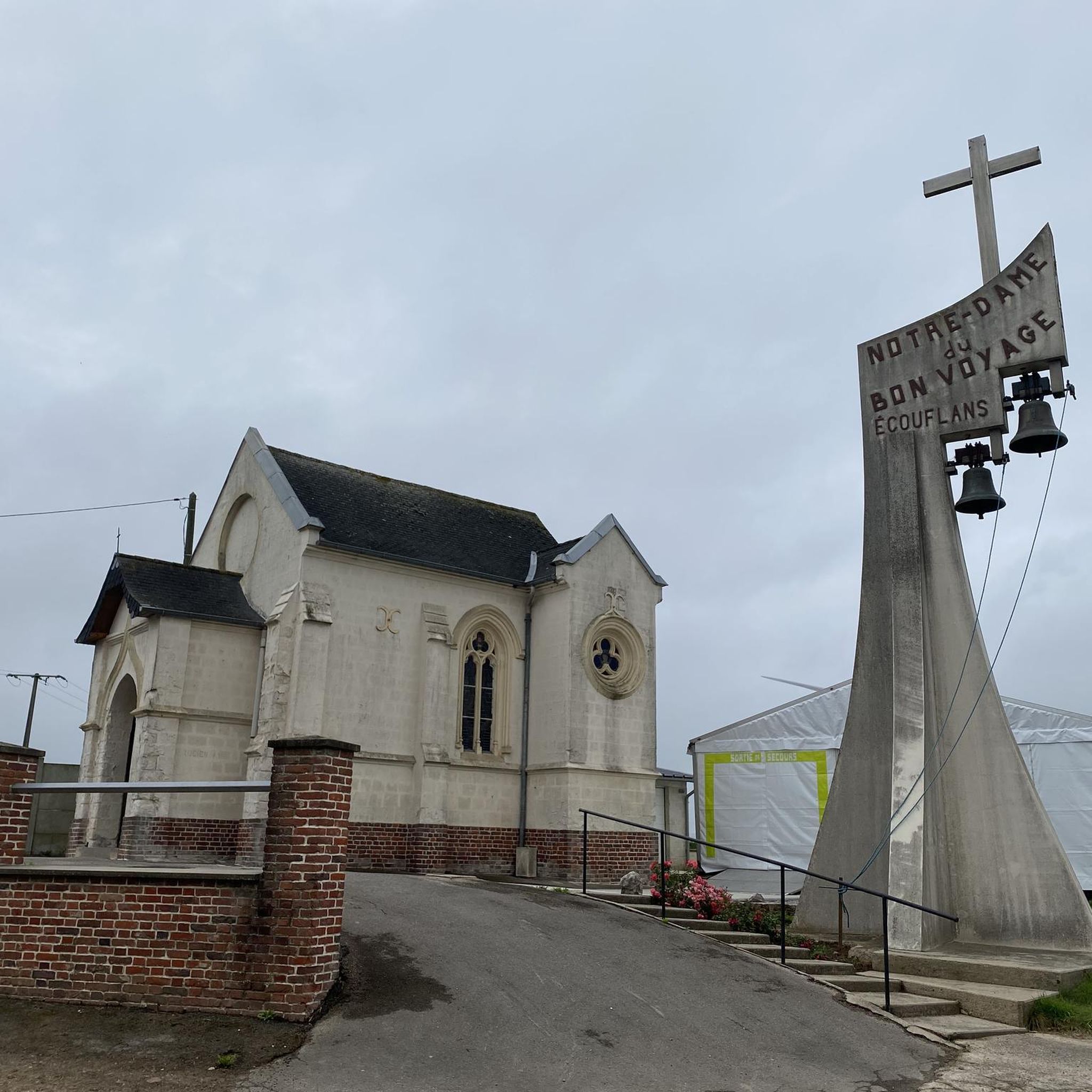
From 1859 onwards, the permanent church was built and in 1860 the tower was built. In 1865 the choir was restored and in 1866 a new sacristy was built. This church was consecrated in 1872. The stained glass windows of this church show the coats of arms of the bishops of the former diocese of Thérouanne. They were installed in 1901-1902.
4
0
The Église St Léger in Cléty is a Catholic church located in the heart of the village, surrounded by a cemetery1. The church is of simple design, with a single nave and a semicircular apse2. It dates from the 16th or early 17th century and has a tower built in 1662 or 16651. The church has a benitier with a basin in brown marble in Louis XV style, a 0.68 m wooden statue from the 16th century of Sainte Anne, the Virgin and the Child Jesus, and a staircase to the top of the tower where a bell can be seen - there used to be two - with a diameter of 1.10 m, cast by Pierre Voulemin in 1678 and donated by Mary, wife of Adrien de Mames (Mametz), lord of Cléty
4
0
Enquin was located on the western edge of the Nord-Pas-de-Calais coal basin, which was mined on a large scale in the 19th century and around 1850 coal was also being sought in Enquin. Initially, the mine had a good yield. The mining company built a town with miners' houses between Enquin and Fléchinelle. In 1905, the name of the municipality was changed from Enquin to Enquin-les-Mines, referring to the mining. However, the mine suffered somewhat from poorer access and less large coal and ultimately proved to be unprofitable. The mine closed definitively in 1928.
9
0
This Spanish mill was built around 1635, on the banks of the Lacquette River. It produced flour until 1938, then milling for livestock. It was bought in 1974 to be transformed into a home. It is built with brick and stone (white limestone). All that remains of the original building is the north gable (17th century), and also a porch. The water wheel is still in place but it no longer turns. The dam forms a pretty waterfall. A turret was added on the river side. It is a very beautiful private home with a beautiful garden in which you can see a stone fountain.
9
0

The Spanish mill of Enquin les Mines is a former water mill which dates from the 17th century and was used to produce flour and animal feed until 1938. It is today a private residence with a beautiful garden and a fountain. You can admire the old brick and stone building, the restored waterwheel and the waterfall created by the dam on the Laquette.
3
0

Spanish style water mill. No longer operational
1
0

Frequently Asked Questions
What historical sites can I explore around Vincly?
The region around Vincly offers several historical attractions. You can visit the Moulin Espagnol d'Enquin les Mines, a 17th-century mill that once produced flour. Other notable sites include the Saint-Léger Church in Cléty, dating from the 16th or early 17th century, and the Saint Martin Church, built from 1859 onwards with distinctive stained glass windows. The area of Enquin les Mines also has a rich history related to coal mining.
Are there any natural attractions or features to see near Vincly?
Yes, a significant natural feature is the Source of the River Lys, where you can observe the initial flow of water that develops into a larger river. The area also features natural landscapes surrounding the historical mill, including a waterfall created by the dam on the Laquette river.
What kind of outdoor activities can I do around Vincly?
The Vincly area is great for various outdoor activities. You can find numerous routes for running, mountain biking, and cycling. For example, there are several running loops from Matringhem and Senlis, MTB trails like the 'Source of the Lys loop from Bomy', and cycling routes such as the 'Source of the Lys Loop'. You can explore these and more on the respective guide pages: Running Trails around Vincly, MTB Trails around Vincly, and Cycling around Vincly.
Are there any churches worth visiting in the Vincly region?
Absolutely. The Saint Martin Church, constructed from 1859, is notable for its stained glass windows depicting the coats of arms of former bishops. Another significant church is the Saint-Léger Church in Cléty, a Catholic church dating from the 16th or early 17th century, featuring a tower built in the 1660s and a 16th-century wooden statue of Sainte Anne.
What do visitors enjoy most about the attractions around Vincly?
Visitors particularly appreciate the historical depth and natural beauty. The Moulin Espagnol d'Enquin les Mines is often highlighted for its historical architecture, restored waterwheel, and the picturesque waterfall it creates. The Source of the River Lys is also a popular spot for its unique natural significance. The komoot community has shared more than 14 photos and given over 19 upvotes to these attractions, indicating their appeal.
Can I find any historical industrial sites in the area?
Yes, the village of Enquin les Mines itself is a historical industrial site. It was once part of the Nord-Pas-de-Calais coal basin, with coal mining operations in the 19th and early 20th centuries. The name 'Enquin-les-Mines' was adopted in 1905 to reflect this mining heritage.
Are there any challenging cycling routes near Vincly?
Yes, for experienced cyclists, there are several difficult routes. The 'Source of the Lys Loop' is a challenging 77 km ride. Other difficult cycling routes include the 'Bomy Castle – Écouflans Church loop from Coyecques' and the 'Nice path with view – Bomy Castle loop from Erny-Saint-Julien'. More details can be found on the Cycling around Vincly guide page.
Where can I see a traditional water mill?
You can visit the Moulin Espagnol d'Enquin les Mines. This former water mill, built around 1635, features an old brick and stone building, a restored waterwheel, and a dam that creates a waterfall on the Laquette river. It's now a private residence but its historical structure and setting are visible.
Are there any moderate difficulty running trails available?
Yes, if you're looking for moderate running trails, you can find options like the 'Running loop from Matringhem' (7.5 km), the 'Running loop from Senlis' (7.8 km), and the 'Motte Féodale loop from Lisbourg' (6.9 km). These are part of the Running Trails around Vincly guide.
What is the significance of the River Lys in this region?
The River Lys is significant as its natural origin point, the Source of the River Lys, is located in the area. Visitors can observe where this important river begins its journey, starting as a small flow of water.
Can I find mountain biking trails of varying difficulty?
Yes, the mountain biking trails around Vincly offer a range of difficulties. You can find moderate routes like the 'Source of the Lys loop from Bomy' (51.8 km) or more difficult options such as the 'Small bridge over the laquette loop from Erny-Saint-Julien' (67.9 km). Explore more on the MTB Trails around Vincly guide page.
What kind of architecture can I expect to see in the churches around Vincly?
The churches in the Vincly region showcase historical architectural styles. For instance, the Saint-Léger Church in Cléty features a simple design with a single nave and semicircular apse, dating from the 16th or early 17th century, with a tower added in the 1660s. The Saint Martin Church, built from 1859, represents later 19th-century ecclesiastical architecture.

Get inspired with the komoot mobile app


Explore more
Still not found the Highlight you’re looking for? See guides of the top attractions in other regions:
