Attractions and Places To See around Richebourg - Top 20
Best attractions and places to see around Richebourg are primarily found in two distinct areas in France: Pas-de-Calais and Burgundy. The Richebourg in Pas-de-Calais is known for its significant World War I memorials and historical sites, offering a place for remembrance. The Richebourg in Burgundy refers to a renowned Grand Cru vineyard, celebrated for its exceptional Pinot Noir wines. A smaller commune also exists in Yvelines.
Best attractions and places to see around Richebourg
- The most popular attractions is Australian…
Last updated: October 9, 2026
Australian Memorial Park Fromelles
Highlight • Monument
Translated by Google •
Tip by

Le Trou Aid Post Cemetery
Highlight • Other
Translated by Google •
Tip by
Sign up now to discover places like this
Get recommendations on the best single tracks, peaks, & plenty of other exciting outdoor places.
Chartreuse Notre-Dame-des-Sept-Douleurs de la Boutillerie
Highlight • Historical Site
Translated by Google •
Tip by

Calvary of Captain Paul Adrian Kennedy
Highlight • Monument
Tip by
The facades of the main square
Highlight • Historical Site
Translated by Google •
Tip by

Sign up for free to discover even more attractions around Richebourg.
Already have an account?
Start today with a free account
Your next adventure awaits.



Tips from the Community

The battle of Fromelles on 19 July 1916 was a bloody initiation for Australian soldiers to warfare on the Western Front. Soldiers of the newly arrived 5th Australian Division, together with the British 61st Division, were ordered to attack strongly fortified German front line positions near the Aubers Ridge in French Flanders. The attack was intended as a feint to hold German reserves from moving south to the Somme where a large Allied offensive had begun on 1 July. The feint was a disastrous failure. Australian and British soldiers assaulted over open ground in broad daylight and under direct observation and heavy fire from the German lines. Over 5,500 Australians became casualties. Almost 2,000 of them were killed in action or died of wounds and some 400 were captured. This is believed to be the greatest loss by a single division in 24 hours during the entire First World War. Some consider Fromelles the most tragic event in Australia’s history. https://www.awm.gov.au/articles/encyclopedia/fromelles
0
0

The Grand'Place de Béthune is the focal point of the city of Buridan. Destroyed in 1918, it was rebuilt and stands as an architectural example. A group of architects led by L.M. Cordonnier gave it its present-day appearance: eclecticism, Art Deco, and neo-regionalism combine to create a diverse ensemble. Town Hall Rebuilt many times, the current Town Hall was designed by architect J. Alleman. Built between 1924 and 1929, the building stands out from the other buildings with its massive form. Its façade embodies the city's titles and glories: the Croix de Guerre and the Legion of Honor, as well as the city's coat of arms. The Town Hall has been listed as a Historic Monument since April 2002. Some of the square's façades, representative of the Art Deco style, are also listed as Historic Monuments. The Cellars of the Grand'Place Vast cellars, boves, and countermine galleries: the underground of Béthune bears witness to the city's intense activity. During the First World War, the cellars served as refuges for the inhabitants of Béthune. Some cellars of private homes are now open to the public. (Notably at No. 42 Grand'Place) (c) https://www.bethune.fr/bethune-brille/patrimoine-historique/la-grand-place-558.html
0
0

Near the front line in 1916, a fierce battle was fought between the British (Australians) and the Germans. To commemorate 'la bataille' and the wounded who were brought back from the battlefield, a monument/statue was erected here.
1
0

Attacking in a southerly direction, Capt Kennedy was shot while leading 'B' Company in the Battle of Aubers Ridge. He and his men had got well beyond the German line which ran roughly east-west where the preserved bunkers are today. His mother later wrote "He had crossed the road and was on the Fromelles side of it when he was shot by a sniper. His men tried to carry him back but he was terribly wounded and after they had carried him back across the road he told them to put him down..." Capt P A Kennedy, 2/Rifle Brigade Killed in action 9 May 1915. No known grave. Remembered on the Ploegsteert Memorial.
8
0
Anecdote: During the battle, Sergeant Simon Fraser heard a wounded soldier cry out, "Don't forget me, cobber!" Despite the danger, Fraser returned to the battlefield to save the man, an act of bravery that was later immortalized in the statue. This event emphasizes the sacrifice and strong bond between soldiers during the horrors of war.
7
0
The Cobbers Australian Memorial is located in the Australian Memorial Park near Fromelles. This memorial commemorates the Australian soldiers who died during the Battle of Fromelles on 19-20 July 1916. The statue, designed by Peter Corlett, shows Sergeant Simon Fraser carrying a wounded comrade out of no man's land. The name "Cobbers" comes from a letter Fraser wrote, describing the bravery and camaraderie of the soldiers.
7
0
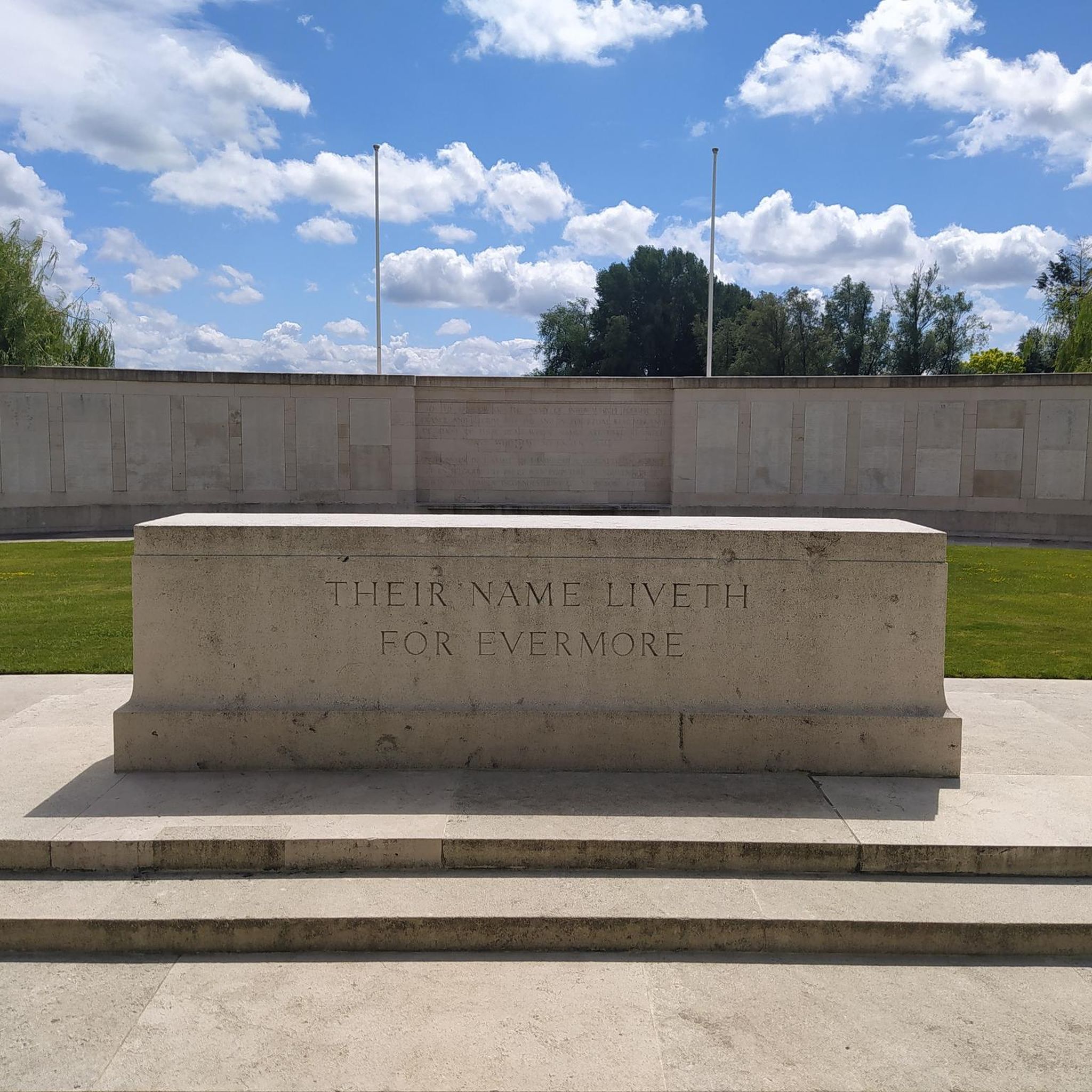
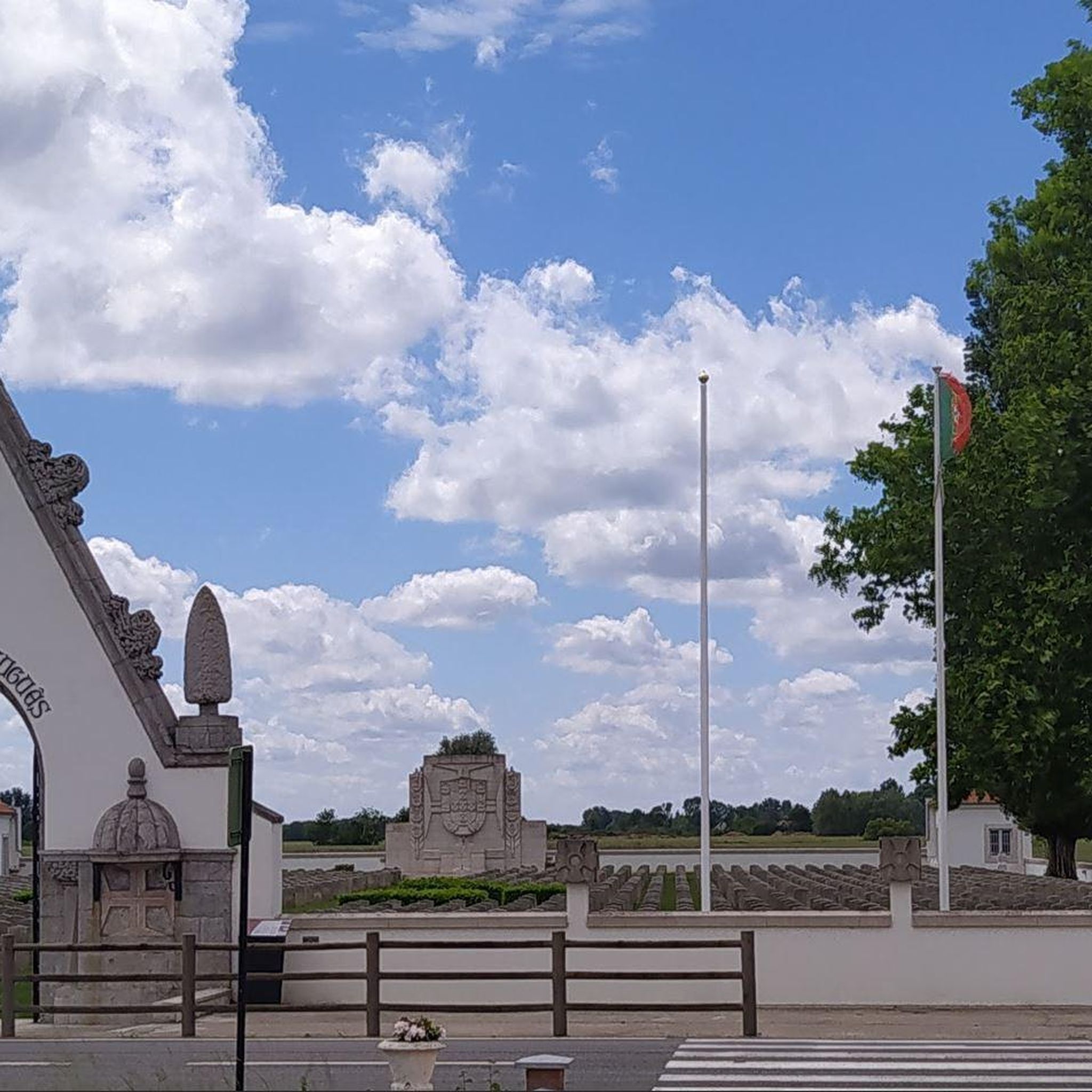
Le Trou Aid Post Cemetery was established in October 1914 by British soldiers of the 19th Infantry Brigade during the First Battle of Ypres. The cemetery initially contained 123 graves, but was expanded after the war. It now contains over 350 graves, of which over 200 are unknown. The cemetery commemorates soldiers who died in a number of battles, including Le Maisnil (October 1914), Aubers Ridge (May 1915), Loos (September–October 1915), and Fromelles (July 1916). A special feature of the cemetery is its rural setting, surrounded by a narrow moat and sheltered by a grove of weeping willows. Visitors reach the cemetery via a footbridge and enter through a delicate cottage-style gate.
7
0

Amidst the quiet roads of western Lille lies this listed cemetery, which is the final resting place of hundreds of Commonwealth soldiers from the First World War.
0
0
Frequently Asked Questions
What historical sites related to World War I can I visit near Richebourg?
Richebourg in Pas-de-Calais is rich in World War I history. You can visit the poignant Australian Memorial Park Fromelles, which commemorates Australian soldiers who died during the Battle of Fromelles. Another significant site is Le Trou Aid Post Cemetery, a military cemetery established by British soldiers in 1914, featuring a serene rural setting.
Are there any other historical or religious landmarks to explore?
Beyond WWI memorials, you can discover the vestiges of the Chartreuse Notre-Dame-des-Sept-Douleurs de la Boutillerie, a historical site founded in 1618. Though largely destroyed, remnants of its surrounding wall remain. Additionally, the Calvary of Captain Paul Adrian Kennedy serves as a moving memorial to a fallen officer from the Battle of Aubers Ridge.
What kind of outdoor activities are available around Richebourg?
The area around Richebourg offers various outdoor activities, particularly cycling and mountain biking. You can find numerous routes, such as the 'Mini Chemin – Between forest and field loop' for cycling or the 'Terril 46 of Verquigneul' for mountain biking. Explore more options in the MTB Trails around Richebourg or Cycling around Richebourg guides.
Are there any family-friendly attractions in the area?
Yes, the Australian Memorial Park Fromelles is considered family-friendly and offers a significant historical experience. While many sites are historical, they provide educational opportunities for families to learn about the region's past.
What is the significance of Richebourg in Burgundy?
While the guide focuses on Richebourg in Pas-de-Calais, it's important to note that 'Richebourg' also refers to a renowned Grand Cru vineyard in Vosne-Romanée, Burgundy. This vineyard is famous worldwide for its exceptional Pinot Noir red wines. If you're interested in wine tourism, the broader Burgundy region offers extensive opportunities for tastings and tours.
What do visitors enjoy most about the attractions around Richebourg?
Visitors particularly appreciate the profound historical significance and the serene, reflective atmosphere of the WWI memorials and cemeteries. Sites like Le Trou Aid Post Cemetery are described as 'very beautiful, very moving military cemetery' by the community, highlighting the emotional impact of these places of remembrance.
Are there any accessible attractions for visitors with mobility needs?
The facades of the main square in Béthune, a nearby city, are noted as wheelchair accessible. While specific accessibility details for all sites in Richebourg are not extensively listed, many memorial parks and cemeteries often have pathways suitable for various visitors.
When is the best time to visit Richebourg?
The Pas-de-Calais region, where the main Richebourg attractions are located, can be visited throughout the year. For outdoor activities like cycling and mountain biking, spring and autumn offer pleasant weather. For historical sites, any time of year allows for a reflective visit, though summer provides longer daylight hours.
Are there any local markets or events in Richebourg (Pas-de-Calais)?
Yes, Richebourg hosts a weekly market every Saturday morning on the church square. Annual festivities include the Feasts of St. John in late June and the Ducasse of Richebourg in September, which features traditional events. A Christmas market, the 'Salon de St Nicolas,' also takes place in early December.
Can I find gravel biking routes near Richebourg?
Yes, there are several gravel biking opportunities. Routes like the 'Canal d'Aire Greenway – Terril 46 of Verquigneul loop' offer diverse terrain for gravel enthusiasts. You can find more detailed routes and information in the Gravel biking around Richebourg guide.
What is the significance of the 'Cobbers' statue at the Australian Memorial Park Fromelles?
The 'Cobbers' statue at the Australian Memorial Park Fromelles depicts Sergeant Simon Fraser carrying a wounded comrade. It symbolizes the bravery and camaraderie of Australian soldiers during the Battle of Fromelles in July 1916. The name 'Cobbers' comes from a letter Fraser wrote, describing the strong bond between soldiers.
Most popular routes around Richebourg
Most popular attractions around Richebourg

Get inspired with the komoot mobile app


Explore more
Still not found the Highlight you’re looking for? See guides of the top attractions in other regions:
