The best road cycling routes around Ribemont-Sur-Ancre
4.5
(38)
1,209
riders
215
rides
Road cycling around Ribemont-sur-Ancre is characterized by its location within the Ancre River Valley, which feeds into the broader Somme River. The terrain is generally flat to gently rolling, with many routes featuring predominantly paved surfaces. This region offers a network of cycling paths suitable for exploring the natural surroundings and historical sites. The landscape includes bucolic scenery with hedgerows and riverside paths, providing accessible road cycling opportunities.
Best road cycling routes around Ribemont-Sur-Ancre
- The most popular road cycling route…
Last updated: October 16, 2026
12
riders
58.4km
02:30
300m
300m
Moderate road ride. Good fitness required. Mostly well-paved surfaces and easy to ride.
11
riders
79.1km
04:00
640m
640m
Moderate road ride. Good fitness required. Mostly well-paved surfaces and easy to ride.

13
riders
55.5km
02:36
350m
350m
Moderate road ride. Good fitness required. Mostly well-paved surfaces and easy to ride.
8
riders
49.8km
02:28
310m
310m
Moderate road ride. Good fitness required. Mostly well-paved surfaces and easy to ride.
4
riders
Moderate road ride. Good fitness required. Mostly well-paved surfaces and easy to ride.
Get access to more routes and recommendations from other explorers.
Already have an account?
Our route recommendations are based on thousands of hikes, rides, and runs completed by other people on komoot.
Start today with a free account
Your next adventure awaits.



Tips from the Community

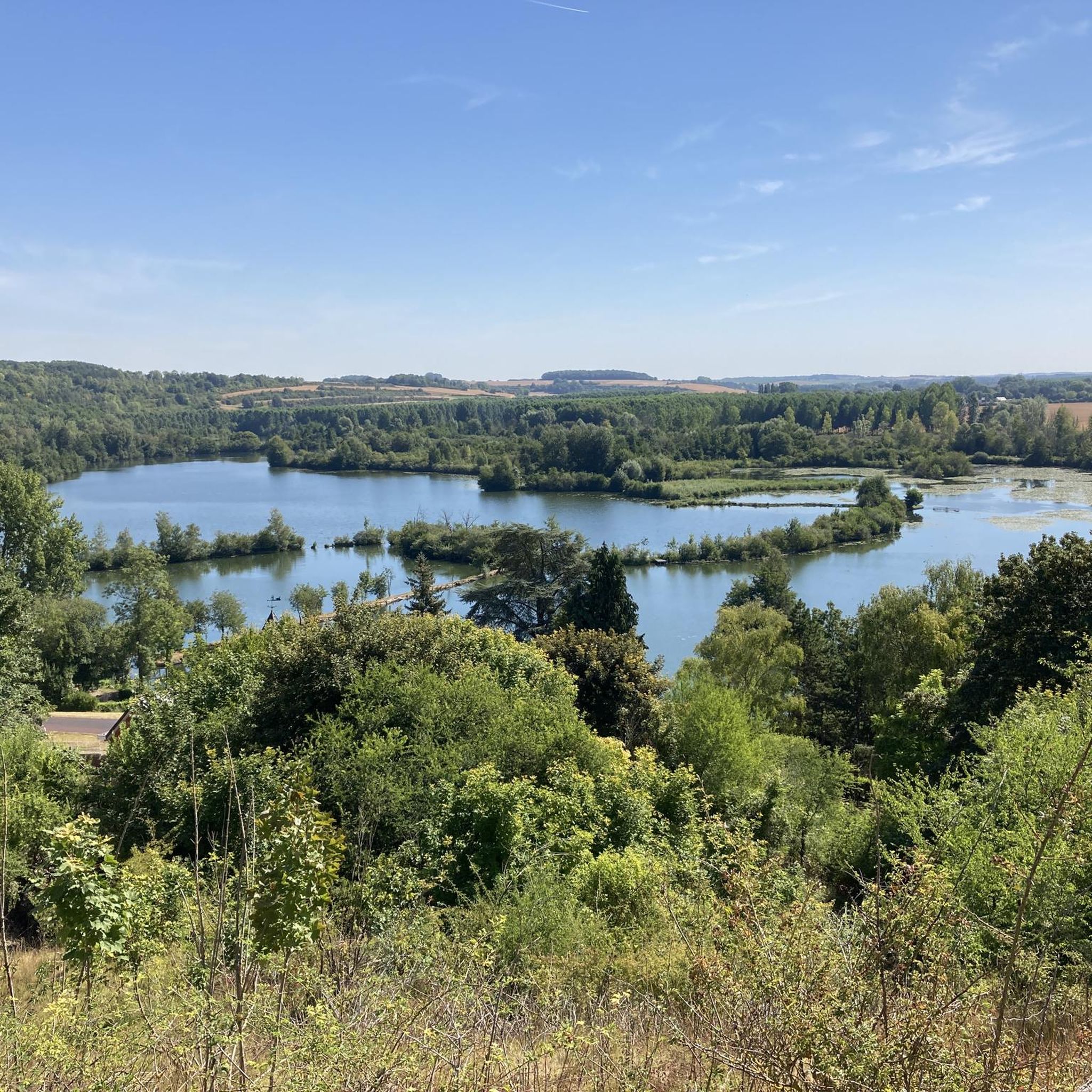
The Étang Saint-Ladre Nature Reserve in Boves is located at the gates of Amiens, in the Avre Valley, a tributary of the Somme. In 1979, it became the first site in Picardy to be classified as a State Nature Reserve. The extraction of peat for heating, during the 18th and 19th centuries, created, in place of meadows, the ponds that today make up the reserve. Other activities such as cattle grazing, bleaching of woven textiles in the surrounding area on the meadows, and mowing of helophytes have also shaped the marsh and its ecological characteristics. The ecological management implemented since the 1990s has enabled the development of a complex mosaic of habitats, among the most representative of alkaline peat systems, allowing the expression of a characteristic, often heritage-worthy, flora and fauna. From the car park, the path enters the reserve and runs along the Avre. On the right, the first ponds and the reed bed appear. You will discover pollarded willows and expanses of wet meadows. These environments were shaped by human activity until the abandonment of these ancestral practices. Each year, the Conservatoire d’espaces naturels carries out work to preserve this endangered heritage. The large, now reopened areas are grazed by Nantais cows to maintain them. Observe the comings and goings of birds and dragonflies during the fine season… Listen to the song of passerines or amphibians. After the meadows, come the large bodies of water with their water lilies, moorhens, and grebes. The path makes a loop on a path along a new series of ponds until returning to the starting point. https://www.cen-hautsdefrance.org/site/rnn-letang-saint-ladre/
0
0
Site managed by the Conservatoire d'Espaces Naturels des Hauts de France (Hauts-de-France Regional Nature Reserve). A wide, stabilized gravel path, open to the public, is maintained and marked with signposts. Since 2012, an audio guide has allowed you to explore the nature reserve with a "virtual guide." QR codes placed along the path allow you to play the audio clips using your smartphone. This audio guide is available in three languages (French, English, and Dutch). https://www.cen-hautsdefrance.org/rnn-l-etang-saint-ladre
0
0
The Etang Saint-Ladre Nature Reserve in Boves is located at the gates of Amiens, in the L’Avre Valley, a tributary of the Somme. In 1979, it became the first site in Picardy to be classified as a State Nature Reserve. The ecological management implemented since the 1990s has made it possible to develop a complex mosaic of habitats among the most representative of alkaline peat systems, allowing the expression of characteristic, often heritage, flora and fauna. Find all the information concerning this site here: https://www.cen-hautsdefrance.org/site/rnn-letang-saint-ladre/
0
0

A beautiful place for a walk in nature. The bike path is perfect.
0
0

Officially part of the Historial de la Grande Guerre, the Thiepval Museum is located near the impressive Thiepval Memorial and offers an in-depth look at the Battle of the Somme of 1916. Opened in 2016 to mark the centenary of this bloody battle, the museum comprises seven thematic areas, each highlighting a different aspect of the war. One of the highlights is the 60-metre-long panoramic comic strip by artist Joe Sacco, which vividly depicts the events of 1 July 1916. Visitors will gain insight not only into the military strategies, but also into the human suffering and the culture of remembrance surrounding the missing of the Somme.
5
0
The Tour d'Ulster, also known as the Helen Tower or Tour de Belfast, is a British war memorial. It was built in 1921 to commemorate the soldiers of the 36th Ulster Division who died during the Battle of the Somme in World War I. The tower is a replica of a neo-Gothic tower in Clandeboye Park, near Belfast, where the 36th Division trained. An interesting anecdote is that the 36th Ulster Division was the first to attack during the Battle of the Somme on 1 July 1916, but suffered heavy losses from both German and British artillery fire. The division lost over 5,500 men in just a few hours. The Tour d'Ulster has a cafeteria where you can enjoy a cup of tea, scones or Tayto chips, a specialty from Northern Ireland. It is a nice place to relax.
6
0
The Cratère de Lochnagar, an impressive war memorial, was created by a huge mine blown up by the British Royal Engineers on 1 July 1916, as part of the Battle of the Somme. The explosion marked the beginning of the battle and left a crater 90 metres in diameter and 25 metres deep. Interestingly, the crater was named after Lochnagar Street, the trench from which the tunnel was dug. The crater is now a preserved site of remembrance and a religious service is held there every year on 1 July in memory of those who died.
8
0
An interesting anecdote is that the monument was inaugurated in 1932 by the Prince of Wales and the French President Albert Lebrun. The monument consists of a series of arches supported by sixteen massive square pillars, on which the names of the missing soldiers are engraved. At the foot of the monument is a Franco-British military cemetery with 600 graves: 300 French and 300 British soldiers.
6
0
Frequently Asked Questions
How many road cycling routes are available around Ribemont-sur-Ancre?
There are over 230 road cycling routes around Ribemont-sur-Ancre, offering a wide range of options for different skill levels. You'll find a good mix of easy, moderate, and some more challenging rides.
What kind of terrain can I expect on road cycling routes in Ribemont-sur-Ancre?
The terrain around Ribemont-sur-Ancre is generally flat to gently rolling, particularly along the Ancre and Somme River valleys. Most routes feature predominantly paved surfaces, making for a smooth riding experience. You'll encounter bucolic landscapes with hedgerows and riverside paths.
Are there any easy road cycling routes suitable for beginners or a relaxed ride?
Yes, there are many easy routes. For example, the Somme Trench Museum loop from Heilly is an easy 28.3 km (17.6 miles) path that is largely paved and perfect for a relaxed ride through historical landscapes. Overall, nearly 50 easy routes are available in the area.
Can I find longer or more challenging road cycling routes in the area?
Absolutely. For those seeking a longer ride, the Ulster Tower – Aviation museum loop from Buire-sur-l'Ancre covers over 80 km (50 miles) with significant elevation gain, offering a moderate challenge. There are over 180 moderate routes and a few difficult ones for experienced cyclists.
What are some notable landmarks or attractions I can see while cycling around Ribemont-sur-Ancre?
Ribemont-sur-Ancre is rich in history. You can explore the renowned Celtic and Gallo-Roman archaeological site, or cycle along the 'Memory Cycle Route' which connects World War I historical sites. Nearby attractions include the Villers-Bretonneux Australian National Memorial and the Lochnagar Crater. The village is also the birthplace of philosopher Nicolas de Condorcet, and his family castle can be visited.
Is the Somme Valley Véloroute accessible from Ribemont-sur-Ancre?
Yes, Ribemont-sur-Ancre is well-connected to the broader Somme River Valley, which features the Somme Valley Véloroute. This extensive network, known for being flat and safe, is ideal for connecting to other green paths and exploring the region. You can find more information about the Véloroute on Somme Tourisme.
What do other road cyclists say about the routes in Ribemont-sur-Ancre?
The road cycling routes around Ribemont-sur-Ancre are highly rated by the komoot community, with an average score of 4.6 stars from over 30 reviews. Cyclists often praise the accessible natural beauty, the well-maintained paved surfaces, and the opportunity to combine cycling with historical exploration.
Are there any family-friendly cycling options in the Ribemont-sur-Ancre area?
Yes, the generally flat terrain and paved surfaces, especially along the river valleys, make many routes suitable for families. The Somme Valley Véloroute, which is accessible from the area, is particularly known for being flat and safe, making it an excellent choice for family outings.
What is the best time of year for road cycling in Ribemont-sur-Ancre?
The region is generally pleasant for cycling from spring through autumn. The bucolic landscapes are particularly beautiful during these seasons. Always check local weather forecasts before heading out, as conditions can vary.
Are there circular road cycling routes available?
Yes, many of the routes around Ribemont-sur-Ancre are designed as loops, allowing you to start and finish in the same location. Examples include the Roadbike loop from Heilly and the Towpath Along the Somme River – Corbie Tours loop from Heilly.
Where can I find parking or public transport options for cyclists in Ribemont-sur-Ancre?
While specific parking areas for cyclists are not detailed, Ribemont-sur-Ancre is a village with local amenities. For public transport, it's advisable to check regional bus or train services for their bicycle transport policies, especially if planning to connect from larger towns in the Hauts-de-France region.
Are there cafes or places to stop for refreshments along the cycling routes?
The routes often pass through or near villages along the Ancre and Somme River valleys, where you can typically find local cafes, bakeries, or small shops for refreshments. It's always a good idea to carry some snacks and water, especially on longer rides.
Most popular routes around Ribemont-Sur-Ancre
Most popular attractions around Ribemont-Sur-Ancre

Get inspired with the komoot mobile app


Explore more
Browse the best Road cycling routes in other regions.
