Attractions and Places To See around Mévoisins - Top 20
Best attractions and places to see around Mévoisins include historical landmarks and natural features in this rural commune of Eure-et-Loir. Situated in the Centre-Val de Loire region, Mévoisins offers insights into its past through ancient churches and washhouses. The area is characterized by the Eure river, providing peaceful settings and a greenway for outdoor activities. Visitors can explore sites reflecting the region's history and natural charm.
Best attractions and places to see around Mévoisins
- The most popular attractions is The…
Last updated: July 2, 2026
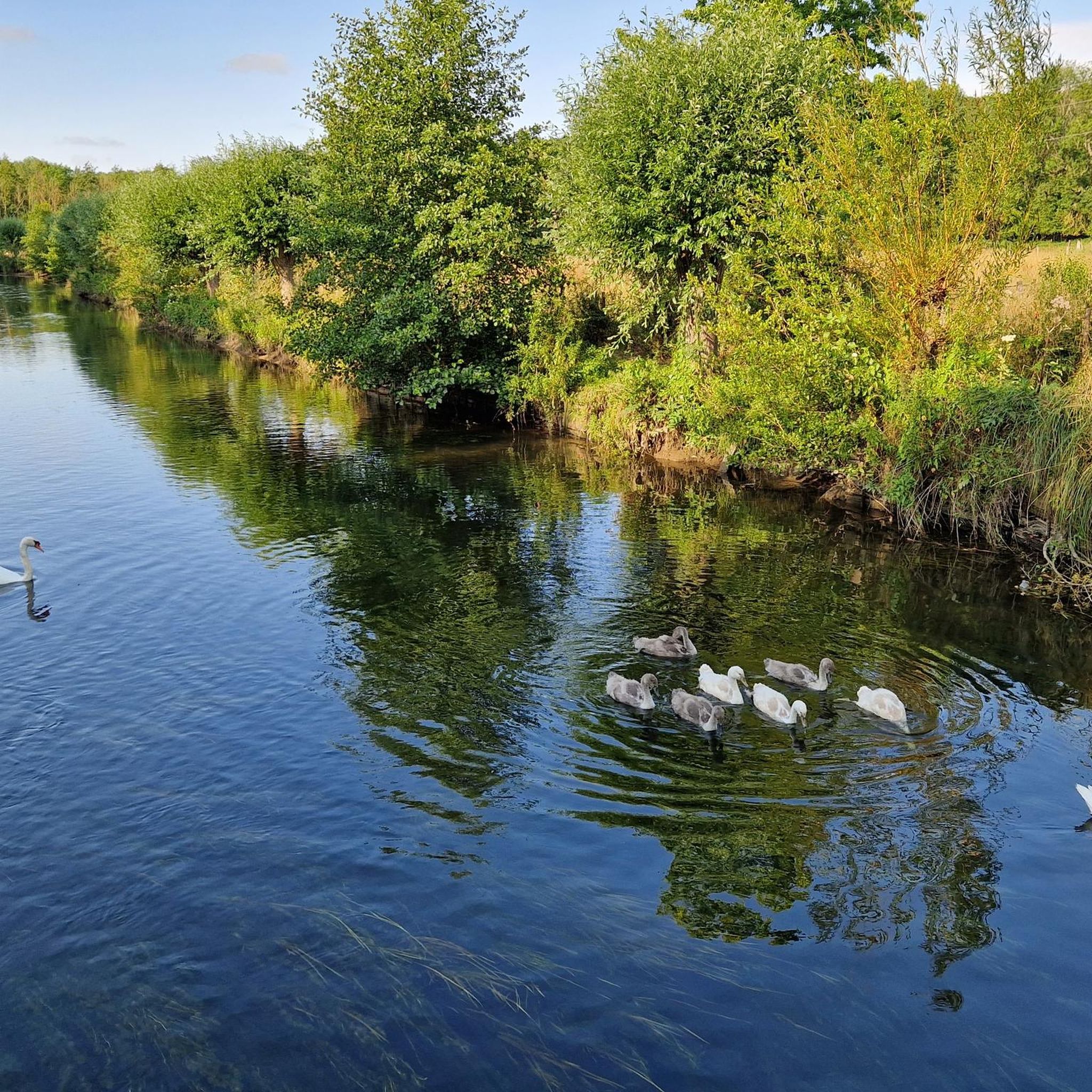
The finish line in Chartres
Highlight (Segment) • Other
Translated by Google •
Tip by

Pont Rouge on the Louis XIV Canal
Highlight • Bridge
Translated by Google •
Tip by
Sign up now to discover places like this
Get recommendations on the best single tracks, peaks, & plenty of other exciting outdoor places.
Sign up for free
Saint-Piat Mill
Highlight • Monument
Translated by Google •
Tip by

Saint Peter's Church, Épernon
Highlight • Religious Site
Translated by Google •
Tip by

Maintenon Castle
Highlight • Castle
Translated by Google •
Tip by
Sign up for free to discover even more attractions around Mévoisins.
Sign up for free
Already have an account?
Start today with a free account
Your next adventure awaits.
Login or Signup

Tips from the Community

According to tradition, the church choir covers the remains of an older building, possibly dating back to the 6th century, which was built to house the saint's body. According to current knowledge, the commune of Saint-Piat (Sanctus Piatus in Latin) officially appeared in 1087, mentioned in a charter of the Nottonville Priory (Eure-et-Loir), on which it depended. The current building was rebuilt during the time of Francis I, as suggested by the date 1535 engraved on two buttresses of the apse and the date 1542 engraved on a piece of wood from the vault. This is according to a study by the SAEL (Eure-et-Loir Archaeological Society). The three-sided apses, the dripstone towers (horizontal members projecting from a wall), and the sculpted roof structures are a testament to the importance of the reconstructions carried out in the department during the 16th century. The church of Saint-Piat is one of them. While the church has not been officially recognized, it nevertheless contains objects that have attracted attention both for their antiquity and quality, but not always for good reason. Their artistic value, far from attracting only religious or aesthetic interest, has also aroused a covetousness that, unfortunately, remains for some of them. Fortunately, those still in place are carefully cared for and offer the curious a story to discover, a beauty to slowly ponder as they progress toward the choir.
0
0

more road and fields than forest areas but still nice
0
0

Too bad it is never indicated the type of bike recommended.
0
0

Pleasant 🤗 Nature 🌳🌿 🏞️and especially no 🚗
0
1

The Moulin de Saint-Piat is a water mill located on the Eure and dating from the 11th century where it was once used for the production of flour and the extraction of oil. You can admire the architecture of the mill, which was extended in 1865, and enjoy the view of the river and the nearby church. The mill is also a good place for birdwatching, as you may be able to see herons, kingfishers and ducks along the water.
4
0
The Château de Maintenon is a castle that was once the residence of Madame de Maintenon, the second wife of Louis XIV. You can explore the elegant halls and gardens of the castle, as well as the impressive aqueduct that was built to supply water to the Palace of Versailles. The castle is open from Tuesday to Sunday, from 10:30 a.m. to 6:30 p.m. The entrance price is 9 euros for adults and 6 euros for children. You can also benefit from a guided tour or an audio guide at an additional cost. The castle is surrounded by a beautiful park, where you can stroll along the Eure and admire the view of the aqueduct and the castle.
3
0

The church in Epernon was dedicated to Saint Peter (SAINT-PIERRE). Simon, nicknamed Peter (rock), was a fisherman on the Sea of Genesareth when he – together with his brother Andrew – was called by Jesus Christ to be the "fisher of men". According to Catholic understanding, he is the supreme apostle, and the two millennia-long line of popes – currently Francis – are his successors. On statues and paintings Peter is almost always depicted with two keys in his hand, this attribute refers to the Bible passage in Matthew: “I will give you the keys of the kingdom of heaven; what you bind on earth will be bound in heaven, and what you loose on earth will be loosed in heaven” (chapter 16, verse 19). Peter is also known along with Paul as the "Princes of the Apostles", their common feast day in the calendar of saints is June 29th.
1
0

Pretty mill to contemplate for a refreshing break along the Eure. Its construction is estimated at the 11th century, but its existence is attested only at the end of the 15th century.
1
0
Frequently Asked Questions
What historical landmarks can I explore in Mévoisins?
Mévoisins offers several historical landmarks. You can visit Pont Rouge on the Louis XIV Canal, an original 17th-century bridge built as part of the project to supply water to Versailles. Other notable sites include L'Arbre de la Liberté, a linden tree planted in 1789 symbolizing the French Revolution, and L'Église Saint-Hilaire, an ancient church with Romanesque elements. The village also features Le Lavoir, an old washhouse on the Eure river, and the preserved home of 18th-century playwright Jean-François Collin d'Harleville.
Are there any ancient or megalithic sites near Mévoisins?
Yes, Mévoisins connects to ancient history through the Saint-Piat Mill, which dates back to the 11th century. Additionally, the village is home to Le Menhir de l'an 2000, an impressive stone erected to commemorate the new century and honor the region's first farmers from 6,000 years ago. Just outside the village, you can find the Dolmen de "La Pierre Fritte", a megalithic monument linking Mévoisins to the ancient past.
What natural features can I enjoy around Mévoisins?
The banks of the Eure river provide a peaceful setting, especially near the old washhouse. For outdoor enthusiasts, a tranquil greenway, known as The finish line in Chartres, follows the Eure from Saint Prest to Luisant, offering a serene path for walking or cycling. Mévoisins is also part of a Zone Naturelle d'Intérêt Écologique, Faunistique et Floristique (ZNIEFF), highlighting its ecological significance.
What outdoor activities are available near Mévoisins?
You can enjoy various outdoor activities, particularly cycling and mountain biking. There are numerous routes for gravel biking, cycling, and MTB trails that explore the local landscapes, including paths along the Eure river and near historical sites like the Louis XIV Canal and Saint-Piat Mill.
Are there family-friendly attractions in the Mévoisins area?
Yes, several attractions are suitable for families. Pont Rouge on the Louis XIV Canal and Saint-Piat Mill are both listed as family-friendly historical sites. Additionally, the greenway along the Eure river, known as The finish line in Chartres, provides a peaceful and accessible route for family walks or bike rides.
What do visitors enjoy most about the greenway near Mévoisins?
Visitors particularly appreciate the tranquility and preserved nature of the greenway, especially the section known as The finish line in Chartres. It offers a peaceful route along the Eure river, described as a 'moment of tranquility not to be missed' and a 'very pleasant shared route' for walking or cycling, even close to Chartres.
Can I visit a castle near Mévoisins?
Yes, Maintenon Castle is a significant historical site nearby. It was once the residence of Madame de Maintenon, the second wife of Louis XIV. You can explore its elegant halls, gardens, and the impressive aqueduct built to supply water to the Palace of Versailles. The castle is open Tuesday to Sunday.
What is the significance of the Pont Rouge on the Louis XIV Canal?
The Pont Rouge is a historical bridge originally built in the late 17th century (1685-1686) under Louis XIV's orders. It was an integral part of his ambitious project to channel water from the Eure river to the Palace of Versailles. Until 1838, it served as the main entry point into Maintenon, and its name is often attributed to the color of the soldiers' uniforms who guarded it.
What is the best time to visit Mévoisins for outdoor activities?
While specific seasonal data isn't provided, the region's natural features like the Eure river and greenways suggest that spring, summer, and early autumn would be ideal for outdoor activities such as cycling, walking, and exploring historical sites when the weather is mild and pleasant.
Are there any religious buildings of interest near Mévoisins?
Yes, in addition to Mévoisins' own L'Église Saint-Hilaire, you can visit Saint Peter's Church in Épernon. This church, built in the 15th century on the site of a Romanesque predecessor, is a significant historical monument in France, known for its architectural history and dedication to Saint Peter.
What kind of architecture can I expect to see in Mévoisins?
Mévoisins showcases traditional rural French architecture. Many ancient houses are old farmhouses constructed with cob and flint rubble walls. The L'Église Saint-Hilaire features Romanesque elements, with parts of its nave dating back to the 11th-12th centuries, and the Saint-Piat Mill also offers views of its historical architecture, extended in 1865.
Most popular routes around Mévoisins

Get inspired with the komoot mobile app


Explore more
Still not found the Highlight you’re looking for? See guides of the top attractions in other regions:
