The best cycling routes around Ladaux
4.5
(130)
879
riders
69
rides
Touring cycling routes around Ladaux are set within the picturesque Entre-deux-Mers area of Gironde, France, known for its rolling countryside and extensive vineyards. The region features a network of well-maintained paths, including sections of the Roger Lapébie cycle path, which often follows old railway lines, providing generally flat and accessible routes. The landscape is characterized by gentle hills, river valleys, and historic villages, offering varied terrain suitable for touring cyclists.
Best touring cycling routes around Ladaux
- The most popular touring…
Last updated: June 29, 2026
4.7
(42)
264
riders
49.3km
02:54
340m
340m
Moderate bike ride. Good fitness required. Mostly paved surfaces. Suitable for all skill levels.
4.5
(19)
105
riders
84.2km
05:06
640m
630m
Hard bike ride. Very good fitness required. Mostly paved surfaces. Suitable for all skill levels.

Sign up for free
3.0
(1)
11
riders
12.9km
00:48
130m
130m
Easy bike ride. Great for any fitness level. Mostly paved surfaces. Suitable for all skill levels.
8
riders
20.7km
01:30
300m
300m
Moderate bike ride. Good fitness required. Mostly paved surfaces. Suitable for all skill levels.
11
riders
63.9km
03:50
480m
480m
Hard bike ride. Very good fitness required. Mostly paved surfaces. Suitable for all skill levels.
Get access to more routes and recommendations from other explorers.
Sign up for free
Already have an account?
Our route recommendations are based on thousands of hikes, rides, and runs completed by other people on komoot.
Start today with a free account
Your next adventure awaits.
Login or Signup


Tips from the Community

Lively small market town, with an arcaded market square
0
0

Majestic in its size and appearance, the Loubens mill is one of the most remarkable in the Entre-deux-Mers region. Its installation seems to date back to the 11th century. A square, medieval tower, built on an island, bears similarities to the Bagas mill located 2 km downstream. It includes three sets of millstones still in place. However, it is not a fortified building; it is a weir mill. To the north construction, a bridge with a double row of arches was added in the 18th century, containing two more pairs of millstones and a fulling mill (a machine used not for grinding grain, but for fulling textiles. These mills were often called "beating mills"). This southern part of the mill earned it the name "little Chenonceau". The mill has been classified as a Historic Monument since 2000.
0
0
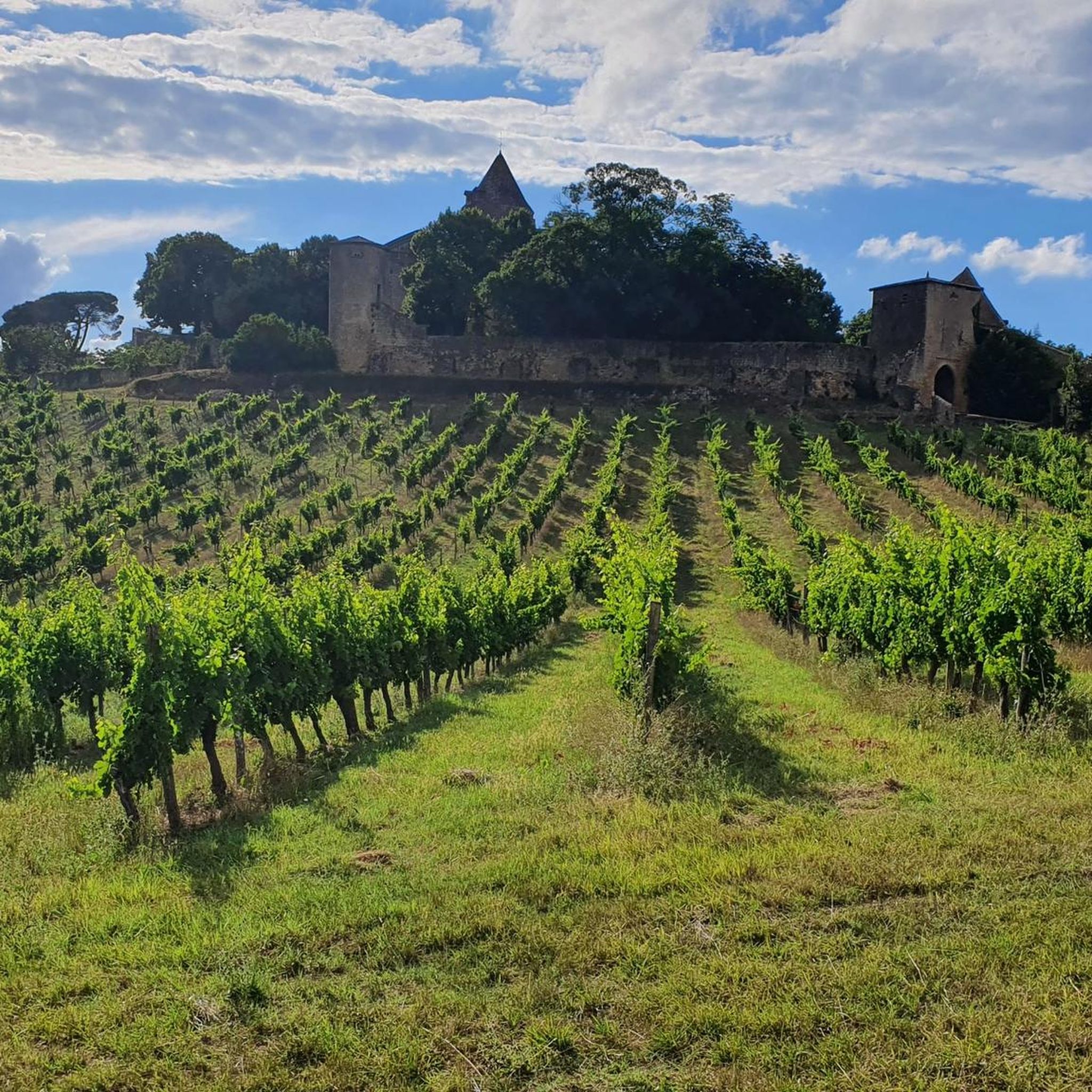
Built by John Lackland, Duke of Normandy (1199-1204), Duke of Aquitaine (1199-1216) and King of England from 1199 to 1216, the castle was built on a rock occupied since antiquity. Witness to the Hundred Years' War, the castle of Rauzan was taken twice by the French, including by Bertrand Du Guesclin in 1377. Classified as a historic monument in 1862, it was only revived in people's minds from the 1970s onwards when the municipality of Rauzan, owner since 1900, and some enthusiasts of medieval architecture undertook clearing and restoration work. (sources Wikipedia)
1
0

Beautiful passage with a train relic recalling the history of the place, formerly a railway.
0
0

At the Creon station, several information panels about the history of the railway line are offered, and wagons and engines that operated on this line can be seen.
0
0
Beautiful view of the ivy-covered mill.
1
0

Sauveterre-de-Guyenne is a bastide. A bastide is a type of French medieval town, founded in the 13th and 14th centuries, primarily in southwestern France. A bastide is characterized by a rectangular street pattern that divides the town into eight blocks around a central market square. The Treaty of Paris (1229) prohibited the building of walls around new towns. Many bastides were provided with some form of fortification, such as gates, after their founding to provide some protection during turbulent times. Most bastides had only local significance and did not develop into large towns. As a result, many bastides, such as that of Sauveterre-de-Guyenne, have been preserved in their original state.
1
0
Stay in a modest guest house, with a very friendly welcome at Les Chambres de l'Archange. Dinner is also available. Booking in advance is recommended, as it's also possible on Sundays.
0
0
Frequently Asked Questions
How many touring cycling routes are available around Ladaux?
There are over 55 touring cycling routes around Ladaux, offering a wide range of options for exploring the picturesque Entre-deux-Mers area. These routes cater to various preferences, from leisurely rides to more challenging excursions.
What kind of terrain can I expect on touring cycling routes near Ladaux, and are there options for different skill levels?
The terrain around Ladaux is characterized by gentle hills, tranquil river valleys, and extensive vineyard landscapes. Many routes follow former railway lines, like sections of the Roger Lapébie cycle path, providing generally flat and accessible paths. We offer a diverse selection of routes: 15 are rated easy, 34 are moderate, and 10 are difficult, ensuring options for all skill levels.
Are there family-friendly touring cycling routes suitable for all ages around Ladaux?
Yes, Ladaux and the surrounding Entre-deux-Mers region are excellent for family cycling. Many routes, particularly those utilizing former railway lines like the Roger Lapébie cycle path, are generally flat and traffic-free, making them ideal for families. You'll find 15 easy routes that are perfect for a relaxed outing with children.
Can I find circular touring cycling routes around Ladaux?
Absolutely. Many of the touring cycling routes around Ladaux are designed as loops, allowing you to start and finish at the same point. Examples include the popular Sunday Walk loop from Capian and the more challenging Branne/Dordogne – Cadillac Gate loop from Bellebat.
What historical sites or landmarks can I see along the touring cycling routes?
The region is rich in history and culture. A notable route, the Espiet tunnel – La Sauve-Majeure Abbey loop from Targon, takes you past the impressive Espiet tunnel and the UNESCO World Heritage site of La Sauve-Majeure Abbey. You can also explore routes near Château de la Benauge, offering a glimpse into the area's medieval past.
What do other touring cyclists enjoy most about cycling in Ladaux?
The touring cycling routes in Ladaux are highly rated by the komoot community, with an average score of 4.6 stars from over 70 reviews. Cyclists frequently praise the picturesque vineyard landscapes, the tranquility of the river valleys, and the well-maintained paths, especially those converted from old railway lines like the Roger Lapébie Cycle Path.
Are there any long-distance touring cycling options accessible from Ladaux?
While Ladaux itself offers many local routes, its strategic location in Nouvelle-Aquitaine provides access to significant long-distance cycling networks. You can connect to routes like the Roger Lapébie cycle path, which is part of a broader network, or explore sections of the Canal des 2 Mers à Vélo, offering tranquil journeys through southwestern France.
What is the best time of year for touring cycling around Ladaux?
The Nouvelle-Aquitaine region generally offers pleasant cycling conditions from spring through autumn. Spring brings blooming vineyards and mild temperatures, while autumn provides stunning colors and comfortable weather for riding through the wine country. Summer can be warm, but routes through forests or along waterways offer shade.
Are there opportunities for wine tasting or vineyard visits along the cycling routes?
Absolutely. Ladaux is situated in the heart of a renowned wine-producing area, the Entre-deux-Mers. Many touring cycling routes wind through vast vineyards, offering cyclists the chance to stop at local châteaux for wine tastings and to experience the region's viticultural heritage firsthand.
Where can I find parking for touring cycling routes near Ladaux?
While specific parking details vary by route, many villages and towns in the Entre-deux-Mers region, which serve as starting points for routes, offer public parking facilities. For example, routes starting from Capian or Targon would typically have parking available in those communes.
What are some of the natural features I might encounter while cycling around Ladaux?
Beyond the vineyards, you'll cycle through diverse natural environments. The region features significant forest areas, offering shaded routes, and is shaped by the Garonne and Dordogne rivers. Cycling alongside these waterways provides serene views and opportunities to see small ports and fishing huts, especially as they merge to form the Gironde Estuary.
Are there any particularly challenging touring cycling routes for experienced riders?
Yes, for experienced touring cyclists seeking a challenge, there are 10 difficult routes available. An example is the Branne/Dordogne – Cadillac Gate loop from Bellebat, which covers over 40 miles and traverses diverse terrain, including sections along the Dordogne River and through varied vineyard landscapes.
Most popular attractions around Ladaux

Get inspired with the komoot mobile app


Explore more
Browse the best Cycling routes in other regions.
