Attractions and Places To See around Colincamps - Top 20
Attractions and places to see around Colincamps are primarily concentrated in the surrounding Somme department of France. This region is historically significant, particularly for its numerous World War I sites, memorials, and cemeteries. Visitors can explore preserved battlefields and monuments that commemorate the events of the Great War. The area also features cultural sites and natural landscapes within a short driving distance.
Best attractions and places to see around Colincamps
- The most popular attractions is Ulster Tower, a British…
Last updated: June 29, 2026
Newfoundland Memorial
Highlight • Other
Translated by Google •
Tip by

Thiepval Memorial
Highlight • Viewpoint
Translated by Google •
Tip by

Sign up now to discover places like this
Get recommendations on the best single tracks, peaks, & plenty of other exciting outdoor places.
Sign up for free
Scottish Divisions Memorial at the Sunken Lane
Highlight • Other
Translated by Google •
Tip by

Ulster Tower
Highlight • Other
Translated by Google •
Tip by
aveluy nymph
Highlight • Other
Translated by Google •
Tip by
Sign up for free to discover even more attractions around Colincamps.
Sign up for free
Already have an account?
Start today with a free account
Your next adventure awaits.
Login or Signup
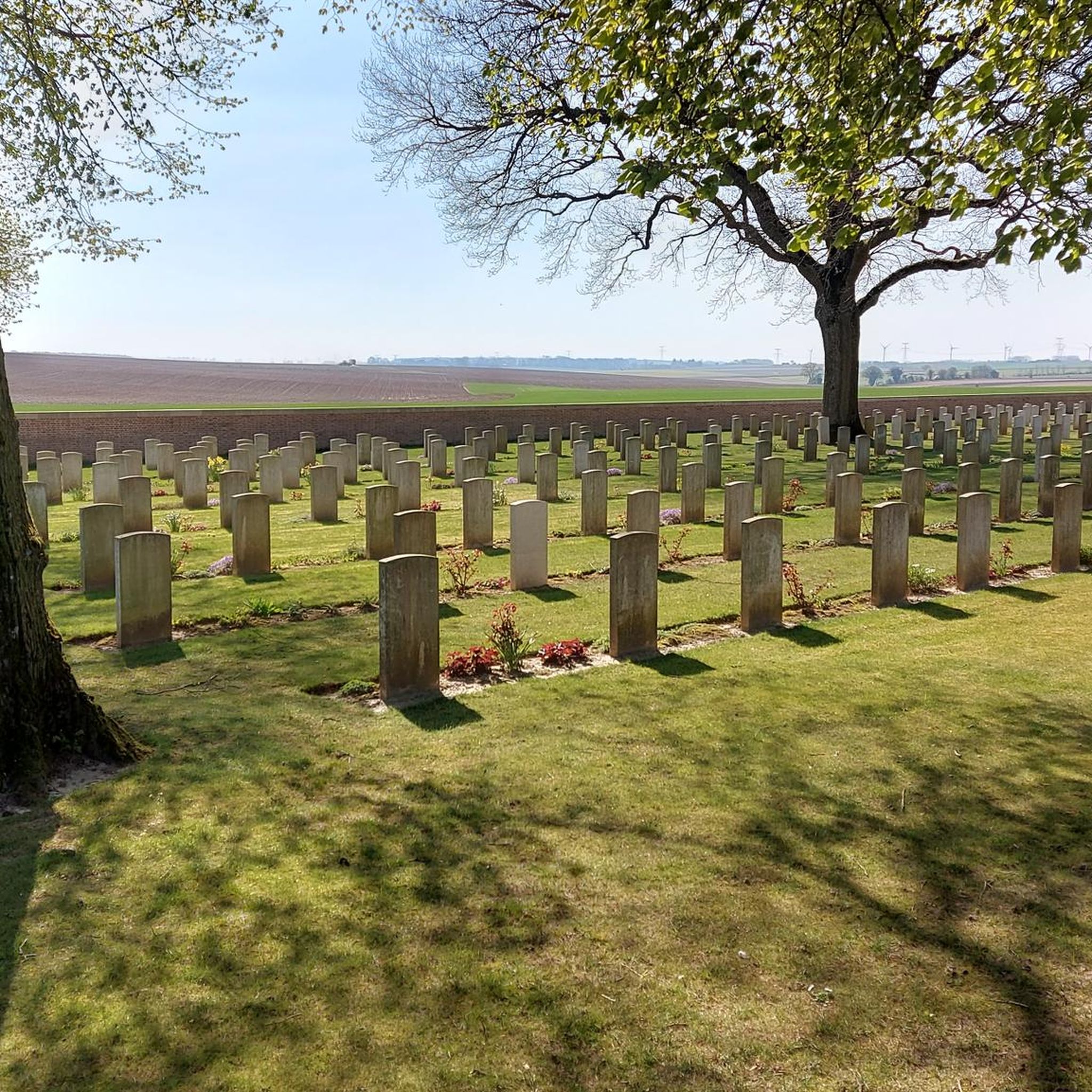


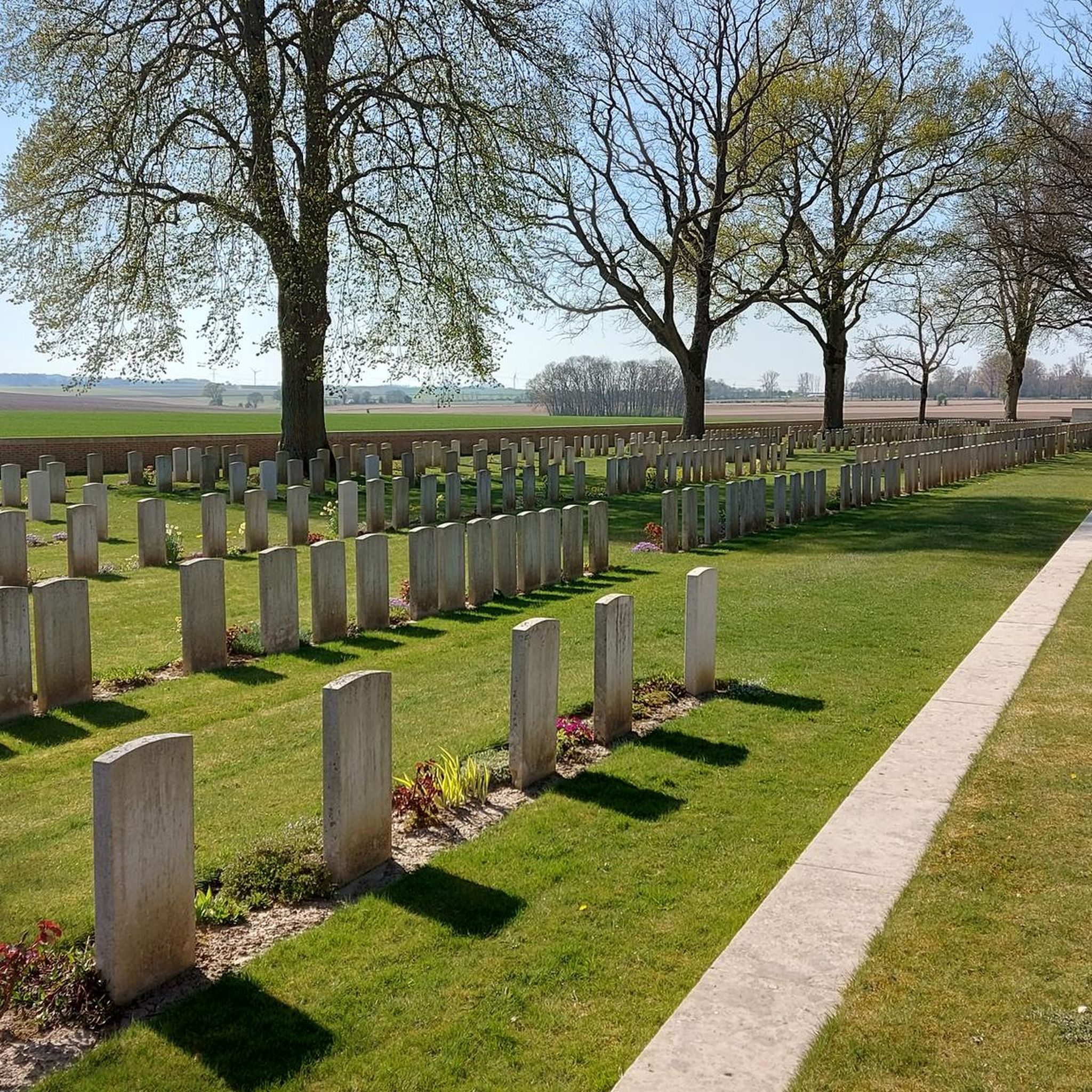


Tips from the Community

Officially part of the Historial de la Grande Guerre, the Thiepval Museum is located near the impressive Thiepval Memorial and offers an in-depth look at the Battle of the Somme of 1916. Opened in 2016 to mark the centenary of this bloody battle, the museum comprises seven thematic areas, each highlighting a different aspect of the war. One of the highlights is the 60-metre-long panoramic comic strip by artist Joe Sacco, which vividly depicts the events of 1 July 1916. Visitors will gain insight not only into the military strategies, but also into the human suffering and the culture of remembrance surrounding the missing of the Somme.
5
0
The Tour d'Ulster, also known as the Helen Tower or Tour de Belfast, is a British war memorial. It was built in 1921 to commemorate the soldiers of the 36th Ulster Division who died during the Battle of the Somme in World War I. The tower is a replica of a neo-Gothic tower in Clandeboye Park, near Belfast, where the 36th Division trained. An interesting anecdote is that the 36th Ulster Division was the first to attack during the Battle of the Somme on 1 July 1916, but suffered heavy losses from both German and British artillery fire. The division lost over 5,500 men in just a few hours. The Tour d'Ulster has a cafeteria where you can enjoy a cup of tea, scones or Tayto chips, a specialty from Northern Ireland. It is a nice place to relax.
6
0
The Nymphe d'Aveluy is a historical monument in Aveluy, France, commemorating the artwork created by French soldiers during World War I. During periods of rest between battles, soldiers created sculptures and engravings, including the famous "Nymphe d'Aveluy". These works were often photographed and sent to their families on postcards.
1
0
An interesting anecdote is that the monument was inaugurated in 1932 by the Prince of Wales and the French President Albert Lebrun. The monument consists of a series of arches supported by sixteen massive square pillars, on which the names of the missing soldiers are engraved. At the foot of the monument is a Franco-British military cemetery with 600 graves: 300 French and 300 British soldiers.
6
0
The Parc Mémorial de Thiepval is an impressive war memorial that commemorates the 72,337 missing British and South African soldiers who died during the Battle of the Somme in World War I. Designed by Sir Edwin Lutyens, the memorial is considered one of the greatest British monumental works of the twentieth century. The park also includes a visitor centre, opened in 2004, and the Jardins de la Paix, where visitors can reflect and enjoy the serene surroundings. Every year on 1 July, remembrance ceremonies are held to honour the victims of the Battle of the Somme.
8
0
Tour d'Ulster has a cafeteria where you can enjoy a cup of tea, scones or Tayto chips, a specialty from Northern Ireland. It is a nice place to relax for a while.
1
0
The Tour d'Ulster, also known as the Helen Tower or Tour de Belfast, is a British war memorial. It was built in 1921 to commemorate the soldiers of the 36th Ulster Division who died during the Battle of the Somme in World War I. The tower is a replica of a neo-Gothic tower in Clandeboye Park, near Belfast, where the 36th Division trained. An interesting anecdote is that the 36th Ulster Division was the first to attack during the Battle of the Somme on 1 July 1916, but suffered heavy casualties from both German and British artillery fire. The division lost over 5,500 men in just a few hours.
1
0

The monument to the 8th Argyll and Sutherland Highlanders is a Celtic cross symbolically erected on the embankment of a sunken road, at the spot where the men of this regiment rushed to capture the village of Beaumont-Hamel on November 13, 1916, at the end of the Battle of the Somme. First, on July 1, when it was located in no man's land, exactly equidistant from the British and German trenches, and served as a refuge for so many soldiers wounded during the fighting; then, five days before the end of that same battle, when the village of Beaumont-Hamel was finally captured on November 13, by the men of the 8th Argyll and Sutherland Highlanders, who had rushed from that position. The 8th Argyll and Sutherland Highlanders was a Scottish regiment that fought on several fronts. A reading of the inscriptions engraved on the different sides of the base of this monument tells us this. Thus, this cross is dedicated to the glory of the battalion's glorious dead and to the memory of those who will never return. Its combat losses, throughout the war, amounted to 51 officers and 831 men and non-commissioned officers, including 105 wounded officers and 2,527 men and non-commissioned officers. Finally, a Celtic inscription reveals "it is good to have friends on the day of battle." Mobilized from August 4, 1914, to November 12, 1919, a period of five years and 100 days, the regiment fought from May 1, 1915, to November 11, 1918, in Belgium and France. Until 1918, the 8th Argyll and Sutherland Highlanders belonged to the 51st Division; In 1915, it fought at Richebourg, Festubert and on Thiepval Ridge, which was to leave a sad memory for the British on 1 July 1916 (this is where the memorial to the missing now stands); in 1916, it fought at the Labyrinth, Vimy Ridge, Fourcaux Wood (High Wood), Beaumont-Hamel (there, therefore) and Courcelette; in 1917, it was Roclincourt, Arras, Roeux, Ypres and Cambrai. In 1918, the 8th Argyll and Sutherland Highlanders fought as part of the 61st Division at Saint-Quentin, Holnon Wood, Villéveque, Nesle, Villers-Bretonneux and on the Lys; but also within the 15th division which distinguished itself at Soissons, at Buzancy and in the final advance which would lead to the armistice
0
0
Frequently Asked Questions
What historical sites related to World War I can I visit near Colincamps?
The area around Colincamps is rich with WWI remembrance sites. You can visit the impressive Thiepval Memorial, which commemorates 72,337 missing British and South African soldiers. Another significant site is the Newfoundland Memorial, a park with preserved trenches and memorials honoring the Royal Newfoundland Regiment. The Ulster Tower also stands as a memorial to the 36th Ulster Division. Other notable sites include Sucrerie Military Cemetery and Euston Road Cemetery in Colincamps, and the Lochnagar Crater.
Are there any cultural attractions or museums near Colincamps?
Yes, for cultural insights, the Somme 1916 Museum / Thiepval Museum, officially part of the Historial de la Grande Guerre, offers an in-depth look at the Battle of the Somme. Further afield, you can explore the magnificent Amiens Cathedral, France's largest Gothic cathedral, or visit the town of Arras, known for its belfry and baroque houses, and the Carrière Wellington tunnels.
What natural features or gardens can I explore in the region?
While Colincamps itself is a small village, the surrounding Somme department offers several natural escapes. You can visit the Parc du château de Sericourt / Les Jardins de Sericourt, or Les Jardins de Maizicourt for beautiful garden experiences. Natural reserves like Réserve naturelle de l'Étang Saint-Ladre and Réserve naturelle régionale du Marais de Wagnonville are also within driving distance, as is the Forêt d'Hesdin.
What kind of outdoor activities can I do near Colincamps?
The region around Colincamps is suitable for various outdoor activities. You can find numerous running trails, cycling routes, and hiking paths. For specific routes, explore the options listed in the Running Trails around Colincamps, Cycling around Colincamps, and Hiking around Colincamps guides.
Are there family-friendly attractions around Colincamps?
Many of the historical sites, while solemn, can be visited by families. The Thiepval Memorial includes a visitor center and the Jardins de la Paix, offering space for reflection. The Newfoundland Memorial park, with its preserved trenches, provides an engaging historical experience for older children and adults.
What do visitors enjoy most about the attractions near Colincamps?
Visitors particularly appreciate the profound historical significance of the WWI sites. For instance, at the Newfoundland Memorial, the preserved trenches and detailed documentation allow for a precise understanding of the events. At the Thiepval Memorial, the sheer scale of the monument and the in-depth museum exhibits are highly valued for their ability to convey the human impact of the Battle of the Somme.
Are there easy hiking trails for beginners near Colincamps?
Yes, there are several easy hiking trails suitable for beginners. For example, the 'Caribou Trail' is an easy 5.4 km route, and the 'Newfoundland Memorial Park loop from Beaumont-Hamel' is an easy 2 km walk. You can find more options in the Hiking around Colincamps guide.
What is the best time to visit the attractions around Colincamps?
The historical sites and memorials around Colincamps are generally accessible year-round. However, for outdoor activities like hiking and cycling, the spring and autumn months offer pleasant weather. Summer can also be a good time, though it might be busier. Always check local opening hours for specific attractions before your visit.
Can I find any unique historical monuments or hidden gems in the Colincamps region?
Beyond the major WWI memorials, you can discover unique historical elements like the Nymphe d'Aveluy, a monument commemorating artwork created by French soldiers during WWI. The Scottish Divisions Memorial at the Sunken Lane also offers a poignant and specific historical insight into the Battle of the Somme.
What are some of the belfries and heritage sites in nearby towns?
The region features several recognized heritage sites, including belfries (Beffroi) in nearby towns. Notable examples include the belfries in Lucheux (about 17km away), Doullens (20km), Arras (25km), and Amiens (31km). The Arras Citadelle, a Vauban fortification, is also a significant heritage site approximately 23 km from Colincamps.
Are there any cycling routes that connect multiple WWI memorials?
Yes, several cycling routes are designed to take you through the historical landscape. For example, the 'Parc Mémorial de Thiepval — loop from Newfoundland Memorial' is a moderate 24 km route. Longer and more challenging options like the 'Ulster Tower – Lochnagar Crater loop from Beaumont-Hamel' (53 km) also exist. You can find more details in the Cycling around Colincamps guide.
Most popular routes around Colincamps

Get inspired with the komoot mobile app


Explore more
Still not found the Highlight you’re looking for? See guides of the top attractions in other regions:
