Attractions and Places To See around Issanlas - Top 20
Best attractions and places to see around Issanlas are found in the Ardèche region of France, offering a tranquil escape within the Auvergne-Rhône-Alpes. The area is characterized by its diverse landscapes, including volcanic formations, deep lakes, and river gorges, alongside historical villages and ancient religious sites. Issanlas provides a base for exploring both natural beauty and cultural heritage.
Best attractions and places to see around Issanlas
- The most popular attractions is Lac d’Issarlès, a lake that is a beautiful…
Last updated: July 7, 2026
Lac d’Issarlès
Highlight • Lake
Translated by Google •
Tip by

Mazan-l'Abbaye
Highlight • Settlement
Tip by

Sign up now to discover places like this
Get recommendations on the best single tracks, peaks, & plenty of other exciting outdoor places.
Sign up for free
Chapel of Our Lady at Saint James Hospital
Highlight • Other
Translated by Google •
Tip by

Saint-Pierre Church
Highlight • Other
Translated by Google •
Tip by
Besset Gate
Highlight • Historical Site
Translated by Google •
Tip by
Sign up for free to discover even more attractions around Issanlas.
Sign up for free
Already have an account?
Start today with a free account
Your next adventure awaits.
Login or Signup

Tips from the Community

Etymology: comes from Mas d’Adam, name of the old domain which was located at the site of the current village which was ceded by the lord of Géorant to the bishop of Viviers to allow him to found the abbey of Mazan. It all begins with the foundation of the Cistercian abbey in the heart of the village. This takes place between 1119 and 1122. At the beginning of the 12th century, canons came to settle on the site of Mas d’Adam (toponym that would evolve towards MAZAN), and were joined by monks from the abbey of Bonnevaux. These religious men built an immense abbey, of which only the remains are left today, which experienced a period of apogee that lasted until the Hundred Years' War. It gave birth to four other abbeys which are Bonneval, Sénanque, Sylvanès and le Thoronet as well as establishments of nuns. After this prosperous period, misfortunes followed one another at the abbey of Mazan: it was plundered by the great companies of the Hundred Years' War, then attacked by the Huguenots in the modern period. Before this last pillage, the monks, according to legend, would have melted a golden bell with all their treasures, which they would have buried somewhere, opposite and in front of the bull's eye, within earshot of the cock's crow. https://www.montagnedardeche.com/patrimoine-culturel/village-de-mazan-labbaye-2387/
0
0

The faithful trust in the help of the Mother of God – who in France is always venerated under the title “Notre-Dame” (which corresponds to the German name “Our Lady”) – was expressed by the French nun, mystic and Doctor of the Church, Saint Thérèse of Lisieux (religious name Thérèse of the Child Jesus and the Holy Face, 1873 to 1897) as follows: “In trials or difficulties I turn to Mother Mary, whose gaze alone is enough to dispel all fear.”
0
0

South gate of the fortified town of Pradelles, an unmissable vestige during your visit
0
0

Very nicely located grotto, you can also go swimming below.
0
1
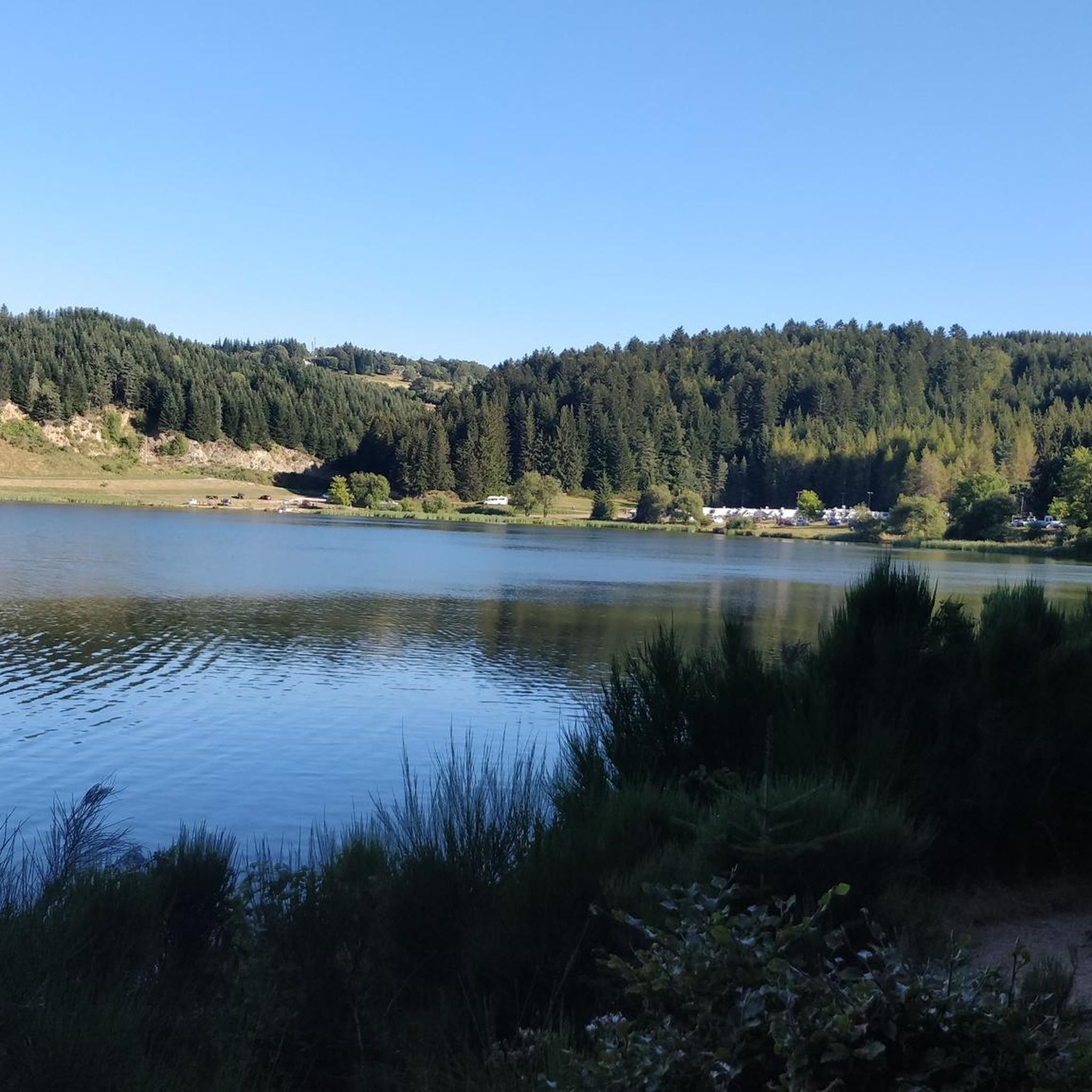
Stroll around the lake on Sunday July 23, 2023. Very pleasant because it is largely shaded. Provide credit card (no possibility to pay in cash) for paid parking from 01/06 to 30/09, package 3€. Lots of people on the beaches and around.
1
0

Work "A circle and a thousand fragments" by Felice Varini. https://www.ardeche-guide.com/lieux-de-visites/sites-historical-monuments/oeuvre-un-cercle-et-mille-fragments-de-felice-varini-4827079
0
0

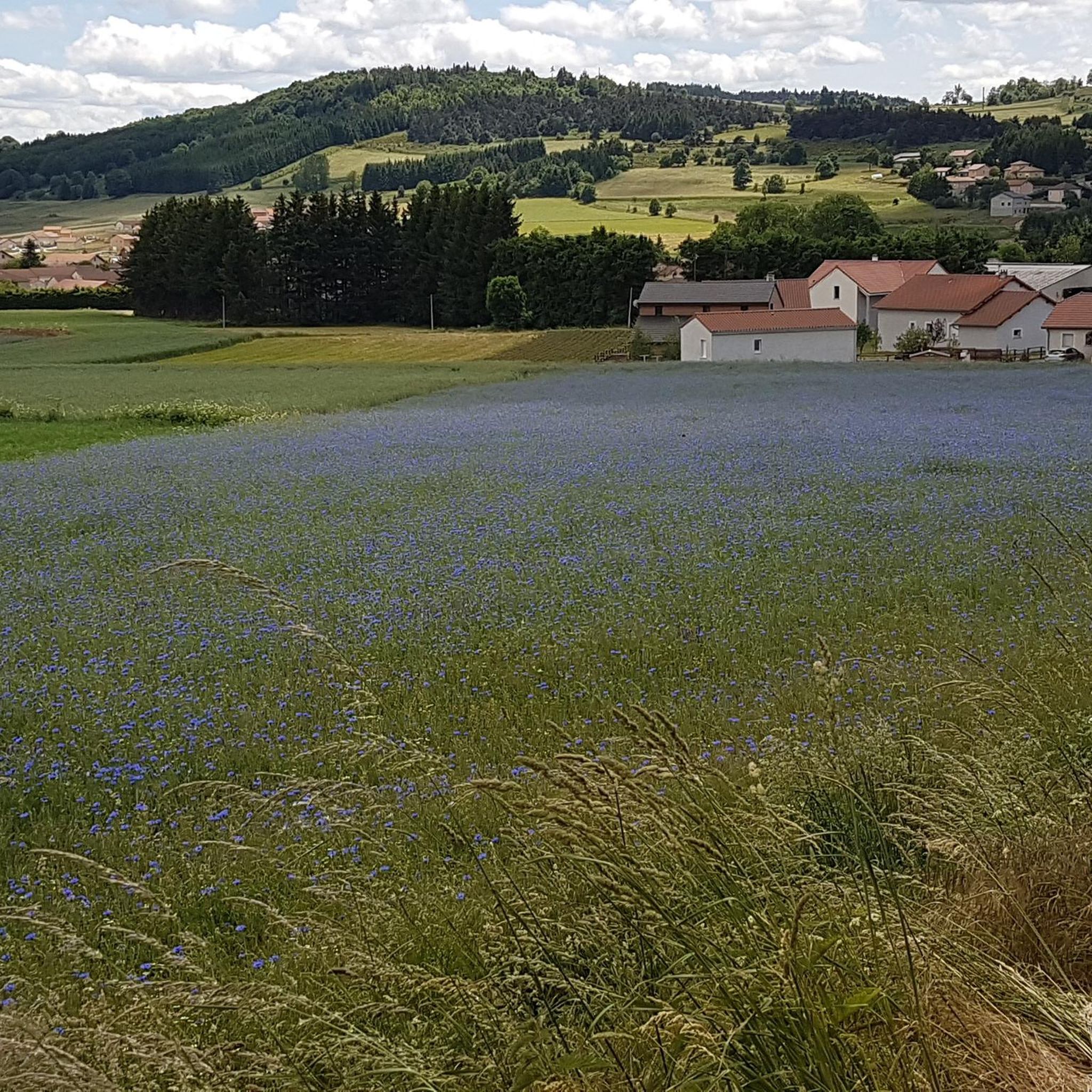
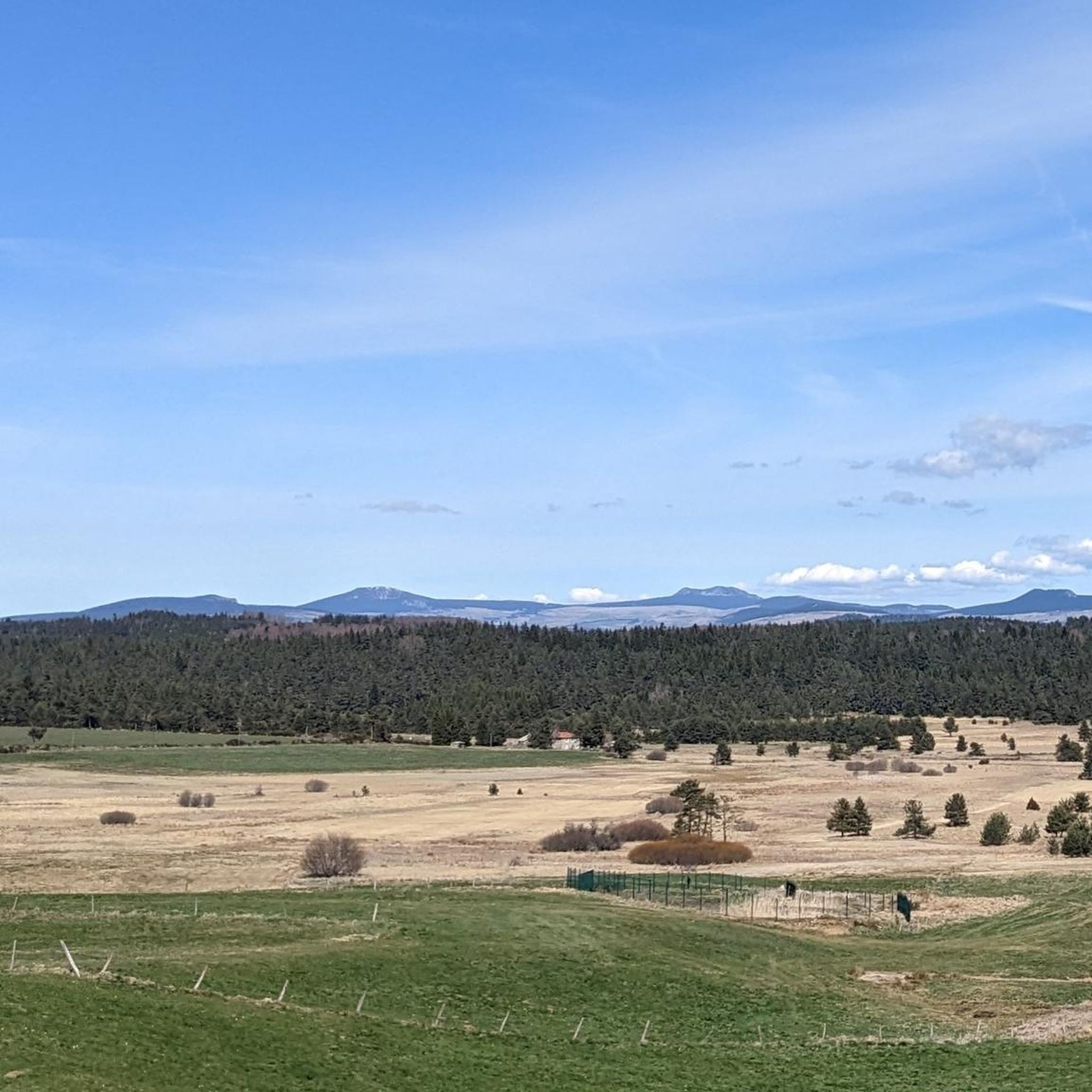
Crater lake, 1,000 meters above sea level with a very pleasant beach for swimming. Very calm. Good food options around and public restrooms.
0
1

Located on the “chemin de Saint-Gilles”, Pradelles had a “Road Hospital”. This hospital is located below the city, because, if charity ordered passing pilgrims to be accommodated, prudence with regard to brigands and epidemics advised to do so "outside the walls". The statue of Notre-Dame, of which Robert-Louis Stevenson wrote, in 1878, "that it worked many miracles although it was made of wood", was discovered in 1512 near this hospital in a wooden chest buried at a unknown period. She was placed in the chapel adjoining the hospital. The current Notre-Dame chapel was built by the Dominicans, the first stone was laid on May 8, 1613. The bell tower was raised in 1655. The chapel was restored and redecorated from 1867 to 1876, the bell tower was remodeled in 1879, to accommodate the Bourdon (large bell with a deep sound). The stone dome topped with the statue of the Virgin was completed in 1889.
4
0
Frequently Asked Questions
What natural attractions can I explore around Issanlas?
The region is rich in natural beauty. A must-visit is Lac d’Issarlès, a stunning mountain lake formed in a volcanic crater, offering opportunities for hiking and swimming. The area is also part of the Parc naturel régional des Monts d'Ardèche, featuring diverse landscapes from volcanic plateaus to deep gorges, and rivers like the Ardèche and Eyrieux, popular for kayaking and canoeing.
Are there any historical or cultural sites worth visiting near Issanlas?
Absolutely. You can explore the magnificent Mazan-l'Abbaye, a 12th-century Cistercian abbey with a unique art installation. Another significant historical site is the Besset Gate, the southern entrance of the fortified town of Pradelles, showcasing its original medieval structure.
What outdoor activities can I do near these attractions?
The area around Issanlas is perfect for outdoor enthusiasts. You can find numerous hiking trails, including a popular Tour of Lac d’Issarlès. For mountain biking, there are challenging routes like the Cirque des Boutières loop. Gravel biking options are also available, such as routes around Lake Naussac.
Are there family-friendly attractions in the Issanlas area?
Yes, Lac d’Issarlès is a great family-friendly destination. It offers supervised swimming at its beach during July and August, and easy hiking trails around the lake suitable for all ages. The natural surroundings provide ample space for children to explore and enjoy the outdoors.
What are some hidden gems or lesser-known spots around Issanlas?
For a unique experience, visit the Chapel of Our Lady at Saint James Hospital in Pradelles, a historic pilgrimage site with a miraculous Madonna statue. Another hidden gem is the Chapelle Saint-Clair, nestled in the woods of Issanlas, built on an ancient pagan sanctuary site, with waters believed to have healing properties.
When is the best time to visit Issanlas and its attractions?
The best time depends on your interests. For swimming and water activities at Lac d’Issarlès, July and August are ideal as the beach is supervised. For hiking and exploring the natural parks, late spring to early autumn offers pleasant weather. Winter provides opportunities for snow sports in nearby Nordic areas like Chavade and Croix de Bauzon.
Can I go wild swimming near Issanlas?
Yes, Lac d’Issarlès is suitable for swimming. The water remains cool due to its altitude, and there is a supervised beach on its north shore during July and August. The region's rivers, such as the Ardèche, also offer popular spots for swimming.
What kind of historical architecture can I see in the villages around Issanlas?
Beyond the abbey, you can explore the charming village of Pradelles, recognized as one of France's 'Most Beautiful Villages,' featuring a historic center and remnants like the Besset Gate. The Saint-Pierre Church in Pradelles, built in the early 20th century to replace an older Romanesque structure, also showcases impressive architecture.
Are there any specific hiking trails recommended for beginners near Issanlas?
Yes, the Tour of Lac d’Issarlès is an easy and scenic hike, perfect for beginners or a leisurely stroll. This circular route allows you to enjoy the beautiful lake views without significant elevation changes.
What do visitors enjoy most about the attractions around Issanlas?
Visitors particularly appreciate the serene beauty of Lac d’Issarlès, often highlighting its depth and the surrounding hiking trails. The historical significance and unique art installation at Mazan-l'Abbaye also receive high praise. The overall tranquility and diverse landscapes of the Ardèche region are frequently mentioned as key draws.
Are there any notable waterfalls or geological formations nearby?
Yes, the region is known for its volcanic origins. Besides Lac d’Issarlès, which is a volcanic crater lake, you can visit Mont Gerbier de Jonc, a significant natural beauty site about 19 km away. There are also beautiful waterfalls like Cascade du Ray-Pic (19km) and Cascade de la Beaume (22km) that are worth exploring.
Most popular routes around Issanlas

Get inspired with the komoot mobile app


Explore more
Still not found the Highlight you’re looking for? See guides of the top attractions in other regions:
