The best road cycling routes around Saint-Girons-D'Aiguevives
4.1
(39)
923
riders
223
rides
Road cycling routes around Saint-Girons-D'Aiguevives traverse the Gironde department of France, characterized by generally flatter terrain compared to more mountainous regions. The landscape features extensive vineyards, rural roads, and proximity to the Gironde estuary. Cyclists can explore routes that pass through historic towns and offer views of natural sites such as the Forêt de la Lande. This area provides a blend of physical activity and cultural immersion.
Best road cycling routes around Saint-Girons-D'Aiguevives
- The most popular road cycling route is Plassac loop from Saint-Christoly-de-Blaye, a 29.4 miles (47.3 km) trail that takes 1 hour 59 minutes to complete. This moderate route offers a scenic loop through the local countryside.
- Another top favourite among local road cyclists is Moulin du Grand Puy de Lansac – Moulin du Grand Puy, Lansac loop from Saint-Christoly-de-Blaye, an easy 26.3 miles (42.3 km) path. This route winds through rural areas, passing by local mills and villages.
- Local road cyclists also love the Bourg Washhouse – Château de Blaye and Washhouse loop from Saint-Christoly-de-Blaye, a 49.6 miles (79.9 km) trail leading through historic sites and vineyards, often completed in about 3 hours 24 minutes.
- Road cycling around Saint-Girons-D'Aiguevives is defined by vineyard landscapes, historic towns, and riverine views. The network offers options for different ability levels, from easy rides to more moderate challenges.
- The routes in Saint-Girons-D'Aiguevives are highly rated by the komoot community with an average score of 4.1 stars from over 50 reviews. More than 980 road cyclists have used komoot to explore Saint-Girons-D'Aiguevives's varied terrain.
Last updated: July 15, 2026
22
riders
Moderate road ride. Good fitness required. Mostly well-paved surfaces and easy to ride.
9
riders
Moderate road ride. Good fitness required. Mostly well-paved surfaces and easy to ride.

Sign up for free
3.0
(1)
7
riders
Easy road ride. Great for any fitness level. Mostly well-paved surfaces and easy to ride.
7
riders
88.0km
03:35
500m
500m
Moderate road ride. Good fitness required. Mostly well-paved surfaces and easy to ride.
3.0
(1)
6
riders
Moderate road ride. Good fitness required. Mostly well-paved surfaces and easy to ride.
Get access to more routes and recommendations from other explorers.
Sign up for free
Already have an account?
Our route recommendations are based on thousands of hikes, rides, and runs completed by other people on komoot.
Start today with a free account
Your next adventure awaits.
Login or Signup



Tips from the Community

Very beautiful Romanesque church from the 12th century.
0
0


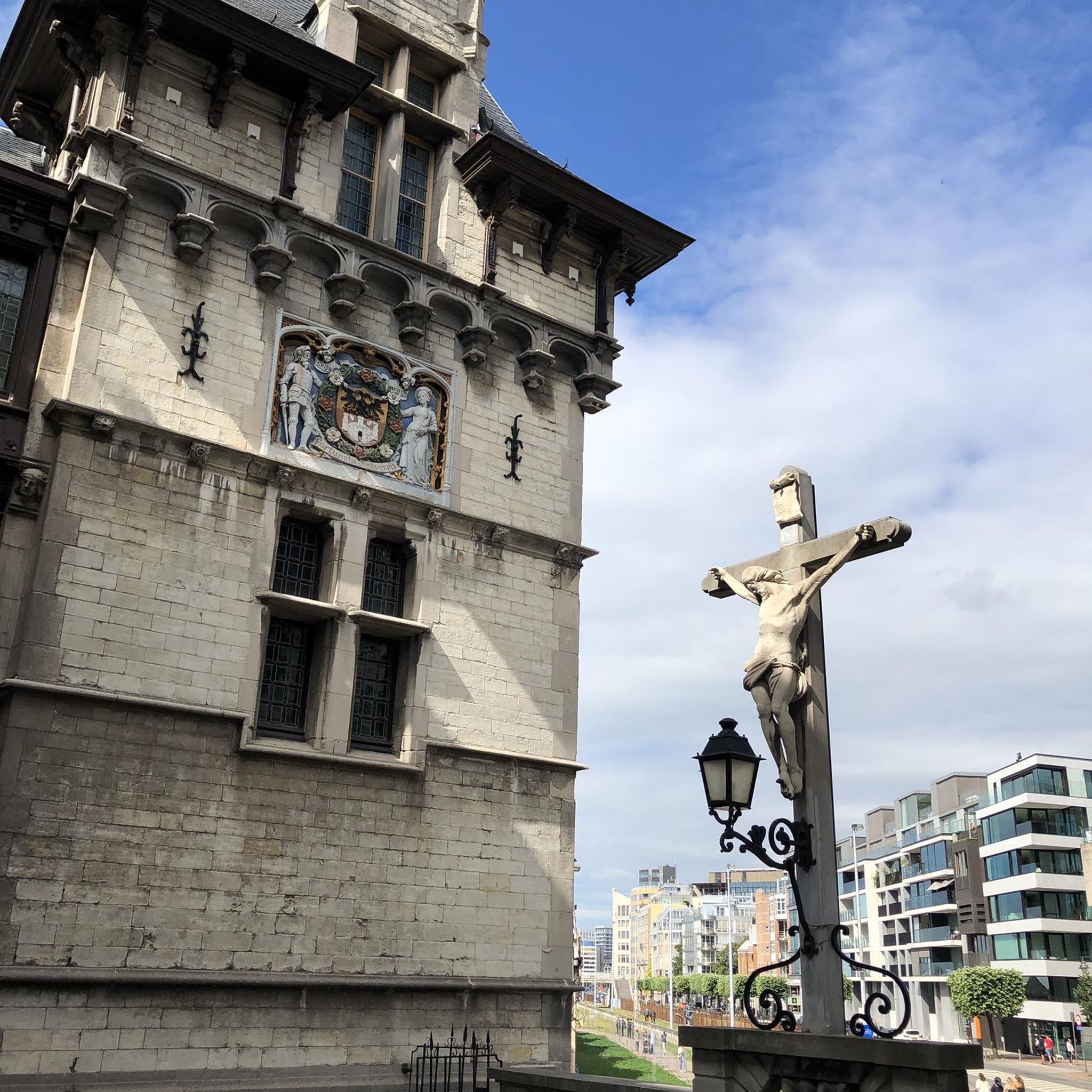
This neo-Gothic church was built to replace the dilapidated church of the Recollect Fathers, a men's convent founded in 1627. In the 19th century, the church wanted to encourage a revival of Catholic worship; it encouraged the construction of new religious buildings in Gironde. Thus, in 1856, the Saint-Géronce church was consecrated. Due to lack of space, its apse was oriented towards the south, contrary to what the liturgy provided. The organ, which has its original construction from 1861, is remarkable. Mass is celebrated there every Sunday morning at 10:00 a.m.
0
0
The Pair-non-Pair Cave is a decorated cave, discovered in 1881, containing artistic representations dating back more than 32,000 years before the present, attributed to the Aurignacian culture. Listed as a historical monument since 1900, the cave is the third decorated cave discovered, after Altamira and Chabot Cave. Its study established the antiquity of the parietal engravings and officially recognized the prehistoric art. The cave, located in the commune of Prignac-et-Marcamps, is open only for guided tours. Booking a tour time online is required. The reception area, museum space, and shop are open from June 1st to September 30th, 9:30 a.m. to 12:30 p.m. and 2:00 p.m. to 6:30 p.m. From October 1st to May 31st, 9:30 a.m. to 12:30 p.m. and 2:00 p.m. to 5:30 p.m. Closed on Mondays, January 1st, May 1st, and December 25th. Individual admission: €13 Free: Under 18s and 18-25s (European Union nationals and non-European legal residents in France)
1
0
The commune takes its name from its Latin name, Blacciacum. A Gallo-Roman settlement is attested by the discovery of the remains of three Gallo-Roman villas, dating from the 1st to the 5th century AD. These remains were found near the current site of the church, not far from the Gironde. During the medieval period, the village's center of activity seems to have shifted to the heights overlooking the river. This is evidenced in particular by a hoard of Merovingian coins discovered around 1850 at a place called Montuzet (Mont des Yeuses). The lower Plassac region, around the port, was heavily involved in river and maritime activity in the 17th, 18th, and 19th centuries. Merchants and ocean-going captains settled in beautiful stone residences. This river activity gradually declined in the 20th century.
2
0

At the same time you can train on a slope of 40 or 50% to access it
0
0

Montendre Castle rises on an eminence 114 meters high and dominates a vast panorama of moors, woods and meadows as well as the tight houses of the old town below. Its origin dates back to the Gallo-Roman era with the construction of a first oppidum in 52 BC. J-C. The castle retains elements from various periods, including part of the enclosures, a round tower, a square tower, a guard room and underground passages. Since the beginning of the 2000s, each summer, international projects (Solidarités Jeunesses) have made it possible to gradually renovate the castle grounds and preserve this site, converted into a promenade. The castle is open for visits from 9 a.m. to 12:30 p.m. and from 2 p.m. to 5:30 p.m. Close on Sunday.
1
0
The small port of Plassac is typical of the esteys of the Gironde estuary. It is in the heart of the ancient village with a Gallo-Roman villa. A Terra Aventura route, combining hiking and discovery, allows you to get to know Plassac better. During your visit, you can also admire mosaics displayed in the alleys of the village: they were created by the inhabitants and by the Babylon Mosaic workshop-boutique. A stepped earthen dike made it possible to shape the current configuration of the port, making it possible to create 44 places reserved for pleasure craft. A rocky groyne protects the entrance to the port. 22 gangways provide access to the boats and boaters can benefit from a water tap, electrical outlets and a light point. https://www.bbte.fr/equipements-de-loisirs/port-de-plassac/
3
0
Frequently Asked Questions
What is the general terrain like for road cycling around Saint-Girons-D'Aiguevives?
The terrain around Saint-Girons-D'Aiguevives in the Gironde department is generally flatter compared to more mountainous regions of France. You'll find routes traversing extensive vineyards, rural roads, and areas near the Gironde estuary, offering a less strenuous cycling experience.
How many road cycling routes are available in the Saint-Girons-D'Aiguevives area?
There are over 220 road cycling routes around Saint-Girons-D'Aiguevives. These include a variety of options, with 72 easy routes, 147 moderate routes, and a few more challenging trails, catering to different skill levels.
Are there any long-distance road cycling routes in the region?
Yes, the area offers several longer routes. For example, the Citadel of Blaye – Romanesque church of Mouillac loop from Saint-Christoly-de-Blaye is an 86.7 km route, and the Bourg Washhouse – Château de Blaye and Washhouse loop from Saint-Christoly-de-Blaye covers nearly 80 km, allowing for extended rides through historic sites and vineyards.
What historical sites or landmarks can I see while road cycling?
Many routes pass by significant historical sites. You can cycle past the impressive Citadel of Blaye, a UNESCO World Heritage site, or explore charming towns like Blaye and Bourg-sur-Gironde. Other notable points include the Saint-Géronce Church and various châteaux such as Château Pontet d'Eyrans.
What do other road cyclists enjoy most about the routes here?
The routes in Saint-Girons-D'Aiguevives are highly rated by the komoot community, with an average score of 4.1 stars from over 50 reviews. Cyclists often praise the scenic rides through vineyards, the blend of physical activity with cultural immersion, and the well-maintained rural roads that offer a pleasant experience.
Are there family-friendly road cycling options in Saint-Girons-D'Aiguevives?
Yes, the generally flatter terrain of the Gironde makes it suitable for family-friendly cycling. Many of the 72 easy routes are ideal for families, winding through rural areas and vineyards, often with less traffic. The Moulin du Grand Puy de Lansac loop is an easy 42.3 km path that could be a good option.
What is the best time of year to go road cycling in this region?
The region offers pleasant cycling conditions for much of the year. Spring and autumn are particularly ideal, with mild temperatures and beautiful scenery as the vineyards change color. Summer can also be enjoyable, though it's best to cycle in the mornings or late afternoons to avoid the midday heat.
Are there circular road cycling routes available?
Yes, many of the routes around Saint-Girons-D'Aiguevives are designed as loops, allowing you to start and end in the same location. Examples include the popular Plassac loop from Saint-Christoly-de-Blaye and the Port of Plassac – Citadel of Blaye loop from Blaye.
Where can I find amenities like cafes or accommodation for cyclists?
The charming towns and villages throughout the Gironde, such as Blaye and Bourg-sur-Gironde, offer various amenities. You'll find cafes, restaurants, and accommodation options that cater to visitors, including cyclists. Many routes pass directly through or near these settlements, making it convenient to stop for refreshments or an overnight stay.
Is public transport available to reach the cycling routes?
While Saint-Girons-D'Aiguevives itself is a smaller commune, its proximity to Bordeaux (approximately 34 km away) means you can access the broader Gironde region via public transport. From Bordeaux, local bus services or regional trains can connect you to larger towns near the cycling routes, though direct connections to specific trailheads might require planning.
Can I combine road cycling with wine tasting experiences?
Absolutely. The Gironde is world-renowned for its prestigious wines. Many road cycling routes wind through famous vineyards, with notable wine-producing villages like Margaux and Pauillac nearby. You can easily plan your rides to include visits to chateaux and wineries for tastings, blending physical activity with cultural immersion.
Are there any natural features or viewpoints to look out for?
The region offers scenic views of the Gironde estuary and the surrounding countryside. While not mountainous, you can enjoy vistas over the vast vineyards and rural landscapes. Natural sites like Bec d'Ambès (where the Garonne and Dordogne rivers meet) and the Forêt de la Lande are within a reasonable distance and offer varied scenery.
Most popular routes around Saint-Girons-D'Aiguevives
Most popular attractions around Saint-Girons-D'Aiguevives

Get inspired with the komoot mobile app


Explore more
Browse the best Road cycling routes in other regions.
