Attractions and Places To See around Chadurie - Top 20
Best attractions and places to see around Chadurie include historical landmarks, natural features, and cultural sites within the Charente department of southwestern France. The region is characterized by its rich history and diverse landscapes, offering opportunities for exploration. Visitors can discover ancient châteaux, significant natural areas like valleys and forests, and charming villages. Chadurie serves as a central point for accessing these varied points of interest.
Best attractions and places to see around Chadurie
- The most popular attractions is Vallée…
Last updated: October 10, 2026
Vallée des Eaux claires
Highlight (Segment) • Other
Translated by Google •
Tip by

Château de la Rochandry
Highlight • Castle
Translated by Google •
Tip by

Sign up now to discover places like this
Get recommendations on the best single tracks, peaks, & plenty of other exciting outdoor places.
Claix Millstone Quarries
Highlight (Segment) • Other
Showing Translation
Tip by

Château de la Mercerie
Highlight • Castle
Translated by Google •
Tip by

Saint-Cybard Church of Dignac
Highlight • Religious Site
Translated by Google •
Tip by

Sign up for free to discover even more attractions around Chadurie.
Already have an account?
Start today with a free account
Your next adventure awaits.

Tips from the Community

The building, constructed in the 12th century, was enlarged in the 15th century by the north and south aisles dedicated to the Virgin and Saint John the Baptist. It was restored in 1875-1876. It has a basilica plan with a single nave, on which is grafted to the east a false square surmounted by a dome on pendentives and which ends in a vaulted apse. Side chapels with flat chevet were added, to the north and south, in the 15th century. The facade is pierced by a door with a triple projection and an open window. The building was fortified at the time of the Hundred Years' War. The whole is surmounted, to the east, at the level of the dome, by a square bell tower on two levels. The base is decorated with three blind arcades; The upper floor is decorated, on each side, with three semicircular arches mounted on small columns, highlighted by a circular stringcourse and enclosing twin bay windows. https://www.dignac.fr/histoire-et-patrimoine/ https://monumentum.fr/monument-historique/pa00104355/dignac-eglise-saint-cybard
0
0

Why visit the Meulières de Claix in Périgord? For the historical heritage: The site is a fascinating example of the importance of millstones in the agricultural economy of past centuries. For the natural setting: Located in a quiet forest environment, the Meulières de Claix offer an ideal opportunity to walk and discover the nature of Périgord while learning about the local past. For the geological aspect: Geology enthusiasts will appreciate the study of the millstone rock, its unique characteristics, and its ingenious exploitation. The Meulières de Claix in Périgord are a must-visit destination for history buffs and nature lovers, offering a perfect blend of industrial heritage and geological discovery.
2
0
Remains of the quarries: Today, the old quarries of Claix are still visible, offering a unique glimpse into industrial exploitation and the extraction techniques of the time. A natural and historical site: Walks and discoveries: The millstone site is accessible on foot via paths that cross the surrounding forest. It is a perfect place for a walk in the heart of nature while discovering a part of local history. Preserved landscapes: The millstones are nestled in a preserved natural environment, where one can also observe the fauna and flora of the Périgord. Memory of artisanal activity: Visible traces: Traces of old extractions can still be observed on the site, such as cut or abandoned stone blocks, and cavities that bear witness to the intense past artisanal activity. Economic importance: The production of millstones greatly contributed to the prosperity of the region for several centuries, due to the importance of mills for agriculture and flour production.
1
0
The Meulières de Claix in Périgord are a site of historical and heritage importance. These millstone quarries, once used to make millstones, are a precious testament to mineral exploitation in Périgord. Points of interest at Meulières de Claix en Périgord: Exploitation of millstones: Manufacturing of millstones: The stones extracted from the quarries were used to make millstones, which were used to grind grain in mills. This industry was essential to the local economy, particularly during the Middle Ages and up to the 19th century. Quality stone: The millstone rock from Claix was particularly prized for its hardness and durability, making it a material of choice for the region's millers. Geological heritage: Characteristics of millstone rock: Millstone rock is a porous siliceous rock with an ideal texture for grinding. Its wear resistance allowed for the production of high-quality millstones, used in water or windmills.
2
0

The extraordinary history of this grandiose residence began in 1924, in the heart of a small 19th century manor (to the left of the current façade): the troubadour castel of La Mercerie was then acquired by Alphonse and Raymond Réthoré. From then on, the two brothers, dreaming of the great Versailles, devoted all their resources to enlarging and embellishing the building. The work undertaken is commensurate with the ambition that drives it. Outside, colonnades and balusters in white stone soon extend the first building. the cut stone increases the gigantism and the rigor of a facade with a perfect rhythm. Inside, nothing is too beautiful for La Mercerie, Raymond brings back from his travels furniture and paintings, chandeliers and precious woods, marbles from Italy, azulejos from Portugal etc. He returns from Italy with a painter sculptor who will carry out on the spot the most monumental decorations with the assistance of the inhabitants of the country. The treasures are piling up, but 30 years of work will not be enough to complete the colossal project. The collections are dispersed during auctions in June 1987. When the two brothers died, the castle fell into oblivion, until the mobilization of the inhabitants of the town, who decided to found an association to safeguard this unique and prestigious heritage. The Béruges room, the central living room, the Vernet living room, the vestibule, the mahogany gallery and the large Azulejos gallery, each more impressive than the last, now fully conquers the visitor eager for cultural discoveries. A short tour of the belvedere of the castle allows you to admire it from the height. In the park of the castle, the rose garden and the arboretum can be visited by little train. The little train is random due to the health context and will be reserved for people with reduced mobility and children, and mainly on Sundays.
0
0

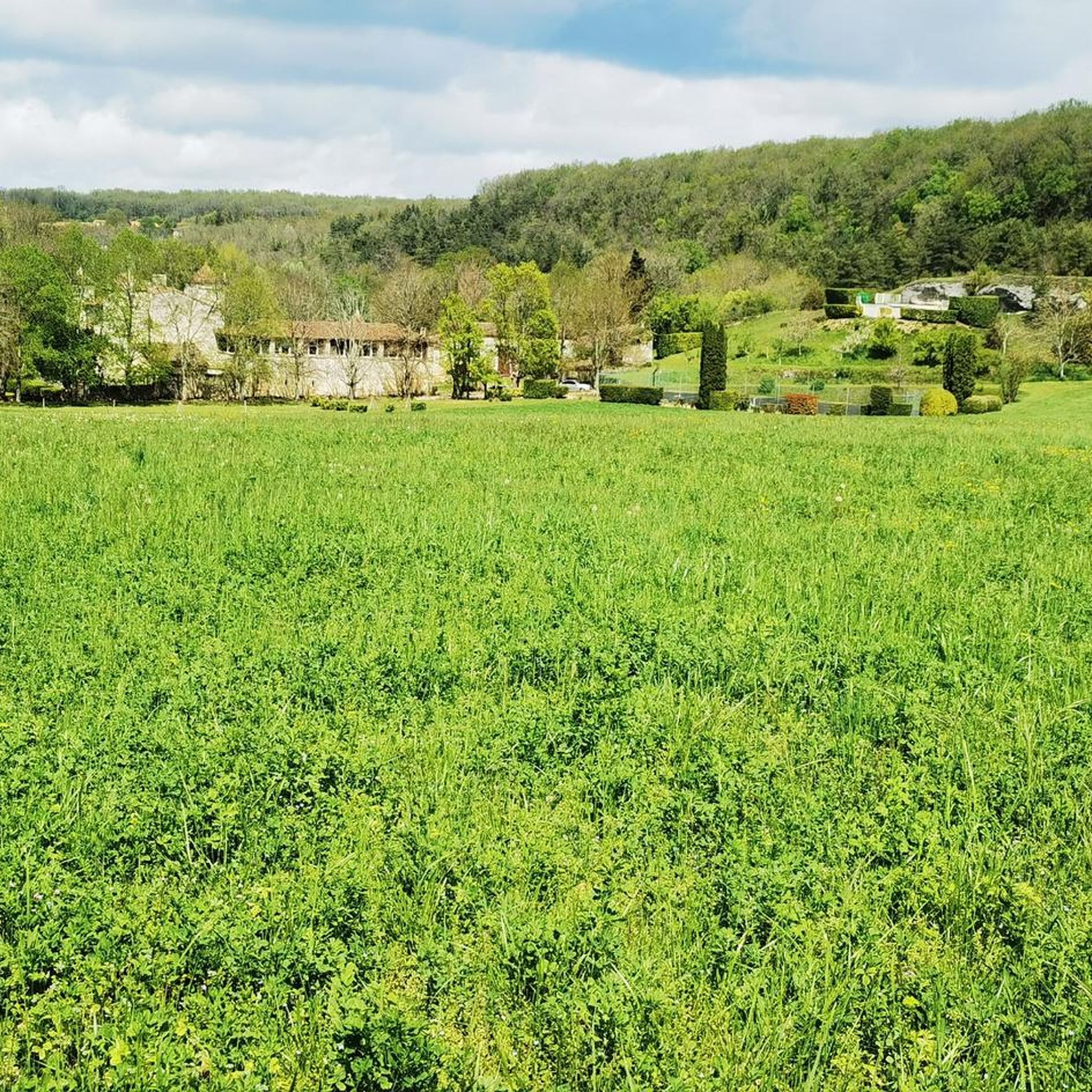
This beautiful valley is classified as a Site of European Interest due to its limestone cliffs and Mediterranean vegetation. The southern slopes are dry grassland which favors a warmer climate, while the northern slopes and valley floor are cooler and wetter. As a natural climbing site, it is known all over the world.
2
0
This beautiful valley is classified as a Site of European Interest due to its limestone cliffs and Mediterranean vegetation. The southern slopes are dry grassland which favors a warmer climate, while the northern slopes and valley floor are cooler and wetter. As a natural climbing site, it is known all over the world.
5
1

Pretty castle in height after a climb from Angoulême
1
0
Frequently Asked Questions
What historical castles can I visit near Chadurie?
The region around Chadurie is rich in historical castles. You can explore the unique Château de la Mercerie, often called the 'Little Versailles of Charente', known for its grand facade. Another significant site is Château de la Rochandry, which has medieval origins and was rebuilt in Gothic and Renaissance styles. Further afield, consider visiting the historic Logis de Puygâty within Chadurie itself, or the Château de Villebois-Lavalette and the impressive Château de La Rochefoucauld.
Are there any unique historical churches or religious sites in the area?
Yes, the area boasts several remarkable religious sites. The most unique is the Subterranean Monolithic Church of Saint-Jean in Aubeterre-sur-Dronne, carved directly into the rock. In Angoulême, you can visit the Angoulême Cathedral (Cathédrale Saint-Pierre d'Angoulême). Closer to Chadurie, numerous historical churches like Eglise de Notre Dame in Voulgezac and Eglise de Saint Cybard in Roullet-Saint-Estephe showcase the region's religious heritage.
What natural attractions and features can I explore around Chadurie?
Nature lovers have plenty to discover. The Vallée des Eaux claires is a beautiful natural valley classified as a Site of European Interest, known for its limestone cliffs and Mediterranean vegetation, and is a popular climbing spot. You can also visit the Claix Millstone Quarries, a limestone plateau offering views of the countryside and a glimpse into historical mineral exploitation. Other natural highlights include the Grotte de Montgaudier, the scenic Charente River, and the Forêt d'Horte, which offers opportunities for walks and canoeing.
Are there forests or parks suitable for walks and relaxation near Chadurie?
Absolutely. The Forêt d'Horte, a 1,140-hectare forest, is an excellent choice for walks, relaxation, and sports, featuring an arboretum with various tree varieties. Additionally, the Burnt Wood near Angoulême offers numerous paths for a breath of fresh air among the trees, with trails of varying widths and terrains.
What cultural sites or museums are available in the Chadurie region?
For cultural experiences, Angoulême, about 17 km from Chadurie, is a town of art and history. It hosts Le Musée de la Bande Dessinée, dedicated to comic strips. The charming villages nearby, such as Aubeterre-sur-Dronne (renowned for its monolithic church) and Charmant, also offer cultural sightseeing opportunities.
What kind of outdoor activities can I do near Chadurie's attractions?
The region around Chadurie is perfect for various outdoor activities. You can find numerous routes for road cycling, hiking, and running. For example, there are moderate road cycling loops like the 'Hergé Bust, Place Marengo – Town Hall loop' or the 'Château de la Mercerie – Villebois-Lavalette Castle loop'. Hiking enthusiasts can enjoy trails such as the 'Boëme Valley loop' or the 'Notre-Dame Church of Charmant loop'. Runners have options like the 'Étang des Jouffroux – Logis de Puygâty loop'. You can find more details on these activities in the dedicated guides for Road Cycling Routes around Chadurie, Hiking around Chadurie, and Running Trails around Chadurie.
Are there easy hiking trails suitable for families near Chadurie?
Yes, there are several easy hiking trails ideal for families. The 'Notre-Dame Church of Charmant loop from Charmant' is an easy 6.7 km trail, and the 'Étang des Jouffroux loop from L'Ouche' is another easy option at 4.1 km. These trails offer a pleasant way to experience the local scenery without significant difficulty. For more options, refer to the Hiking around Chadurie guide.
What do visitors enjoy most about the attractions around Chadurie?
Visitors particularly appreciate the diverse landscape and historical depth. The Vallée des Eaux claires is loved for its natural beauty and climbing opportunities, while the Claix Millstone Quarries offer unique historical insight and scenic views. The architectural grandeur of Château de la Rochandry and Château de la Mercerie also receive high praise for their historical significance and impressive structures. The combination of natural sites and rich heritage makes the region appealing.
Can I find local markets to experience the regional culture?
Yes, visiting local markets is a great way to experience the regional culture. Angoulême hosts daily markets (except Monday), while La Couronne has a market on Saturdays, and Chalais on Mondays. These markets offer a chance to discover local produce and crafts.
Are there any notable gardens or arboretums to visit?
Yes, for those who appreciate gardens, the Jardin du Chaigne is a remarkable garden located approximately 24 km from Chadurie. Additionally, the Forêt d'Horte features an arboretum with various tree varieties, offering a pleasant natural setting for exploration.
What are some charming villages worth visiting near Chadurie?
Several charming villages are worth exploring. Aubeterre-sur-Dronne is recognized as a 'Most Beautiful Village' and is home to the impressive Subterranean Monolithic Church. Other recommended villages for sightseeing include Charmant (about 4 km away) and Mouthiers-sur-Boeme (about 7 km away), both offering a glimpse into the local life and architecture.
Most popular attractions around Chadurie

Get inspired with the komoot mobile app


Explore more
Still not found the Highlight you’re looking for? See guides of the top attractions in other regions:
