The best road cycling routes around Santeuil
4.3
(8)
316
riders
129
rides
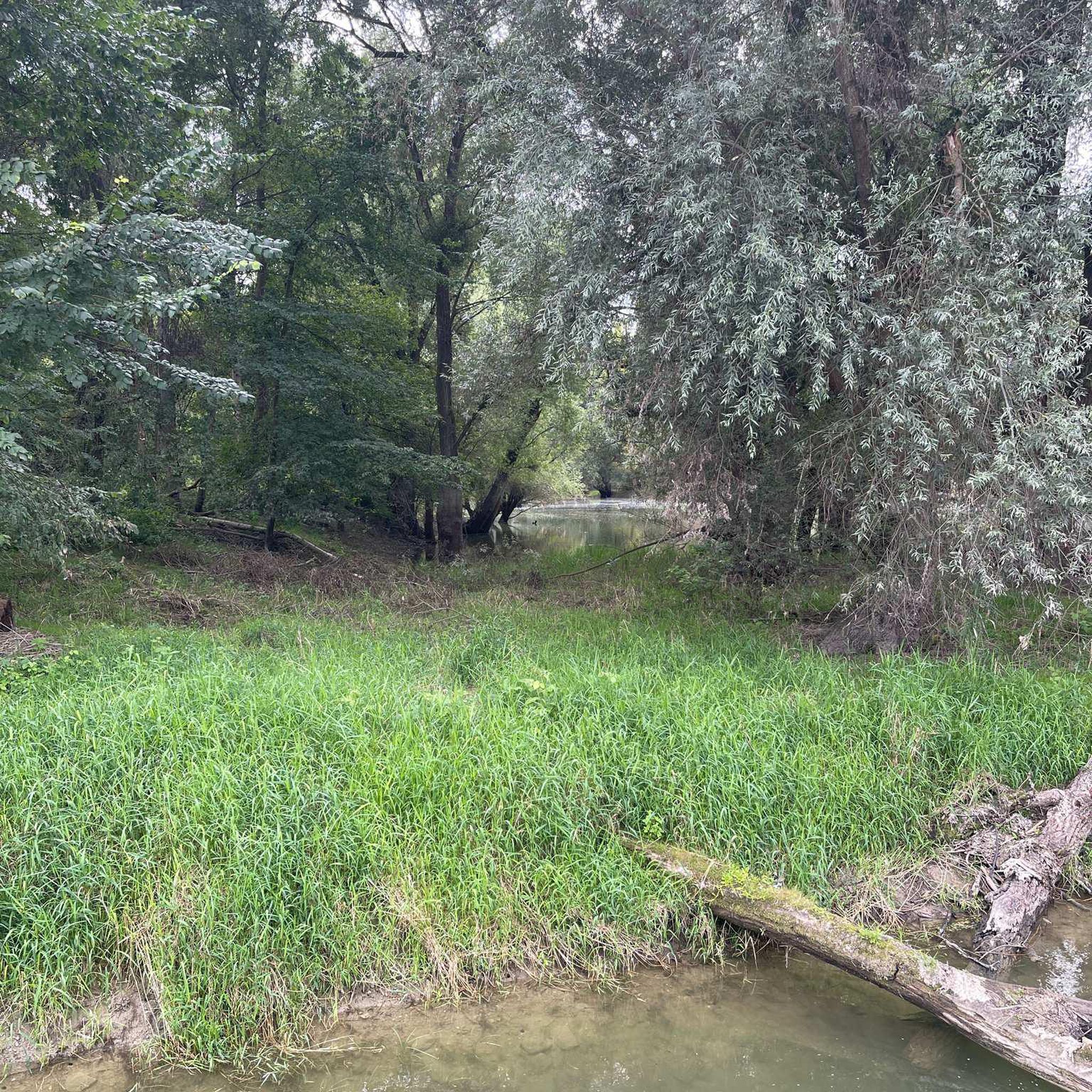
Road cycling around Santeuil, located within the Vexin Français Regional Natural Park, offers diverse terrain for cyclists. The region is characterized by limestone plateaus and river valleys, such as the Viosne Valley, providing undulating routes with both flat sections and gentle climbs. Cyclists can navigate through extensive agricultural fields, wooded areas, and small asphalt roads, experiencing a mosaic of environments. This landscape provides a suitable backdrop for various road cycling experiences.
Best road cycling routes around Santeuil
- The most popular…
Last updated: July 5, 2026
7
riders
Easy road ride. Great for any fitness level. Mostly well-paved surfaces and easy to ride.
4.0
(2)
4
riders
48.0km
01:50
120m
120m
Easy road ride. Great for any fitness level. Mostly well-paved surfaces and easy to ride.

Sign up for free
5
riders
38.8km
01:30
120m
120m
Easy road ride. Great for any fitness level. Mostly well-paved surfaces and easy to ride.
4
riders
81.6km
03:16
340m
340m
Moderate road ride. Good fitness required. Some segments of this route may be unpaved and difficult to ride.
3
riders
51.7km
02:05
250m
250m
Moderate road ride. Good fitness required. Mostly well-paved surfaces and easy to ride.
Get access to more routes and recommendations from other explorers.
Sign up for free
Already have an account?
Our route recommendations are based on thousands of hikes, rides, and runs completed by other people on komoot.
Start today with a free account
Your next adventure awaits.
Login or Signup



Tips from the Community

In the 15th century, the original church, probably from the 12th century, was burned down. During the reconstruction, a side aisle was added. The bell tower dates from the late 19th century, as do the painted motifs on the walls.
0
0
The Saint-Lubin church of La Chapelle-d'Aunainville is a religious monument located in the town of the same name. This place of worship, whose exact period of construction is not specified in the available sources, is part of the local architectural landscape. Its name refers to Saint Lubin, a religious figure associated with the region, although the details of this dedication are not documented in the source text. In the general context of the Centre-Val de Loire, parish churches like Saint-Lubin played a central role in community life in the Middle Ages and modern times. They served not only as a place of prayer, but also as a gathering point for the inhabitants, marking social, agricultural and religious rhythms. Local activities, often linked to agriculture or crafts, were organized around these buildings, which also symbolized spiritual and sometimes temporal authority in the villages.
0
0
A tower and a side aisle were added to the original Roman building in the 16th and 18th centuries. In 1879, the chapel of the Virgin was raised. In 1906, vaults were built in the neo-Gothic style. At the corner of the square, a part of the entrance to the priory of Saint-Pierre de Roinville from the 15th century remains. A shield with the arms of Cluny remains.
0
0
The bell tower and nave were erected in 1150 to house the relics of Saint Martin. The choir and side aisles date from 1519. At the beginning of the 17th century, significant ornamental donations were added, as well as two altars in the side aisles dedicated to Saint Sebastian and the Virgin Mary. Major renovations were carried out in the 19th century: the choir vaults were completely rebuilt in 1859. The stained-glass windows date from 1871. A baptistery outside the building was built to the north of the first bay of the nave. The bays above each altar are built in the neo-Gothic style. The original decoration, dating from the 16th to 18th centuries, consisting of geometric elements in red, yellow, and black, has recently been restored. It is a tempera painting on a sand and lime plaster. It adorns the elevations and the vaults of the two lower sides.
0
0
The nave consists of a main nave and an aisle to the north. A bell tower is located to the south, as well as a seigneurial chapel. The choir consists of a straight bay and a semicircular apse. A first church was built in the late 11th and early 12th centuries by Étienne de Denonville. It was modified in the 16th century by Pierre de Hémard. A seigneurial chapel was built shortly after the death of Jacques de Hémard, Lord of Denonville, in 1559. On the old vault, in 1658, one could still see "the coat of arms and blazons of the Hémard family, which are six sable burels, around which are the hat and cords of a cardinal from the family." The vault was rebuilt by the Brisay family in 1722. A project to extend the church was considered in 1755 but never carried out. The north aisle was built in 1770.
0
0
The tower of the church of Sainville, as well as the choir and the first three bays of the main nave, are in the Transitional Romanesque style from the end of the 12th century; the rest of the main nave and the side aisles appear to date only from the 15th century. The bell tower contains three bells. The largest, listed as a historic monument, is engraved with a quatrain: "Founded smokes all new I am the Patron of Sainville, I bear the name of St. Peter. In the year 1014. XLIX." (1549) The second, from 1821, bears this inscription: "Blessed be the Lord God of Israel, for he has visited and redeemed his people." Gospel of Saint Luke, chapter 1, verse 68. The third is located above the other two.
0
0
Construction of this neo-Gothic church began in 1892. On December 8, 1895, it was inaugurated and blessed, becoming the parish church in place of the Church of Saint Rémy. However, sculptures and stained-glass windows have been added or renewed to this day. The stained-glass windows in the nave depict the Beatitudes. Seven sculpted groups in the heart of the church symbolize the sacraments.
0
0
The church of Bleury, dedicated to Saint Martin, probably dates from the end of the Middle Ages. It was remodeled and enlarged in the 16th century by the addition of a large chapel on the north side. The nave ends with a semicircular apse. The chapel to the north is extended by a square bell tower which once opened onto the nave through an arch that is now blocked but still visible. The chapel opens onto the nave through two pointed arches made of recently rendered clotted stone. It communicated with the ground floor of the courtyard through an arch that is now closed. Another filled-in arch appears on the wall between the chapel and the lower room of the courtyard. The church is covered with a paneled roof. A single beam is sculpted, the penultimate one on the west side. It supported, with the beam resting on the facade wall, a recently demolished gallery. Some of the nave's semi-circular windows are late, and the pointed arch openings have Gothic tracery. The square bell tower has a saddleback roof. It is pierced with pointed arch openings. Access to the building is from the south, under a modern porch that houses a portal surmounted by a shield with three fleurs-de-lis. A stone cornice runs under the roof to the south, supported by unsculpted modillions. Two 18th-century altarpieces were included in the Supplementary Inventory of Historic Monuments on June 17, 1975. 16th-century wall paintings depict the Mass of Saint Gregory. They were discovered in 1881 and classified as Historic Monuments on November 17, 1908. Their preservation is currently threatened by infiltration due to the poor condition of the roof structure. The Sauvegarde de l’Art Français provided aid of 75,000 F in 1994, thus contributing to the repairs undertaken to restore the framework, which will allow the walls to be cleaned up.
0
0
Frequently Asked Questions
How many road cycling routes are available around Santeuil?
There are over 130 road cycling routes around Santeuil, offering a wide range of options for different skill levels. The komoot community has explored these routes extensively, with over 290 road cyclists using komoot to discover the area.
What are the typical terrain and landscapes like for road cycling in Santeuil?
Road cycling around Santeuil, nestled within the Vexin Français Regional Natural Park, features a diverse landscape. You'll encounter limestone plateaus and river valleys, such as the Viosne Valley, providing a mix of flat sections and gentle climbs. Routes often pass through extensive agricultural fields, wooded areas, and small asphalt roads, offering a picturesque and varied cycling experience.
What is the best time of year for road cycling in the Santeuil area?
The Vexin Français Regional Natural Park, including Santeuil, is generally pleasant for road cycling from spring through autumn. Spring offers lush green landscapes and blooming fields, while autumn provides beautiful foliage. Summers are also suitable, though it's always wise to check local weather forecasts and plan for hydration.
What do other road cyclists say about the routes in Santeuil?
The road cycling routes in Santeuil are highly regarded by the komoot community, holding an average rating of 4.0 stars from over 6 reviews. Cyclists often praise the varied terrain, from gentle valley rides to more undulating sections, and the scenic beauty of the Vexin Français Regional Natural Park.
Are there road cycling routes suitable for beginners in Santeuil?
Yes, Santeuil offers numerous easy road cycling routes perfect for beginners. Out of the 131 available routes, 54 are classified as easy, featuring gentle gradients and manageable distances. An example of an easy route is the Béville-le-Comte Town Hall – Parc du Château de Laval loop from Béville-le-Comte, which is 24.0 miles (38.7 km) long.
Are there challenging road cycling routes for experienced cyclists?
While the majority of routes are easy to moderate, there are a few more challenging options for experienced road cyclists. The region's limestone plateaus and river valleys can offer routes with more significant elevation changes. For example, the Côte de Châlo – Bréau-sans-Nappe obelisk loop from Ouarville is a moderate route spanning 81.6 km with over 340 meters of elevation gain.
What historical or natural attractions can I see while road cycling near Santeuil?
The Santeuil area is rich in both natural beauty and historical sites. You might pass by the significant natural site of Étang de Vallière, known for its diverse habitats. Historically, you can discover the 12th-century Saint-Pierre-Saint-Paul Church in Santeuil, or other rural heritage elements like the Croix Bossée and traditional lavoirs. Nearby attractions include the Château de Denonville and the Saint-Barthélemy Church of Theuville.
Are there loop trails for road cycling around Santeuil?
Yes, many of the road cycling routes around Santeuil are designed as loops, allowing you to start and end in the same location. This is convenient for planning your ride. An example is the popular Lavoir de Soulaires – Spot for a break on the banks of the Eure loop from Francourville, a 37.1 miles (59.8 km) moderate trail.
Where can I park my car when starting a road cycling route in Santeuil?
Santeuil and the surrounding villages within the Vexin Français Regional Natural Park typically offer public parking options. Look for designated parking areas in village centers or near local amenities. It's advisable to check specific starting points for routes for the most convenient parking.
Are there places to stop for refreshments or food along the road cycling routes?
Yes, the charming villages scattered throughout the Vexin Français Regional Natural Park often have local cafes, bakeries, or small restaurants where you can stop for refreshments. Planning your route to pass through these villages can enhance your cycling experience with a pleasant break.
Is public transport available to access road cycling routes in Santeuil?
Access to Santeuil and the Vexin Français Regional Natural Park by public transport is possible, though it may require some planning. Regional train services connect to larger towns in the Val-d'Oise department, from which local buses or a short ride might be needed to reach specific starting points for cycling routes. Always check current schedules and bike transport policies with local operators.
Are the road cycling routes around Santeuil suitable for families?
Many of the easy and moderate road cycling routes around Santeuil are suitable for families, especially those with older children comfortable on bikes. The gentle gradients and quiet small asphalt roads make for a pleasant experience. The Béville-le-Comte Town Hall – Parc du Château de Laval loop from Béville-le-Comte is an easy option that could be suitable for a family outing.
Can I find long-distance road cycling routes near Santeuil?
Yes, the extensive network of roads within the Vexin Français Regional Natural Park allows for longer road cycling routes. You can combine several loops or explore routes that extend further into the park. For example, the Côte de Châlo – Bréau-sans-Nappe obelisk loop from Ouarville is over 80 km, providing a good option for a longer ride.
Most popular attractions around Santeuil

Get inspired with the komoot mobile app


Explore more
Browse the best Road cycling routes in other regions.
