The best road cycling routes around Levainville
4.4
(56)
1,591
riders
266
rides
Road cycling routes around Levainville traverse the diverse landscapes of the Eure-et-Loir department in France. The region features the vast, fertile agricultural plains of the Beauce, offering gentle rolling terrain ideal for road cycling. To the west, the Perche region presents more challenging routes with green, rolling hills. Additionally, picturesque river valleys, such as those of the Eure and Loir rivers, provide scenic paths through woodlands and charming villages.
Best road cycling routes around Levainville
- The most popular road cycling…
Last updated: July 12, 2026
9
riders
54.3km
02:12
260m
260m
Moderate road ride. Good fitness required. Mostly well-paved surfaces and easy to ride.
8
riders
55.8km
02:25
280m
270m
Moderate road ride. Good fitness required. Mostly well-paved surfaces and easy to ride.

Sign up for free
5
riders
76.1km
03:07
430m
430m
Moderate road ride. Good fitness required. Mostly well-paved surfaces and easy to ride.
6
riders
43.7km
01:48
200m
200m
Easy road ride. Great for any fitness level. Mostly well-paved surfaces and easy to ride.
5.0
(1)
6
riders
Easy road ride. Great for any fitness level. Mostly well-paved surfaces and easy to ride.
Get access to more routes and recommendations from other explorers.
Sign up for free
Already have an account?
Our route recommendations are based on thousands of hikes, rides, and runs completed by other people on komoot.
Start today with a free account
Your next adventure awaits.
Login or Signup


Tips from the Community

Located on the pilgrimage route to Chartres, the parish of Orphin was at the borders of the lands of Montfort, the Count of Prunelé, Port-Royal and the Bishopric of Chartres. Surrounded by four fortified houses, the village takes its name "orfin" from the gold of the wheat of the Beauce. The Sainte Monégonde church was erected in the 11th century and established as a parish in the 16th century. The framework bears the date of 1552 and the bells 1556. A polychrome wooden statue from the 17th century, which represents Saint Teresa of Avila, is located near the choir. There is also, on a pillar, a coat of arms depicting the lion of Montfort. A chapel and the bell tower could be earlier than the rest of the building. The large nave could be the result of an extension of the small lateral nave. Indeed, the lateral nave and the central pillars seem older than the other elements of the church. The church suffered a serious fire at the end of the 19th century which destroyed the vault of the large nave and damaged the south wall which were rebuilt. The current stained glass windows were made by Charles Lorin, master glassmaker in Chartres, in 1914. The characters are depicted in the effigy of the donors. The stoup is described as dating from the 16th century but it is probably older. Several paintings from the 17th and 19th centuries adorn the walls of the church. The main altar and the altar of Saint Joseph date from the 1850s.
0
0
The church of Bleury, dedicated to Saint Martin, probably dates from the end of the Middle Ages. It was remodeled and enlarged in the 16th century by the addition of a large chapel on the north side. The nave ends with a semicircular apse. The chapel to the north is extended by a square bell tower which once opened onto the nave through an arch that is now blocked but still visible. The chapel opens onto the nave through two pointed arches made of recently rendered clotted stone. It communicated with the ground floor of the courtyard through an arch that is now closed. Another filled-in arch appears on the wall between the chapel and the lower room of the courtyard. The church is covered with a paneled roof. A single beam is sculpted, the penultimate one on the west side. It supported, with the beam resting on the facade wall, a recently demolished gallery. Some of the nave's semi-circular windows are late, and the pointed arch openings have Gothic tracery. The square bell tower has a saddleback roof. It is pierced with pointed arch openings. Access to the building is from the south, under a modern porch that houses a portal surmounted by a shield with three fleurs-de-lis. A stone cornice runs under the roof to the south, supported by unsculpted modillions. Two 18th-century altarpieces were included in the Supplementary Inventory of Historic Monuments on June 17, 1975. 16th-century wall paintings depict the Mass of Saint Gregory. They were discovered in 1881 and classified as Historic Monuments on November 17, 1908. Their preservation is currently threatened by infiltration due to the poor condition of the roof structure. The Sauvegarde de l’Art Français provided aid of 75,000 F in 1994, thus contributing to the repairs undertaken to restore the framework, which will allow the walls to be cleaned up.
0
0
According to tradition, the church choir covers the remains of an older building, possibly dating back to the 6th century, which was built to house the saint's body. According to current knowledge, the commune of Saint-Piat (Sanctus Piatus in Latin) officially appeared in 1087, mentioned in a charter of the Nottonville Priory (Eure-et-Loir), on which it depended. The current building was rebuilt during the time of Francis I, as suggested by the date 1535 engraved on two buttresses of the apse and the date 1542 engraved on a piece of wood from the vault. This is according to a study by the SAEL (Eure-et-Loir Archaeological Society). The three-sided apses, the dripstone towers (horizontal members projecting from a wall), and the sculpted roof structures are a testament to the importance of the reconstructions carried out in the department during the 16th century. The church of Saint-Piat is one of them. While the church has not been officially recognized, it nevertheless contains objects that have attracted attention both for their antiquity and quality, but not always for good reason. Their artistic value, far from attracting only religious or aesthetic interest, has also aroused a covetousness that, unfortunately, remains for some of them. Fortunately, those still in place are carefully cared for and offer the curious a story to discover, a beauty to slowly ponder as they progress toward the choir.
0
0

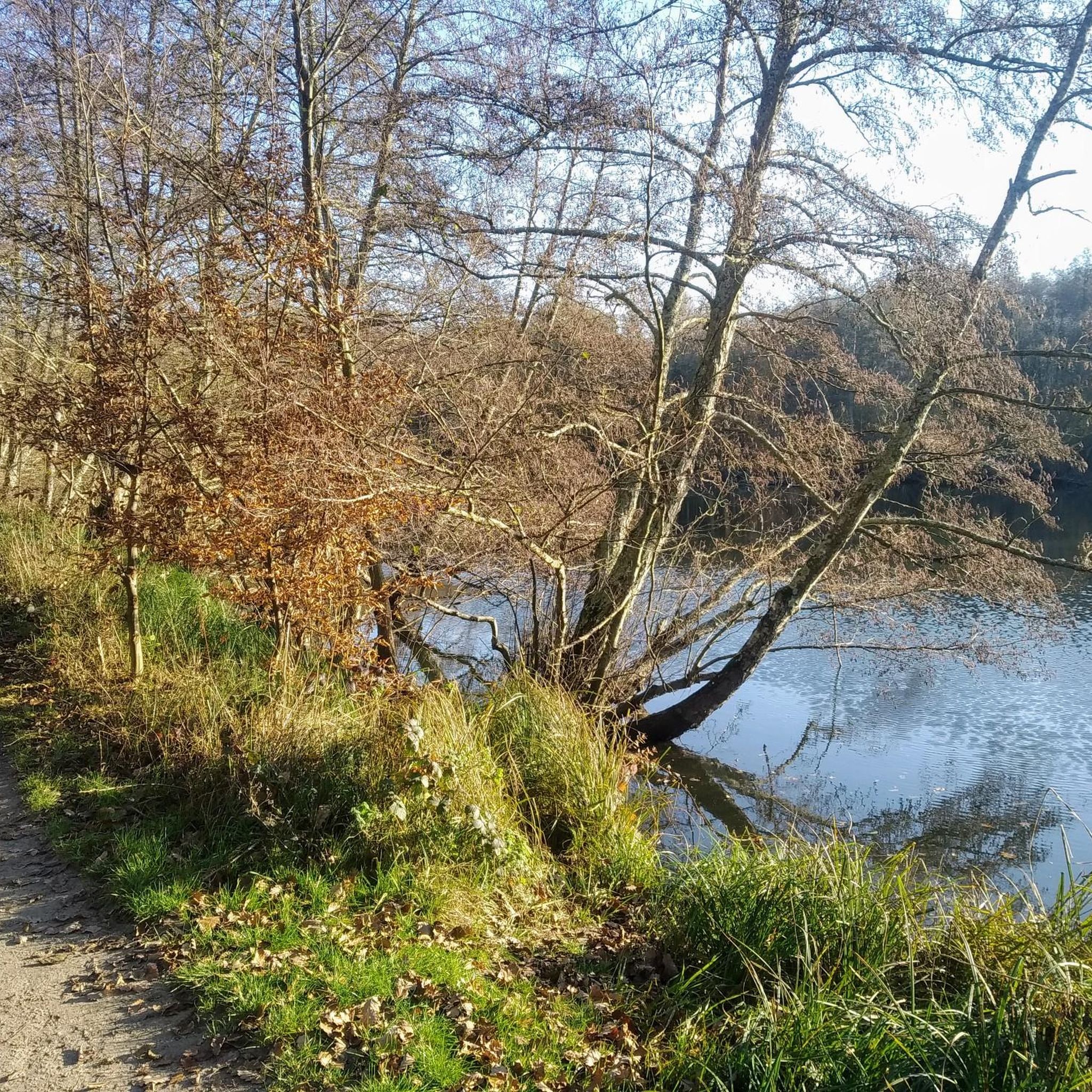
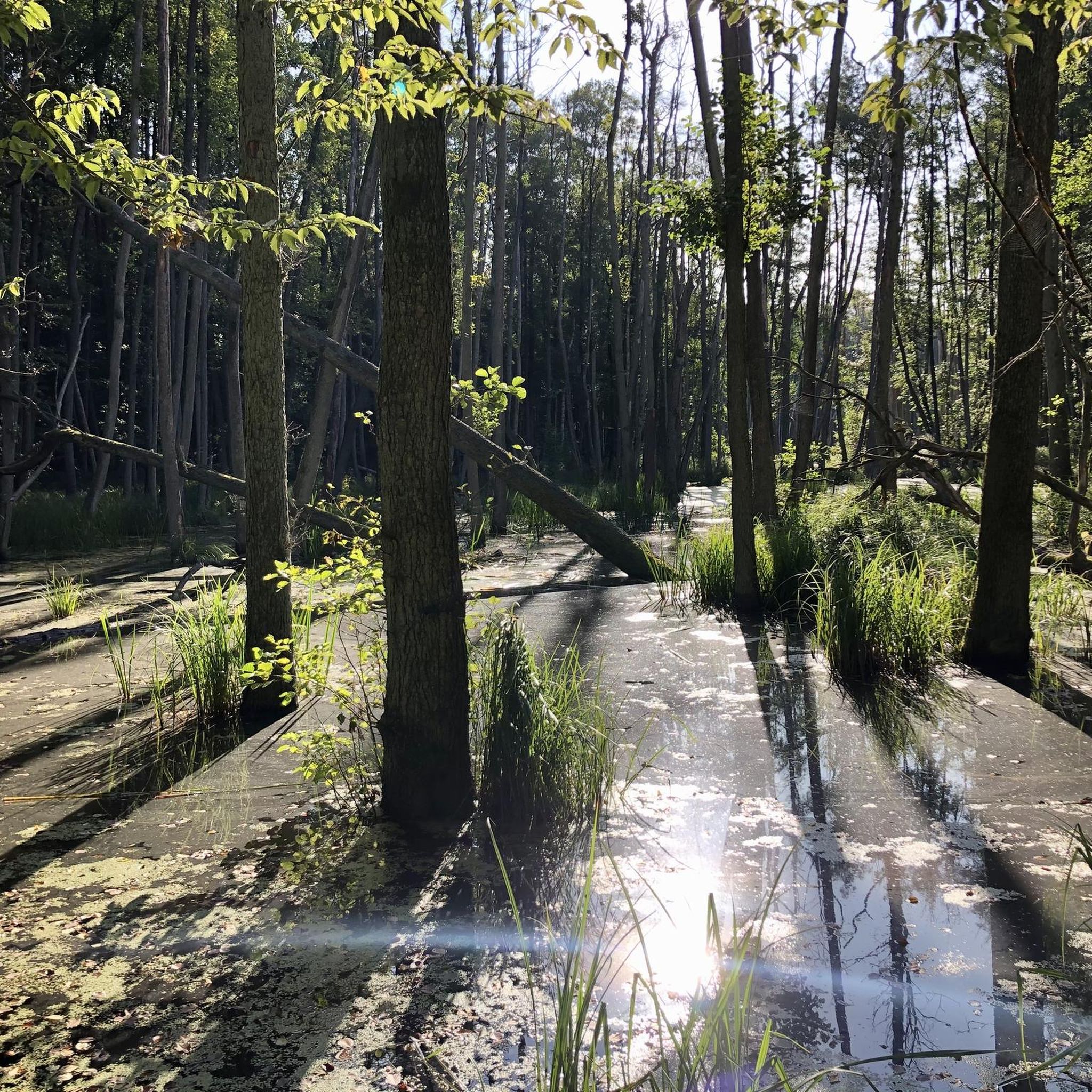
Don't be surprised if you spot flamingos 🦩 on the banks of the pond. They're still there, despite the park being closed for many years.
0
0

The Fontaine du Breuil wash house, an essential break ✨
1
0

Pretty little stone shelter with statue of the Virgin Mary.
0
0

The Moulin de Saint-Piat is a water mill located on the Eure and dating from the 11th century where it was once used for the production of flour and the extraction of oil. You can admire the architecture of the mill, which was extended in 1865, and enjoy the view of the river and the nearby church. The mill is also a good place for birdwatching, as you may be able to see herons, kingfishers and ducks along the water.
4
0

Beautiful, recently renovated washhouse. Its water is supplied by a spring, not the river. It's a great place to take a break.
2
0
Frequently Asked Questions
How many road cycling routes are available around Levainville?
There are over 270 road cycling routes around Levainville, offering a wide variety of options for different skill levels and preferences. The komoot community has explored these routes over 1,500 times, highlighting the region's popularity among cyclists.
What kind of terrain can I expect on road cycling routes near Levainville?
The region around Levainville offers diverse terrain. You'll find vast, fertile agricultural plains in the Beauce, providing gentle rolling landscapes ideal for easy rides. To the west, the Perche region features more challenging routes with green, rolling hills. Additionally, picturesque river valleys, such as those of the Eure and Loir rivers, offer scenic paths through woodlands and charming villages.
Are there routes suitable for beginners or families?
Yes, Levainville offers many easy road cycling routes. For instance, the Gourville Fortified House – Sonchamp church loop from Prunay-en-Yvelines is an easy 27.1-mile (43.7 km) path winding through rural landscapes and past historic sites. Another accessible option is the Gourville Fortified House – Statue of the Virgin Mary loop from Prunay-en-Yvelines, a 23.7-mile (38.1 km) trail through the gentle plains of the Beauce.
What are some longer or more challenging road cycling options?
For those seeking longer or more challenging rides, the region has plenty to offer. The Guiperreux Toad Crossing – Esclimont Castle loop from Le Gué-de-Longroi is a moderate 48.4-mile (77.9 km) route with varied terrain. Another moderate option is the Étang de la Tour – Rochefort-en-Yvelines loop from Prunay-en-Yvelines, covering 46.1 miles (74.2 km) with notable elevation changes. The rolling hills of the Perche region also provide more demanding ascents.
What can I see along the road cycling routes around Levainville?
Road cycling routes around Levainville often pass by charming villages and historical sites. You might encounter landmarks such as the Esclimont Castle or the Gourville Fortified House. The region is also dotted with picturesque churches like the Saints Peter and Paul Church in Gallardon, offering cultural enrichment during your ride.
Are there any long-distance cycling routes accessible from Levainville?
Yes, Levainville is well-placed to access sections of the Véloscenic route, a major long-distance cycling itinerary connecting Paris to Mont Saint-Michel. This route takes cyclists through a 'patchwork countryside' of quaint villages and historic towns in Eure-et-Loir. While not directly on the Loire à Vélo, the broader Centre-Val de Loire region is famous for this iconic path, and the Vallée du Loir à Vélo is also nearby, offering scenic rides along the Loir River.
What is the best time of year for road cycling in the Levainville area?
The spring and autumn months generally offer the most pleasant conditions for road cycling in the Centre-Val de Loire region, including Levainville. Temperatures are mild, and the landscapes are particularly beautiful. Summer can also be enjoyable, though it's advisable to start rides earlier in the day to avoid the midday heat.
Are there circular road cycling routes available?
Many of the road cycling routes around Levainville are designed as loops, allowing you to start and finish in the same location. Examples include the Shaded road – Moulin de Montlouet loop from Le Gué-de-Longroi, a 18.3-mile (29.5 km) easy route, and the longer Guiperreux Toad Crossing – Esclimont Castle loop from Le Gué-de-Longroi.
What do other road cyclists enjoy most about road cycling in Levainville?
The road cycling routes around Levainville are highly rated by the komoot community, with an average score of 4.4 stars from over 40 reviews. Cyclists often praise the varied terrain, from the gentle plains of the Beauce to the rolling hills, and the picturesque river valleys. The well-maintained roads and charming rural scenery are frequently highlighted as key attractions.
Can I find places to stop for refreshments or accommodation along the routes?
The region around Levainville, with its numerous villages and towns, offers opportunities for refreshment stops. While specific cafes or pubs on every route aren't detailed, you can expect to find options in the larger towns or villages you pass through. For accommodation, look for 'gîtes vélo' or other cyclist-friendly lodgings in the area.
Is public transport available to Levainville for cyclists with bikes?
While specific public transport options for bikes to Levainville are not detailed, the Eure-et-Loir department is generally accessible. For detailed information on bringing bikes on trains or buses in the Centre-Val de Loire region, it is recommended to check the official regional transport websites or contact local tourist information centers.
Where can I find parking for road cycling routes in Levainville?
Many road cycling routes around Levainville start from nearby towns and villages like Le Gué-de-Longroi or Prunay-en-Yvelines. These locations typically offer public parking facilities where you can safely leave your vehicle before starting your ride. Always check local signage for specific parking regulations.
Most popular attractions around Levainville

Get inspired with the komoot mobile app


Explore more
Browse the best Road cycling routes in other regions.
