The best road cycling routes around Écrosnes
4.3
(173)
2,604
riders
390
rides
Road cycling routes around Écrosnes, located in the Eure-et-Loir department of France, traverse diverse landscapes characterized by rolling hills and winding country lanes. The region offers a blend of open fields, forests, and river valleys, providing varied terrain for cyclists. This area is known for its well-maintained routes that allow exploration of the countryside and cultural heritage. The landscape includes distinct areas such as the Beauce and the Perche, offering different scenic vistas.
Best road cycling routes around Écrosnes
- The…
Last updated: July 2, 2026
21
riders
66.2km
02:58
400m
400m
Moderate road ride. Good fitness required. Mostly well-paved surfaces and easy to ride.
3.8
(5)
27
riders
47.0km
01:55
210m
210m
Easy road ride. Great for any fitness level. Mostly well-paved surfaces and easy to ride.

Sign up for free
5.0
(1)
13
riders
126km
05:01
500m
500m
Hard road ride. Very good fitness required. Mostly well-paved surfaces and easy to ride.
3.0
(1)
22
riders
49.7km
02:05
250m
250m
Moderate road ride. Good fitness required. Mostly well-paved surfaces and easy to ride.
3.0
(4)
13
riders
50.5km
02:15
190m
190m
Moderate road ride. Good fitness required. Some segments of this route may be unpaved and difficult to ride.
Get access to more routes and recommendations from other explorers.
Sign up for free
Already have an account?
Our route recommendations are based on thousands of hikes, rides, and runs completed by other people on komoot.
Start today with a free account
Your next adventure awaits.
Login or Signup


Tips from the Community


The Moulin de Mormoulins is a watermill located on the Eure River in the hamlet of Mormoulins. This mill dates back to the 18th and 19th centuries and is a listed historical monument. You can admire the old stone building, the wooden wheel, and the canal that diverts water from the river as you pass in front of the mill. The mill is surrounded by green fields and trees, creating a peaceful and relaxing atmosphere.
0
0

According to tradition, the church choir covers the remains of an older building, possibly dating back to the 6th century, which was built to house the saint's body. According to current knowledge, the commune of Saint-Piat (Sanctus Piatus in Latin) officially appeared in 1087, mentioned in a charter of the Nottonville Priory (Eure-et-Loir), on which it depended. The current building was rebuilt during the time of Francis I, as suggested by the date 1535 engraved on two buttresses of the apse and the date 1542 engraved on a piece of wood from the vault. This is according to a study by the SAEL (Eure-et-Loir Archaeological Society). The three-sided apses, the dripstone towers (horizontal members projecting from a wall), and the sculpted roof structures are a testament to the importance of the reconstructions carried out in the department during the 16th century. The church of Saint-Piat is one of them. While the church has not been officially recognized, it nevertheless contains objects that have attracted attention both for their antiquity and quality, but not always for good reason. Their artistic value, far from attracting only religious or aesthetic interest, has also aroused a covetousness that, unfortunately, remains for some of them. Fortunately, those still in place are carefully cared for and offer the curious a story to discover, a beauty to slowly ponder as they progress toward the choir.
0
0
Before 528, the village of Saint-Prest was called Saint-Jean-sur-Eure. At that time, the Bishop of Chartres, Ethère, had a building built adjoining the southern flank of the parish church, including a "martyrium" to house the remains of holy martyrs (the legend of Saint-Prest), which were placed in ten sarcophagi. The most honored relics were those of a certain Priscus; following numerous miracles, the parish took the name of Saint-Prest. The current church's crypt is the apse of the 9th-century Carolingian church, which replaced a 6th-century sanctuary. Access to the 12th-century nave, on the west side, is through a beautiful Romanesque portal, carved from beautiful limestone, surmounted by a triple saw-tooth archivolt and framed by two small columns with capitals. On the right, a face would be that of Eve, and on the left would appear the tempting serpent.
0
0

Many centuries ago, our ancestors discovered the possibility of harnessing the power of the elements—which, while helpful and useful on the one hand, could also be a threat as untamed forces of nature—for various purposes, thus eliminating the need for human or animal muscle power. Mills like these are a good example of the human engineering skills of earlier generations: The heavy millstones used to grind grain or press oil, for example, could be powered by wind or—as in this case—water.
0
0

Pretty building at Bordes which forms the entrance to the castle.
0
0

Ideal for a coffee break. There's a bar and a pastry shop that makes delicious macarons! There's a water fountain next to the church, a little further on.
0
0

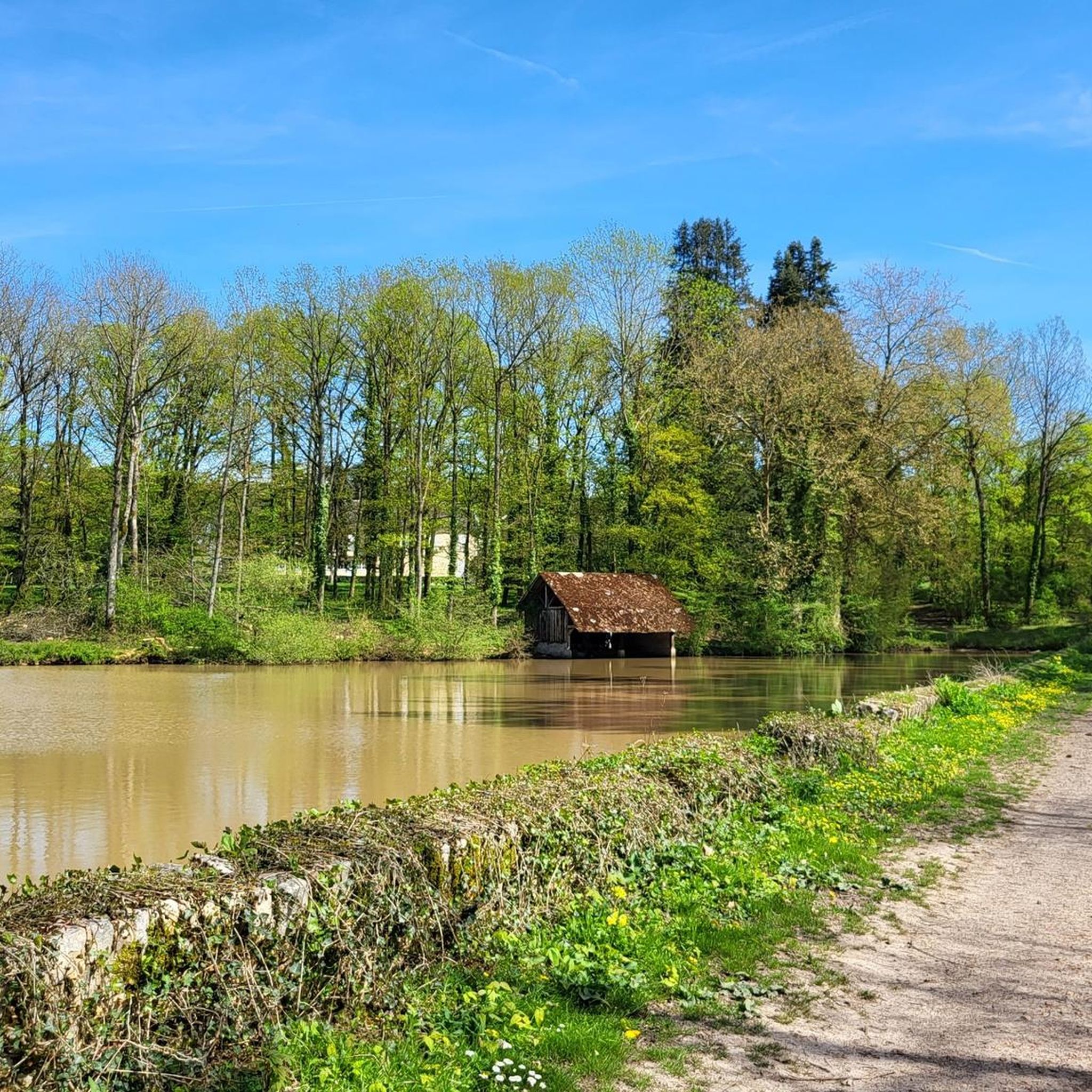
Very beautiful pond
0
0
Frequently Asked Questions
How many road cycling routes are available around Écrosnes?
There are over 390 road cycling routes around Écrosnes, offering a wide variety of options for cyclists. These routes cater to different skill levels, with 115 easy, 277 moderate, and 4 challenging trails.
What kind of terrain can I expect when road cycling in Écrosnes?
The terrain around Écrosnes is characterized by rolling hills and winding country lanes. You'll encounter a blend of open fields, forests, and river valleys, providing varied and engaging rides through distinct areas like the Beauce and the Perche.
Are there any easy road cycling routes suitable for beginners around Écrosnes?
Yes, Écrosnes offers a good selection of easy routes. For example, the Armenonville church – Château de Maintenon loop from Gallardon is an easy 42.7 km route that takes you through pleasant countryside.
What are some notable landmarks or attractions I can see while cycling in the Écrosnes area?
The region is rich in historical and natural sites. You can cycle past impressive structures like the Maintenon Castle with its aqueduct, or the historic Pont Rouge on the Louis XIV Canal. The Canals of Rambouillet Castle are also a beautiful sight to explore.
What do other road cyclists enjoy most about cycling in Écrosnes?
The road cycling routes in Écrosnes are highly rated by the komoot community, with an average score of 4.3 stars from over 100 reviews. Cyclists often praise the varied terrain, well-maintained routes, and the picturesque landscapes that blend charming villages with open fields and forests.
Are there any long-distance cycling routes that pass through or near Écrosnes?
Yes, several notable long-distance routes are accessible. The famous Véloscénie, stretching from Paris to Mont Saint-Michel, passes through the Eure-et-Loir region. Other signposted itineraries include the Royal Eure Valley by bike and the Loir Valley by bike, offering extensive exploration opportunities.
Are there any circular road cycling routes available?
Many routes around Écrosnes are designed as loops. A popular moderate option is the La Celle-les-Bordes – Château des Bordes loop from Orphin, which covers 66.5 km and takes you through picturesque landscapes and charming villages.
What is a good moderate road cycling route to try in the area?
For a moderate challenge, consider the Pavilion Pond – Route de la Celle (D72) loop from Orphin. This 49.1 km route features rolling hills and country lanes, providing an engaging ride through the Eure-et-Loir countryside.
Can I find routes that offer a mix of natural beauty and cultural heritage?
Absolutely. The region around Écrosnes is known for its blend of natural beauty and cultural heritage. Routes often wind through charming villages, past historic châteaux like Maintenon Castle, and alongside scenic river valleys, allowing you to experience both aspects.
What is the best time of year to go road cycling in Écrosnes?
The Eure-et-Loir region generally offers pleasant conditions for cycling from spring through autumn. These seasons provide comfortable temperatures and vibrant landscapes, making it ideal for exploring the countryside at your own pace.
Are there any challenging road cycling routes for experienced cyclists?
While the majority of routes are easy to moderate, there are a few challenging options for experienced cyclists. The region's rolling hills and varied terrain ensure that even seasoned riders can find routes to test their endurance and enjoy the scenic climbs.
Where can I find more information about cycling in the Eure-et-Loir region?
For additional information and resources about cycling in the broader Eure-et-Loir region, you can visit the official tourism website: tourisme28.com/en/cycling/.
Most popular attractions around Écrosnes

Get inspired with the komoot mobile app


Explore more
Browse the best Road cycling routes in other regions.
