The best road cycling routes around Coudreceau
4.1
(44)
1,110
riders
260
rides
Road cycling routes around Coudreceau are set within the Loire Valley, a region defined by the Loire River and its affluents, offering a mix of flat river paths and gently rolling terrain. The landscape features extensive forests, such as the Forêt d'Orléans, alongside cultivated plateaus and vineyards. While generally gentle, some areas present moderate hills, providing varied cycling experiences.
Best road cycling routes around Coudreceau
- The most popular road cycling route is Thiron Abbey – Stage 1 of the Véloscénie…
Last updated: July 4, 2026
4.8
(4)
37
riders
31.4km
01:27
340m
340m
Moderate road ride. Good fitness required. Mostly well-paved surfaces and easy to ride.
8
riders
54.3km
02:18
420m
410m
Moderate road ride. Good fitness required. Mostly well-paved surfaces and easy to ride.

Sign up for free
7
riders
45.4km
02:04
520m
520m
Moderate road ride. Good fitness required. Mostly well-paved surfaces and easy to ride.
6
riders
64.8km
02:39
390m
390m
Moderate road ride. Good fitness required. Mostly well-paved surfaces and easy to ride.
7
riders
43.0km
01:54
390m
390m
Moderate road ride. Good fitness required. Mostly well-paved surfaces and easy to ride.
Get access to more routes and recommendations from other explorers.
Sign up for free
Already have an account?
Our route recommendations are based on thousands of hikes, rides, and runs completed by other people on komoot.
Start today with a free account
Your next adventure awaits.
Login or Signup
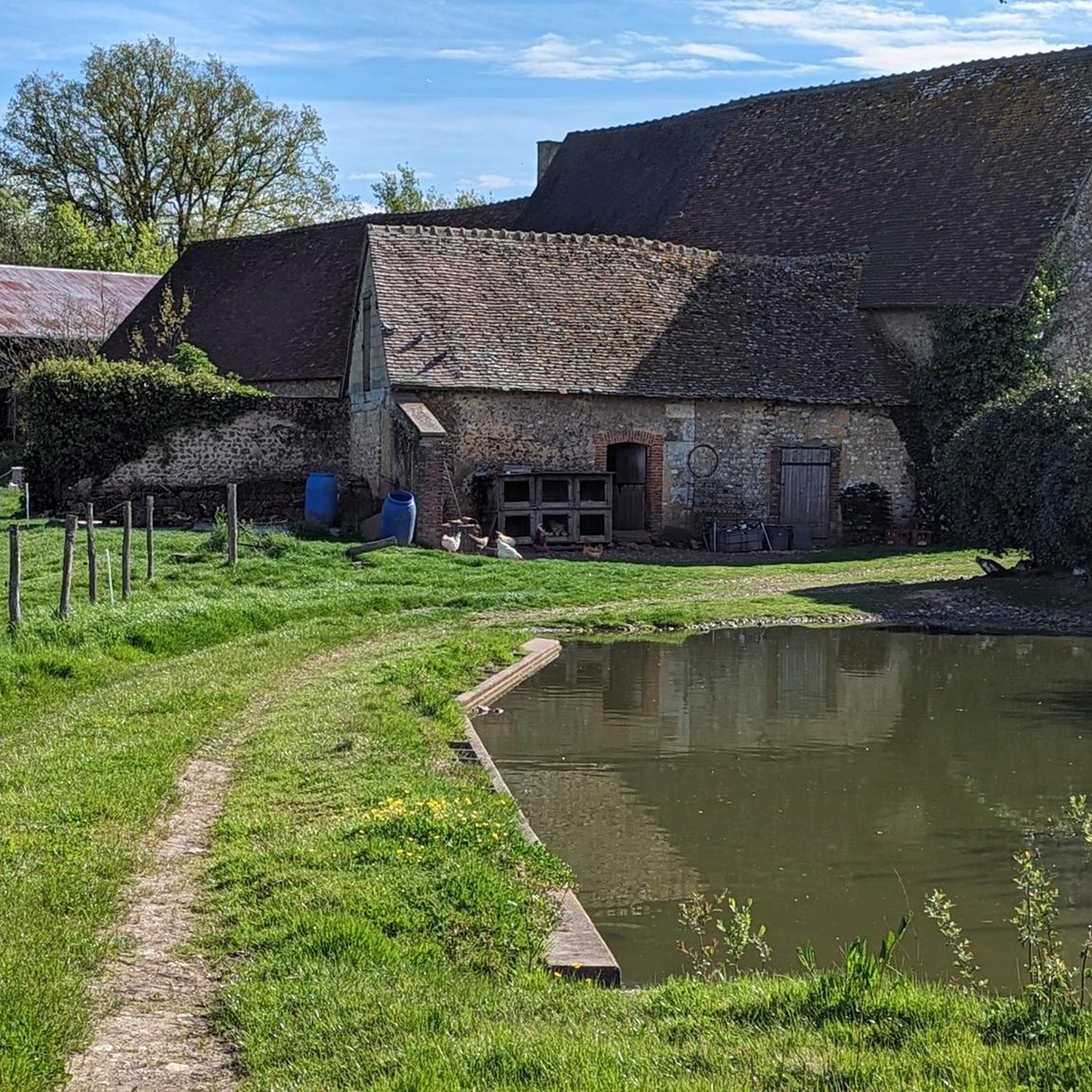

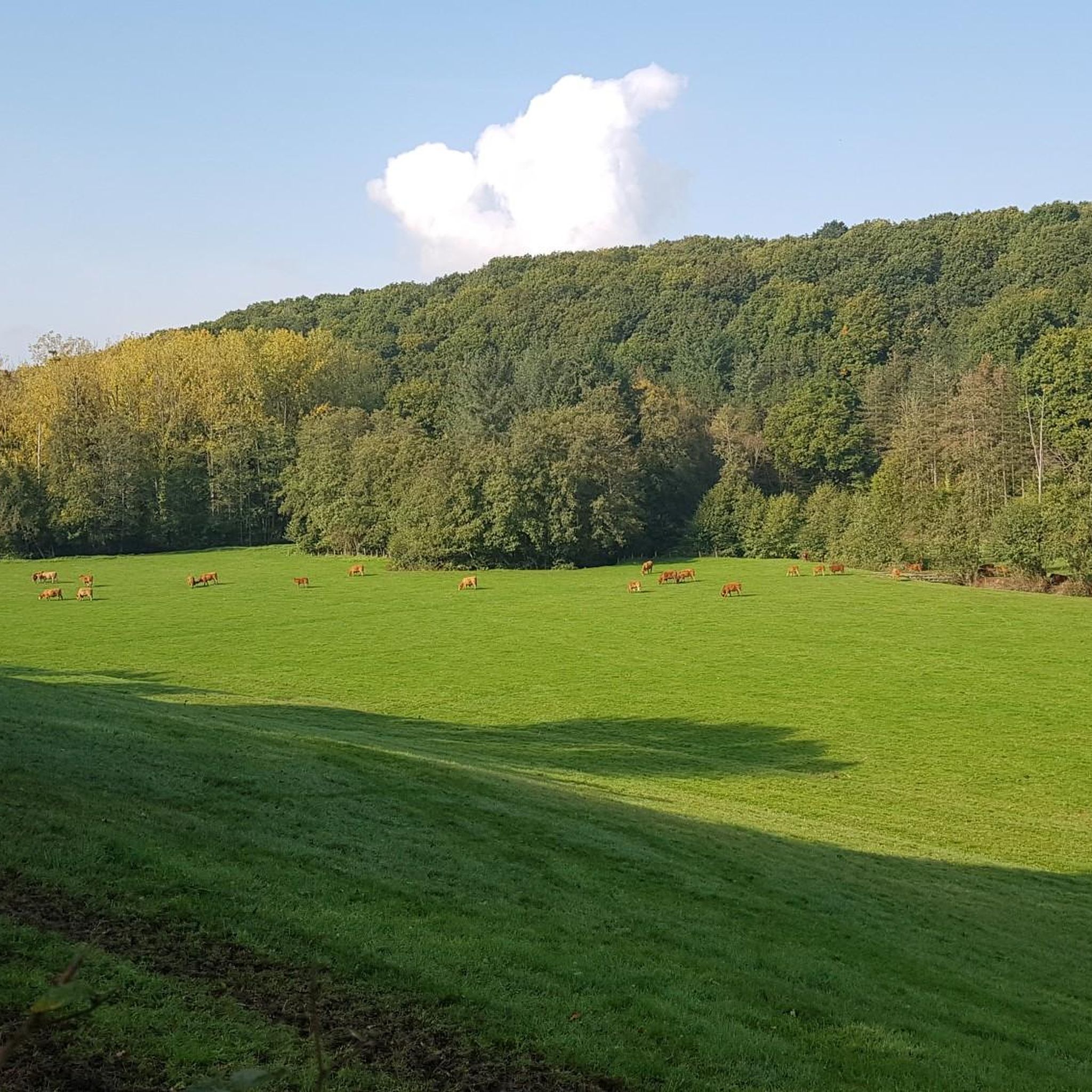

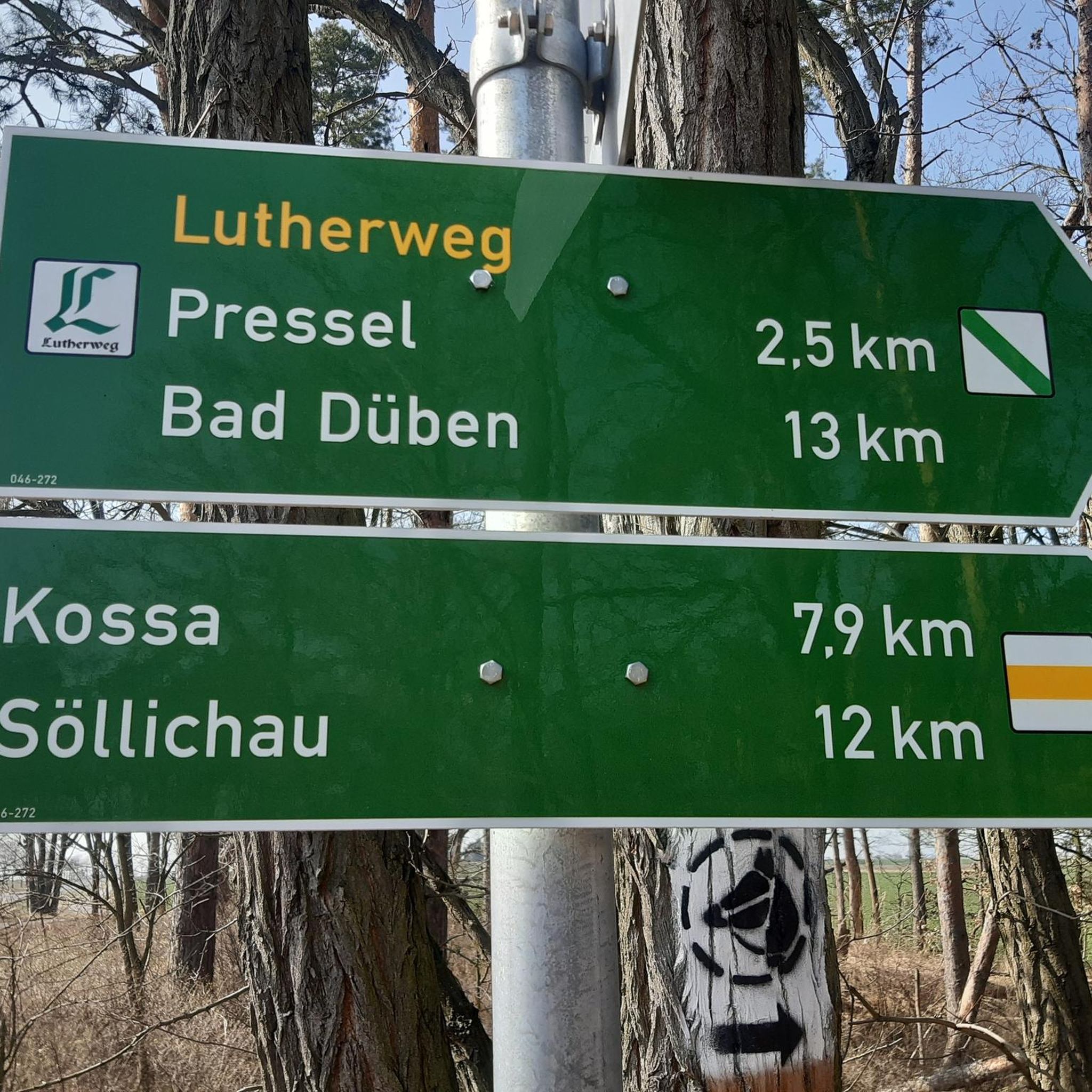
Tips from the Community

Magnificent ceiling with the possibility of lighting it up
0
0

This ancient fortified castle dominates the Huisne Valley at 360° with its imposing keep. The building, with its troubled history, has undergone numerous modifications in its architecture and functions. A visit is essential to understand the complexity of its history and to observe the architectural evolutions.
0
0

The inhabitants of Margon can admire the church of Notre-Dame du Mont-Carmel, proudly dominating the old town on its rocky spur, at the corner of two green valleys. It was later given an aisle during the 16th century, but its Romanesque portal has been preserved. It reigns benevolently over the old cemetery which surrounds it and which has recently been enlarged due to the increase in the population of the commune.
0
0

A must-see that overlooks the valley.
0
0

Built on an old feudal motte, which is still visible and was completely destroyed during the Hundred Years' War, it was replaced in the second half of the 15th century by the castle, the remains of which can still be seen today. The Saint-François Tower remains as it was, with its Grisons base and rows of white stone. Halfway up the circle is the Cord of Saint Francis of Assisi, with its coils and knots. A Renaissance building was added in the 16th century, and new buildings were constructed in the 17th and 18th centuries.
0
0
The Saint-Lubin church, built on a sloping site, is a vast building with juxtaposed constructions, bearing witness to renovations and additions up to the 19th century, the oldest distinguished by the presence of grison, the most recent by limestone and flint. The sanctuary was ceded in 1077 by the monks of Saint-Denis de Nogent-le-Rotrou to the monks of the Saint-Père de Chartres abbey. Built in the 11th-12th century, the nave extended by a semi-circular apse is the oldest part of the church, in Romanesque style. In the thickness of the north walls of the nave are still visible the grison bonds which bear witness to the original openings. The building was considerably enlarged in the 15th and 16th centuries by the construction of a large transept, formed of two chapels, and a south aisle forming an alignment of gables attached to the slopes decorated with leafy motifs and finished with chimeras. The construction of the north aisle, just begun, was not finished. On the outside, on the west wall of the chapel, we can see the beginning of a first bay (stone arch and walls removed that remained unfinished). On the gable of the north transept, the walled door can be seen from the pointed arch and the ornate pinnacles, characteristic of the end of the 15th century. In the center, two animals present a coat of arms. On each side of the door, niches with canopies once housed statues. Above, we can still see a coat of arms presented by two bearded figures and probably surmounted by God the Father. According to local tradition, all or part of the extensions were due to the generosity of Florimont Robertet, who owned the barony of Brou from 1509 until his death in 1527, and it was because of this that the work was interrupted. Occupied by the revolutionaries, the building became a ten-day temple in 1794; it was finally returned to worship in 1802. Burnt down by lightning in 1813, the upper part of the bell tower, which was a slender spire, was replaced by the construction of a square limestone tower pierced with louvers. On the southern part of the bell tower, a turret provides access to the bells. In the southern part of the nave, a door, now blocked and highlighted by a basket-handle arch topped with a pinnacle, provided access to the cemetery that once surrounded the church. The building can boast of having preserved very uniform oak furniture, most of which was made in the second half of the 18th century.
0
0
Occupying mainly a hill dominated by a curious dome-shaped bell tower, the territory of Brunelles has a rich historical past, sometimes even bordering on the marvelous. If the very ancient occupation of the place is attested to in Bois-Jahan, the disappearance of the village of La Ferrière and its church of La Madeleine during the Hundred Years' War (14th-15th century), give the hamlet of Vieux Murs a legendary air... A fortified castle and a chapel below probably stood here. Furthermore, because the lords of Brunelles who were the vassals of the Rotrou, were required to guard the Saint-Jean castle, one of the towers of the Nogent castle still bears the name of the village today. Situated on a rocky peak, the Saint-Martin church is visible from afar. Built in the 15th century, most of it, including the spire, was unfortunately destroyed by fire, and only the stone choir with a semi-circular vault is original. The nave is lit on each side by three flamboyant-style windows, and in the choir you can admire the beautiful stone altarpiece that has recently been restored. You will also notice an oculus on the south face, found during the 1998 restoration campaign, and enriched with a recent stained glass window illustrating the Creation. Finally, visitors should not fail to stop by the relics of the young Alexander, tortured for refusing to renounce his faith in Christ, as were other saints called martyrs for this, from the Greek "witnesses". There are thus many relics in our churches: they can be found at the first origin of basilicas, often built on ancient funerary areas on the outskirts of ancient cities. The relics of the saints are to be considered as the very humble signs of what their bodies were, the evocation of their human condition: it is with their bodies that the saints acted, thought, prayed, worked, suffered and experienced death. The monastery of the Val d’Arcisses was the first foundation of the monk Bernard d’Abbeville, later called Bernard de Thiron, because the monks of St.-Denis de Nogent-le-Rotrou would not let him do it! Bernard had to settle nearby, in the parish of Gardais, under the protection of the bishop of Chartres, Saint Yves and de Rotrou, Count of Perche. He had been established in a manor located between Brunelles and Ozée. The Notre-Dame-du-Val-d’Arcisses abbey welcomed Benedictine nuns during the 17th and 18th centuries. Destroyed during the Revolution, all that remains is the gatehouse, a beautiful arch embedded in a façade. One of the monks' major works was to dig the Arcisses canal, a diversion from the Cloche: it irrigated the abbey's lands and supplied the fountain which flowed near the Notre-Dame church in Nogent-le-Rotrou.
0
0
Frequently Asked Questions
How many road cycling routes are available around Coudreceau?
There are over 250 road cycling routes around Coudreceau, offering a wide range of options for different skill levels. This includes 41 easy routes, nearly 200 moderate routes, and 15 more challenging options, ensuring there's a ride for every cyclist.
What kind of terrain can I expect on road cycling routes near Coudreceau?
The terrain around Coudreceau is characterized by picturesque, undulating landscapes, particularly within the Parc Naturel Régional du Perche. You'll find rolling hills, green valleys, and extensive forested sections, offering engaging ascents and descents without overly strenuous mountain passes. The region also features quiet country roads, making for a peaceful cycling experience.
Are there any family-friendly road cycling routes in the Coudreceau area?
Yes, Coudreceau offers several family-friendly road cycling options, particularly on the quieter country roads and designated cycle paths. While the region has undulating terrain, many routes are suitable for various fitness levels. For a gentler experience, consider exploring sections of the Voie verte in Dorceau, which provides a dedicated cycle way.
What are the best seasons for road cycling around Coudreceau?
Spring and autumn are considered the best seasons for road cycling in the Coudreceau area and the wider Parc Naturel Régional du Perche. During these times, you can enjoy mild weather and vibrant landscapes, with lush greenery in spring and beautiful foliage in autumn, making for a very scenic ride.
What historical sites or landmarks can I see along the road cycling routes?
The Coudreceau area is rich in charming villages and historic sites. Along your rides, you might encounter places like Nogent-le-Rotrou Castle, the peaceful Thiron-Gardais Abbey Gardens, or the impressive Notre-Dame Church in Nogent-le-Rotrou. Routes like the Nogent-le-Rotrou Castle – Château Saint-Jean loop from La Gaudaine specifically pass by such attractions.
Are there any long-distance cycling routes accessible from Coudreceau?
Yes, Coudreceau is situated along or near sections of La Véloscénie, a major long-distance cycle route connecting Paris to Mont Saint-Michel. This route offers a mix of greenways and quiet roads, passing through forests and the picturesque Perche Regional Natural Park, ideal for multi-day cycling adventures. You can experience a part of it on the Notre Dame Church – Stage 1 of the Véloscénie loop from La Gaudaine.
What do other road cyclists say about the routes in Coudreceau?
The road cycling routes in Coudreceau are highly rated by the komoot community, with an average score of 4.0 stars from over 30 reviews. Cyclists often praise the quiet country roads, the engaging undulating terrain, and the beautiful, lush countryside that provides a peaceful and immersive cycling experience.
Are there circular road cycling routes available around Coudreceau?
Yes, many of the road cycling routes around Coudreceau are designed as loops, allowing you to start and finish in the same location. Examples include the Notre-Dame Church – Saint-Denis Church loop from Condeau and the Notre-Dame Church – Saint-Denis Church loop from Coudreceau, which offer convenient circular journeys through the rural landscapes.
Where can I find more information about cycling in the Perche region?
For additional information about cycling opportunities and the natural beauty of the Perche region, you can explore resources like France Vélo Tourisme's guide to the Perche by bike or the Tourisme28 website for cycling in the Eure-et-Loir department.
Are there challenging road cycling routes for experienced riders?
Absolutely. While the region is known for its rolling hills, there are routes that offer significant elevation changes, providing a good workout for experienced riders. The 'Routes Tranquilles du Perche' network, for instance, includes loops with positive altitude differences sometimes exceeding 1,000 meters, ensuring a rewarding ride with panoramic views. You can find 15 difficult routes in the area, such as the Frazé – Château de Frazé loop from La Gaudaine.
What are the typical distances and durations for road cycling routes in Coudreceau?
The road cycling routes around Coudreceau vary widely in distance and duration. You can find shorter loops like the Notre-Dame Church – Saint-Denis Church loop from Condeau, which is 22.2 km and takes about 1 hour 4 minutes. Longer routes, such as the Notre Dame Church – Stage 1 of the Véloscénie loop from La Gaudaine, cover 54.3 km and can take around 2 hours 18 minutes, offering extended rides through varied terrain.
Most popular routes around Coudreceau
Most popular attractions around Coudreceau

Get inspired with the komoot mobile app


Explore more
Browse the best Road cycling routes in other regions.
