Attractions and Places To See around Le Poislay - Top 16
Best attractions and places to see around Le Poislay include a blend of historical religious architecture and natural landscapes within the Perche region. This area, part of the Perche Gouët, is characterized by a succession of valleys and hills, offering varied views. The Vallée de l'Yerre, a designated ZNIEFF, highlights the ecological importance of the region for fauna and flora. Visitors can explore centuries-old churches and natural environments suitable for outdoor activities.
Best attractions and places to see around Le…
Last updated: June 29, 2026
Notre-Dame Church of Chapelle-Guillaume
Highlight • Religious Site
Translated by Google •
Tip by

Saint John the Baptist Church
Highlight • Other
Translated by Google •
Tip by
Sign up now to discover places like this
Get recommendations on the best single tracks, peaks, & plenty of other exciting outdoor places.
Sign up for free
Saint-Jean-Baptiste Church of Courtalain
Highlight • Religious Site
Translated by Google •
Tip by
Saint Anne Church
Highlight • Religious Site
Translated by Google •
Tip by
Saint Hilaire Church
Highlight • Other
Translated by Google •
Tip by
Sign up for free to discover even more attractions around Le Poislay.
Sign up for free
Already have an account?
Start today with a free account
Your next adventure awaits.
Login or Signup



Tips from the Community

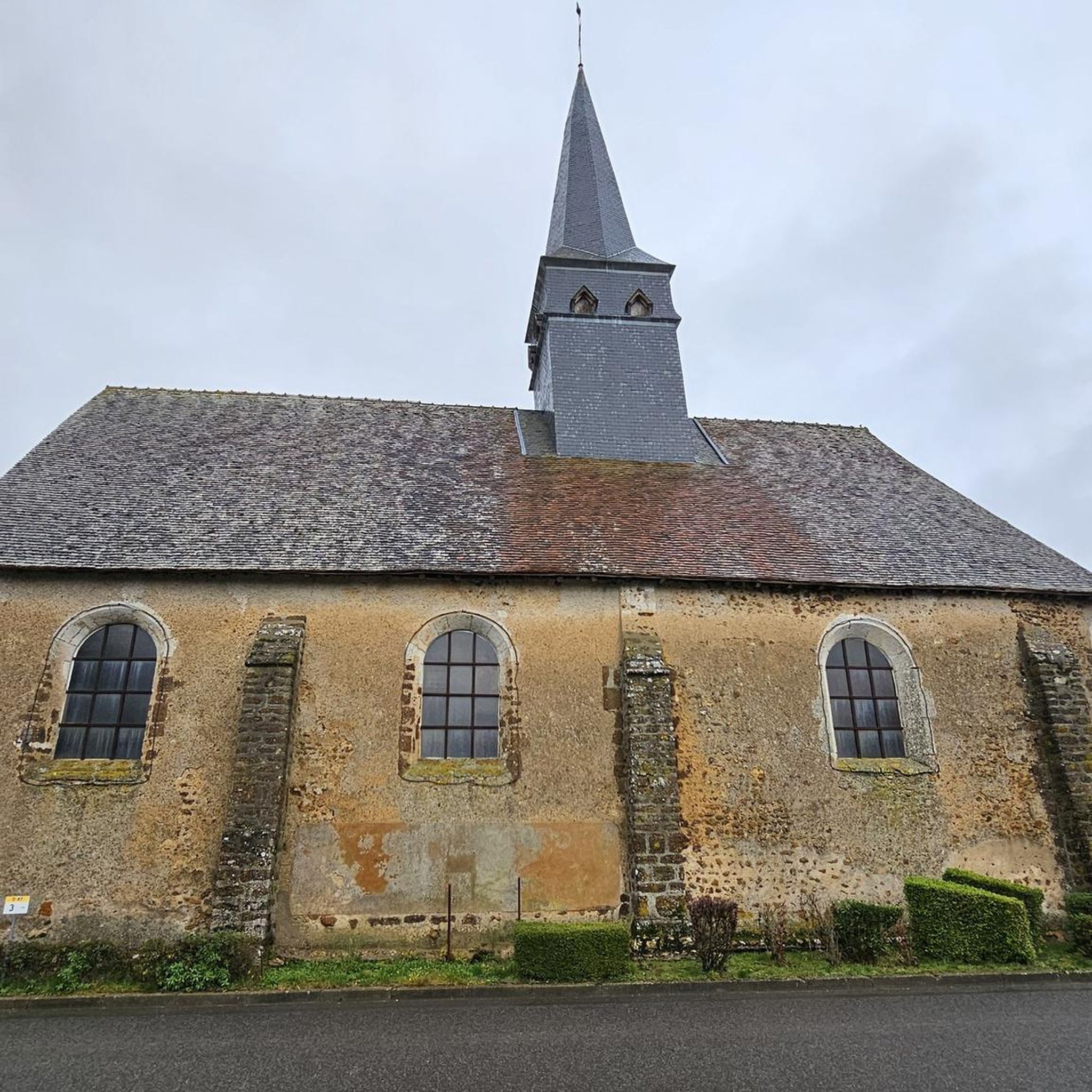
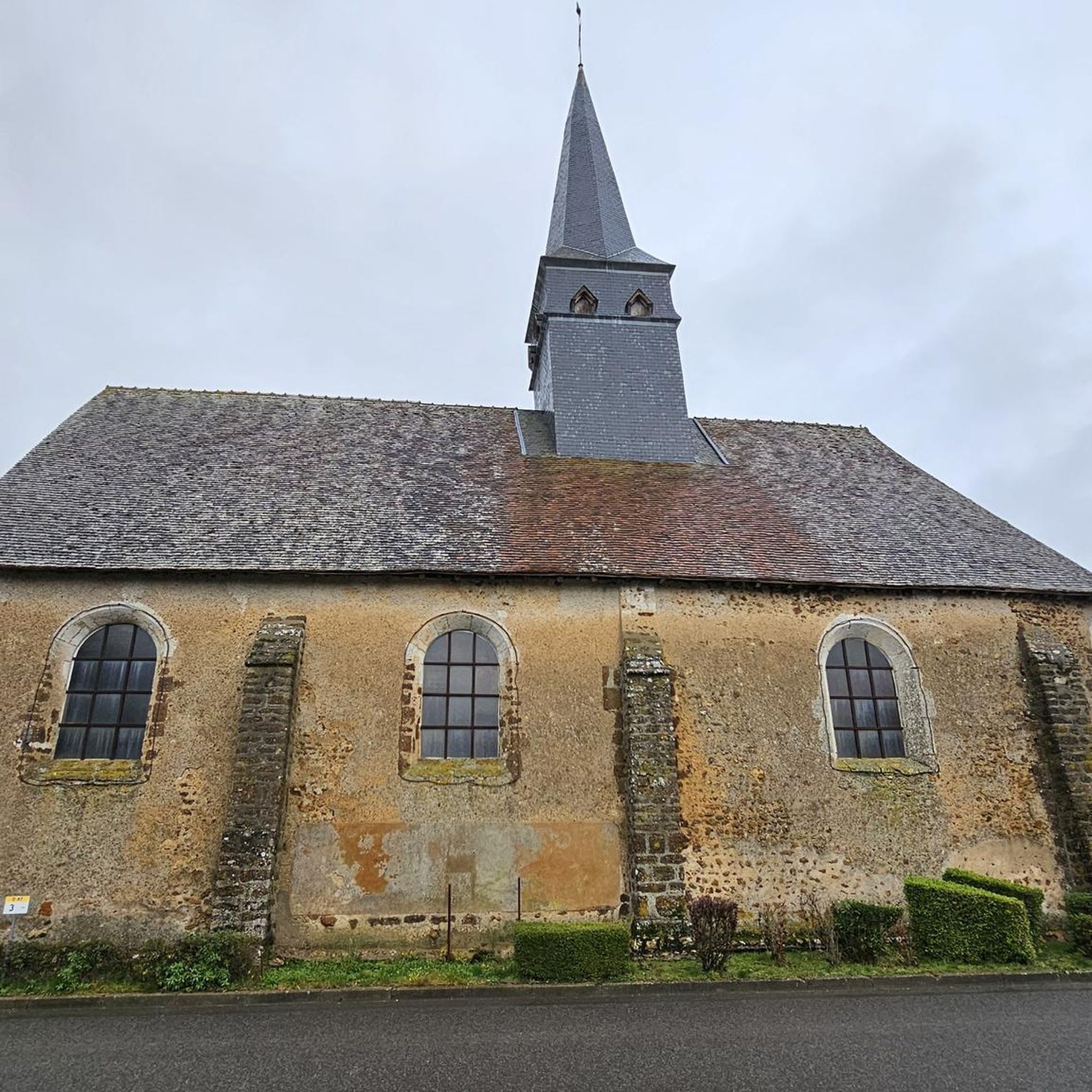
The Saint Hilaire church is a vast building from the end of the 11th or 12th century which originally consisted of only a nave with choir and semi-circular apse supported by slightly protruding buttresses made of grison, an extremely hard ferruginous agglomerate which does not allow any work. of sculpture. You can see the primitive work in the walls of the nave and the choir with its small windows and the exterior buttresses in gray. Its appearance was considerably modified during the Renaissance period, when a transept was added, then during a second campaign of transformations, the small side chapels of the choir covered with ribbed vaults with vines and tiers which would have had to be topped with a pavilion roof. The entire monument is covered with a paneled vault with visible beams and hallmarks; above the sanctuary the shingle decorated with arabesques and painted cherubs' heads bears the date 1561. In the 17th century, like many churches of the time, the glass roof at the bottom of the apse was closed to build an altarpiece then fashionable, as it is today with the woodwork that accompanies it. On the west side of the north transept, above the small shed, we can clearly see in the masonry a stone arch which is perhaps the beginning of the cloister mentioned in the archives. In addition to the charm of its Renaissance parts, this church is fortunate to have beautiful furniture from the 17th and 18th centuries which preserves the appearance it had under the Ancien Régime: a lectern dated 1754, modified in 1784 with a antiphonary and a Chartres gradual from 1784. It is in perfect condition, as the cantors must have used it before the revolution. Another valuable piece, the solid oak work bench, cleaned a few years ago of the paint with which it had been decorated, and which now serves as an altar to meet the new standards of the liturgy for the mass facing the faithful.
0
0
The 12th century church of Saint Jean-Baptiste de Courtalain, already repaired in 1592, was rebuilt in 1809, increased by an aisle in 1838, then by a remarkable porch bell tower topped with a twelve meter spire. height, thanks to the generosity of the Montmorency family, owner of the castle. It is to Guillaume Davaugour and Perette de Baïf, his wife, that we attribute the erection of the Courtalain chapel into a parish church; The church is located in the immediate perimeter of the castle. The entire building is partly covered with flat tiles for the roof of the nave, the bell tower, the staircase turret; the three cut sides of the apse and the lower north side are covered in natural slate. Inside the nave is a Mutin Cavaillé Coll organ dating from 1936. It contains several interesting paintings.
0
0
The parish church dedicated to Saint Anne, perhaps more anciently to the Virgin, depended on the diocese of Chartres. This former possession of Ganelon, treasurer of Saint-Martin de Tours in the 11th century, was undoubtedly part of the important donation made by his descendants Eudes and Rahier de Montigny for the benefit of the chapter of Chartres Cathedral around 1160. This Romanesque building, 35 m long, with a single nave and flat apse, reinforced with buttresses and lit by round-arched windows splayed internally and simply chamfered towards the outside, was never vaulted in stone: it is covered with 'a paneled vault. The masonry is entirely made of Grison stone, including the frames, giving an austere appearance specific to this region of Perche. We enter to the west through a semi-circular door with a double arch into the lower room of a bell tower-porch established later inside the original nave. The upper part of this bell tower was pierced with semi-circular bays. The eastern one was obstructed during the installation of the high roof of the nave and the bells were placed above in a belfry under a frame. The interior of the building was in fact covered as a whole by a paneled vault with molded beams and punches from the 16th century. In the 17th century, the entire back of the choir was decorated with a large altarpiece with columns and pilasters, paintings and sculptures, of great decorative effect. A curious set of carpentry from the same period presents above a confessional a paneled pulpit surmounted by a large sounding board. Note in the furniture a carved Gothic canopy from the beginning of the Renaissance and on the glory beam a carved wooden calvary from the same period. The 19th century. added a gallery, repainted the vault and provided the windows with stained glass.
0
0
This 13th, 15th and 16th century church does not have a transept. It has a central shingled nave with aisles. The choir ends with a polygonal apse. The apse is decorated with glass roofs dating from 1541 representing various scenes from the Passion. These 16th century stained glass windows (bays 1 to 4) have been partially classified as historic monuments since 1908. Bays 1 and 2 were restored in the 17th century thanks to the Bourbon-Conti family, lords of Bazoche-Gouet from 1676 in 1719, the 4 in the 19th century, then in 1974, by Michel Petit, master glassmaker whose workshop is located in Thivars in Eure-et-Loir. Outside the choir, the stained glass windows are from the 19th century, made by two renowned master glassmakers, the Lorin workshops in Chartres and the Carmel stained glass factory in Le Mans, the first in a neo-Romanesque style, the second approaching the neo-Romanesque style. Gothic.
0
0
The robust grison pillars of the church of Chapelle-Guillaume reveal its distant roots in the beautiful country of Perche-Gouët, and even if it is often difficult to fix with precision the date of construction of a church, at least It seems obvious to her that she has been watching over the small village that surrounds her for many centuries – probably not far from ten… It owes her name to Guillaume Gouët. In any case, the last two hundred years have given it many alterations and restorations. Thus the bell tower that a hurricane had brought down was rebuilt in 1827, while the capital which adorned the entrance disappeared a few decades later, serving as a narthex, or more simply as a “caquetoire”. Everything here announces the joy of welcome and the simple peace that a place of prayer requires. The interior is distinguished by the great care taken in maintaining the warm furnishings: painted vault, gallery, benches, paneling, statues and choir woodwork. The altarpiece is illustrated by a pretty painting of the Annunciation. A great harmony emerges from the whole and invites prayer. There was also not far from there near the church a Notre-Dame priory dependent on Marmoutier, where Saint Martin resided.
0
0
Frequently Asked Questions
What historical religious sites can I visit around Le Poislay?
The region is rich in historical churches. You can explore the Notre-Dame Church of Chapelle-Guillaume, known for its robust 'grison' pillars and warm interior. The Saint Fiacre Church features a beautiful Renaissance-style choir entrance and classified stained glass windows. Also, consider visiting the Saint Anne Church, a Romanesque building constructed entirely of Grison stone, and the Saint Hilaire Church, a large building from the late 11th or 12th century with Renaissance modifications. The Saint-Jean-Baptiste Church of Courtalain, located near the Château de Courtalain, also dates back to the 12th century.
Are there natural areas or features to explore near Le Poislay?
Yes, Le Poislay is situated within the picturesque Perche region, specifically the 'Perche Gouët' landscape unit. This area is characterized by a succession of valleys and hills, offering varied and rich landscapes. The Vallée de l'Yerre is identified as a ZNIEFF (Zone Naturelle d'Intérêt Écologique, Faunistique et Floristique), highlighting its ecological importance for fauna and flora, making it an interesting site for nature enthusiasts.
What outdoor activities can I do around Le Poislay?
The natural environment around Le Poislay provides opportunities for various outdoor activities. You can find numerous cycling routes, including road cycling and touring bicycle options. For mountain biking enthusiasts, there are dedicated MTB trails. Explore detailed routes and guides for these activities on komoot: Road Cycling Routes around Le Poislay, Cycling around Le Poislay, and MTB Trails around Le Poislay.
Are there family-friendly attractions in the Le Poislay area?
The Notre-Dame Church of Chapelle-Guillaume is noted as a family-friendly attraction. Its welcoming interior and historical significance can be an engaging experience for families. Additionally, exploring the natural landscapes of the Perche region, such as the Vallée de l'Yerre, offers opportunities for outdoor family activities like gentle walks or picnics.
What makes the Notre-Dame Church of Chapelle-Guillaume a significant site?
The Notre-Dame Church of Chapelle-Guillaume is significant for its robust 'grison' pillars, which suggest ancient origins, possibly nearly a thousand years old. Despite alterations over centuries, its interior maintains a harmonious atmosphere with warm furnishings, a painted vault, a gallery, and an altarpiece illustrating the Annunciation, inviting a sense of peace and reflection.
What is unique about the Saint Fiacre Church?
The Saint Fiacre Church stands out with its very pretty Renaissance-style choir entrance. It houses several classified elements, including stained glass windows, choir woodwork, altarpieces, and a font. The building itself has Romanesque origins from the 12th century, later rebuilt and enlarged in the 16th century, with beams bearing the arms of the Vove, lords of Saint-Agil.
Can I find historical architecture beyond churches in the area?
While many prominent historical sites are religious, the Saint-Jean-Baptiste Church of Courtalain is located in the immediate vicinity of the Château de Courtalain. Although the château itself is a civil edifice, its presence alongside the church offers a broader glimpse into the historical architecture and heritage of the region.
What kind of landscapes can I expect in the Perche Gouët region?
The Perche Gouët region, where Le Poislay is located, is characterized by a dynamic landscape of successive valleys and hills. These 'moving reliefs' are shaped by clayey soils and carved by rivers and streams, resulting in varied views that alternate between intimate, enclosed spaces and more open vistas, all with rounded profiles.
What are the architectural characteristics of the Saint Anne Church?
The Saint Anne Church is a Romanesque building, 35 meters long, featuring a single nave and a flat apse. It is constructed entirely of Grison stone, giving it an austere appearance typical of the Perche region. The interior is covered by a paneled vault with molded beams, and it boasts a large 17th-century altarpiece decorating the back of the choir.
What is the significance of the Vallée de l'Yerre?
The Vallée de l'Yerre is designated as a ZNIEFF (Zone Naturelle d'Intérêt Écologique, Faunistique et Floristique) within the commune's territory. This designation underscores its ecological importance, indicating that it is a significant natural area for its diverse fauna and flora. It's a key spot for those interested in local biodiversity and natural preservation.
Are there any specific features to look for at Saint Hilaire Church?
At the Saint Hilaire Church, you can observe primitive work from its late 11th or 12th-century origins, including small windows and exterior buttresses made of grison stone in the nave and choir walls. Later Renaissance modifications added a transept and side chapels. Inside, look for the paneled vault with visible beams and hallmarks, and a 17th-century altarpiece with accompanying woodwork.

Get inspired with the komoot mobile app


Explore more
Still not found the Highlight you’re looking for? See guides of the top attractions in other regions:
