The best road cycling routes around Saint-Jean-Pierre-Fixte
3.8
(24)
830
riders
236
rides
Road cycling routes around Saint-Jean-Pierre-Fixte traverse a landscape characterized by its hilly terrain and diverse crop fields within the Eure-et-Loir department. The region benefits from low motor vehicle traffic on many sections, enhancing the cycling experience. It is situated near the Perche Regional Natural Park, which offers serene countryside, woods, and apple orchards. The Huisne River also provides pleasant routes along its banks.
Best road cycling routes around Saint-Jean-Pierre-Fixte
- The most popular road cycling route is From Nogent-le-Rotrou to Louigny…
Last updated: May 23, 2026
4.0
(1)
6
riders
Moderate road ride. Good fitness required. Mostly well-paved surfaces and easy to ride.
3.7
(3)
21
riders
55.7km
02:22
420m
420m
Moderate road ride. Good fitness required. Mostly well-paved surfaces and easy to ride.

Sign up for free
3.0
(1)
17
riders
50.1km
02:13
450m
450m
Moderate road ride. Good fitness required. Mostly well-paved surfaces and easy to ride.
12
riders
69.0km
02:49
390m
390m
Moderate road ride. Good fitness required. Mostly well-paved surfaces and easy to ride.
5.0
(1)
13
riders
Moderate road ride. Good fitness required. Mostly well-paved surfaces and easy to ride.
Get access to more routes and recommendations from other explorers.
Sign up for free
Already have an account?
Our route recommendations are based on thousands of hikes, rides, and runs completed by other people on komoot.
Start today with a free account
Your next adventure awaits.
Login or Signup



Tips from the Community

Religious building dating back to the 11th century and expanded during the Renaissance. The first parish church of Nogent-le-Rotrou dates back to the 11th century, and its expansion dates from the 15th and 16th centuries. Beautiful bell tower topped with a lantern surrounded by an ornate gallery.
0
0
The inhabitants of Margon can admire the church of Notre-Dame du Mont-Carmel, proudly dominating the old town on its rocky spur, at the corner of two green valleys. It was later given an aisle during the 16th century, but its Romanesque portal has been preserved. It reigns benevolently over the old cemetery which surrounds it and which has recently been enlarged due to the increase in the population of the commune.
0
0
The church has a Latin cross plan. It has a single nave and a flat chevet. A small building is attached to the chevet. A bell tower flanks the building. Buttresses support the drip walls and the gable wall. Pointed arch bays with tracery illuminate the building. The portal, in a low arch, has its external arched voussure.
0
0
Parish church, as well as its polychrome stone choir enclosure, with the exception of the bell tower and the sacristy built in the 19th century. The church consists of a main nave whose choir ends with a semi-circular apse from the Romanesque period. The large mullioned windows were installed in the 15th century. The south aisle dates from the 16th century. In the second half of the 19th century, the church underwent major modifications: construction of the sacristy in 1860, brick vault in 1870, stone bell tower according to the designs of the architect Prempain around 1879.
0
0
Formerly La Loupe, Vaupillon and Saint Eliph formed only one parish called the Trinity of the Woods. The church contains a set of 3 painted stone altarpieces from the 17th century. One is dated 1646 and signed Delahays: it includes 3 sculptures: a trunk of grace, representation of the trinity in which God the father holds before him his son on the cross, the dove of the Holy Spirit hovering above his head You can also see a statue of the local saint in painted and gilded stucco and a Saint Sebastian in painted stucco, characteristic of the counter-reformation. A small chapel to the north was added in the 19th century which contains a pieta.
0
0

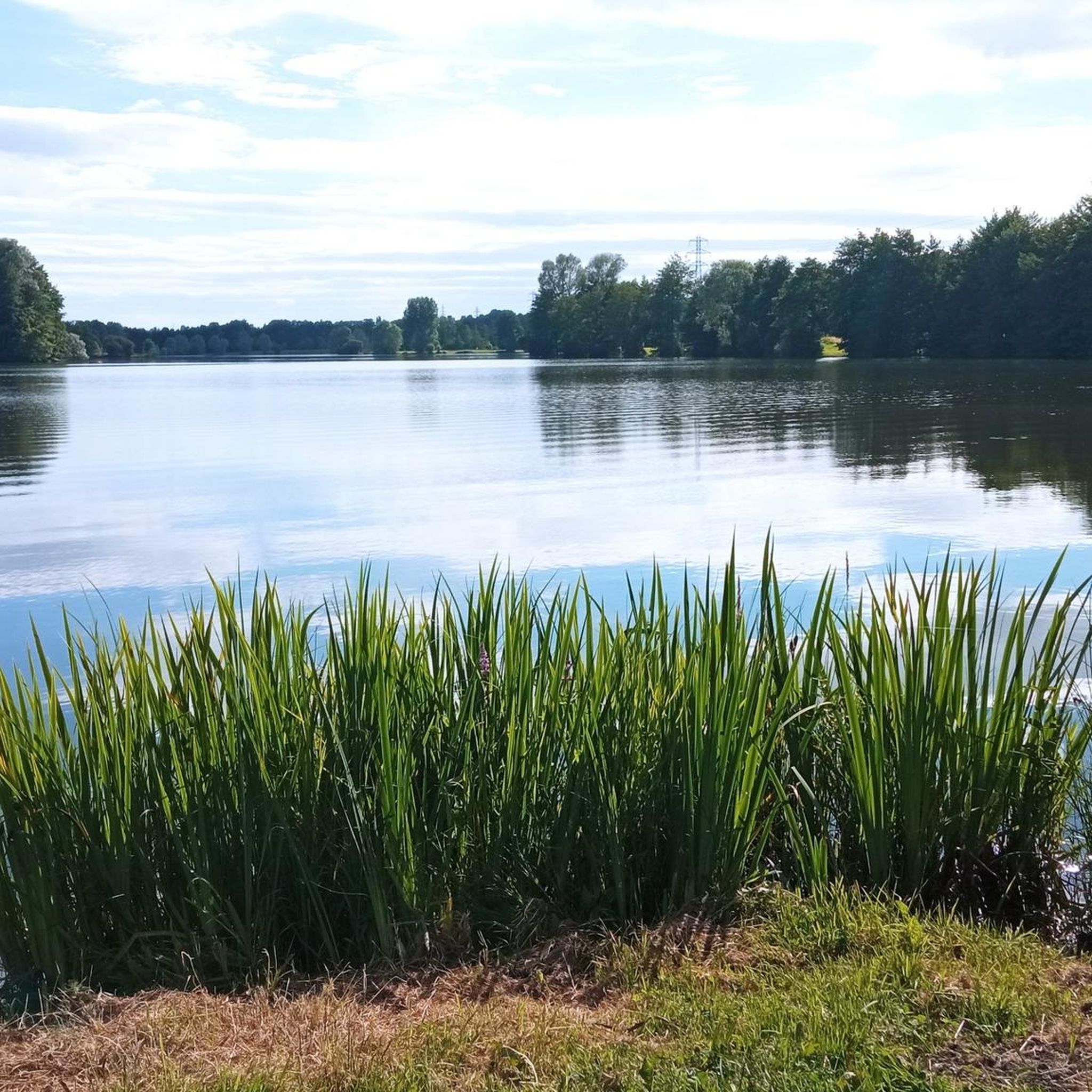
You absolutely must do this small climb to be able to enjoy a magnificent panorama!
0
0
The church of La Loupe, in Eure et Loir, in the Center-Val de Loire, is attached to the parish of Saint Laumer du Perche, of the Doyenné des Forêts, in the diocese of Chartres. The church is placed under the protection of Notre-Dame des Fleurs.
0
0
During the first half of the 16th century, the church was completely rebuilt in the flamboyant Gothic style on the foundations of an older building which had disappeared. The nave is finished with a three-sided apse. It is bordered by two aisles formed by the sawtooth alignments of eight chapels. A square bell tower is attached to the right near the large entrance door. Inside, several objects are listed as Historic Monuments We are continuing its restoration regularly: after the choir, we restored the vault of the Nave, a new phase of work will be carried out this year and will concern the right chapel.
0
0
Frequently Asked Questions
How many road cycling routes are available around Saint-Jean-Pierre-Fixte?
There are over 230 road cycling routes in the Saint-Jean-Pierre-Fixte area, offering a wide range of options for different skill levels. You'll find 33 easy routes, 187 moderate routes, and 10 difficult routes to explore.
What kind of terrain can I expect when road cycling in Saint-Jean-Pierre-Fixte?
The region is characterized by its undulating, hilly terrain, offering magnificent views without extreme mountain ascents. You'll cycle through verdant valleys, extensive forests, traditional hedged farmlands, and expansive crop fields. The Perche Regional Natural Park, in particular, is known for its rolling landscapes and quiet country roads.
Are there any family-friendly road cycling routes in the area?
While many routes feature rolling hills, the region offers options suitable for various abilities. For a more relaxed experience, look for routes with lower elevation gains. The Véloscénie route, which passes through the Perche, often utilizes traffic-free greenways, which can be more suitable for families, though specific family-friendly road cycling routes are not explicitly highlighted in the data.
What are some notable landmarks or attractions I can see along the routes?
Many routes pass through or near charming historical sites. You can visit the ancient fortified Nogent-le-Rotrou Castle, explore the historic Notre-Dame Church in Nogent-le-Rotrou, or discover the traditional Villeray Mill. The region also offers scenic viewpoints like a lovely stretch through the fields.
What is the best time of year for road cycling in Saint-Jean-Pierre-Fixte?
Spring and autumn are considered the best seasons for road cycling in the Perche region. The weather is typically mild, and the landscapes are vibrant with color, making for a very pleasant cycling experience.
Are there any circular road cycling routes available?
Yes, many routes in the area are designed as loops. For example, you can try the moderate From Nogent-le-Rotrou to Louigny — hilly circuit in the Parc naturel régional du Perche, which covers 67 km with over 600 meters of elevation gain.
What do other road cyclists enjoy most about cycling in this region?
The area is highly rated by the komoot community, with an average score of 3.9 stars from over 20 reviews. Cyclists often praise the quiet country roads, the serene countryside of the Perche Regional Natural Park, and the varied landscapes of hills, forests, and crop fields.
Are there options for longer, more challenging road cycling routes?
Yes, while many routes are moderate, the region offers longer challenges. For instance, the 'Boucle de la Vallée de l'Huisne et de la Foret de Réno-Valdieu' is approximately 120 km, and some routes can feature elevation gains exceeding 1,000 meters, catering to more advanced cyclists.
Can I find routes that pass through historical towns or villages?
Absolutely. The Perche region is dotted with charming villages and historic sites. Routes like the Saint Eliph Church – Notre-Dame Church loop from Nogent-le-Rotrou explore the area around Nogent-le-Rotrou, featuring historical churches and offering a glimpse into the region's heritage.
Is it possible to combine routes for multi-day road cycling tours?
Yes, the network of well-defined cycling routes, including the 'Routes tranquilles du Perche' with its nine loops, can be combined for multi-day adventures. Accommodations are available along the way, making it feasible to plan longer trips through the region.
What is the Véloscénie route, and does it pass through this area?
The Véloscénie is a significant cycling route stretching from Paris to Mont-Saint-Michel. A substantial portion of it traverses the Perche Regional Natural Park, often utilizing traffic-free greenways built on disused railway lines. You can experience a part of it on the Porte Saint Julien – Stage 1 of the Véloscénie loop from Nogent-le-Rotrou.
Are there places to stop for a break or picnic along the routes?
Yes, the region offers pleasant spots for breaks. For example, there's a maintained area with picnic tables near the Huisne River, which is an ideal spot for a break or even an overnight bivouac. Look for highlights like the Ideal bivouac spot near the Huisne River.
Most popular routes around Saint-Jean-Pierre-Fixte
Most popular attractions around Saint-Jean-Pierre-Fixte

Get inspired with the komoot mobile app


Explore more
Browse the best Road cycling routes in other regions.
