The best road cycling routes around Montigny-Le-Gannelon
4.5
(39)
548
riders
145
rides
Road cycling routes around Montigny-Le-Gannelon are characterized by the gently undulating profile of the Loir Valley, offering varied terrain suitable for road cyclists. The region features serene riverside paths and quiet rural roads, transitioning between the vast agricultural plains of Beauce and the slightly hillier, forested landscapes of Le Perche. This combination provides a mix of flat stretches and gentle ascents, making it accessible for various fitness levels.
Best road cycling routes around Montigny-Le-Gannelon
- The most popular road cycling route…
Last updated: July 16, 2026
4.0
(1)
15
riders
48.0km
02:02
250m
250m
Moderate road ride. Good fitness required. Some segments of this route may be unpaved and difficult to ride.
18
riders
46.5km
02:05
260m
260m
Moderate road ride. Good fitness required. Mostly well-paved surfaces and easy to ride.

Sign up for free
4.0
(2)
9
riders
43.9km
01:52
320m
320m
Moderate road ride. Good fitness required. Mostly well-paved surfaces and easy to ride.
6
riders
57.2km
02:18
280m
280m
Moderate road ride. Good fitness required. Mostly well-paved surfaces and easy to ride.
4
riders
54.3km
02:13
310m
310m
Moderate road ride. Good fitness required. Mostly well-paved surfaces and easy to ride.
Get access to more routes and recommendations from other explorers.
Sign up for free
Already have an account?
Our route recommendations are based on thousands of hikes, rides, and runs completed by other people on komoot.
Start today with a free account
Your next adventure awaits.
Login or Signup

Other adventures around Montigny-Le-Gannelon

Tips from the Community

Placed under the patronage of Saint Hilaire, this parish was given by Gannelon de Montigny, lord of the place, to the abbey of Marmoutier around 1042. Its reconstruction probably dates from this period; it then became a priory. The church has a rectangular nave ending in a choir with a flat chevet. An examination of the masonry easily reveals two distinct periods of construction: the Romanesque period and the Renaissance. Built of flint rubble with rendering, the western part of the building appears to date from the 11th or 12th century. A limestone cornice supported by rather crude corbels underlines the base of the roof. To the south, two narrow Romanesque windows flared inwards light the nave. To the north, the bays were later reworked and enlarged. On this same side, a Romanesque doorway was walled up; It allowed the church to connect with a building whose traces of detachment remain. The bell tower was built to the north of the Romanesque nave, extending the western façade. The absence of a connection between the east and west walls of the bell tower and the north wall of the nave clearly indicates that it is an entirely later construction. However, its crowning is much later, as evidenced by its cornice, whose molding is in the classical style. Flanked by obliquely angled buttresses, it is covered with a saddleback roof. The eastern half of the church appears to be an extension built during the Renaissance period. Its ogee-shaped cornice and the decoration of the eastern gable, as well as the moldings of the buttress bands, attest to this dating. A vast rectangular choir then appears to have replaced a semicircular Romanesque apse; the eastern gable and the southern and northern façades were then pierced with networked bays. In the lower part of the north façade, projecting ashlars appear to have supported the roof of a lean-to building. To the south, a sacristy was built in the 19th century. Inside, the entire building is covered with a paneled vault with exposed tie beams and kingposts. The 18th-century high altar is surmounted by an Assumption of the Virgin inspired by Murillo's. For the restoration of the roofs and façades, the Sauvegarde de l'Art Français (French National Art Protection Agency) awarded a grant of €30,490 in 2001.
0
0
The Church of Saint Sauveur La Trinité, probably built in the 12th century, is notable for its Romanesque windows with columns and capitals. On its walls, alternating with the consecration crosses, one can admire a Stations of the Cross in blue enamel on earthenware. The choir is lit by five Romanesque windows decorated with stained glass depicting Our Lord and the four Evangelists.
0
0
Saint Mames was martyred in Cappadocia around 1274: local legend has it that a saint offers a helping hand to cross the Loir. On April 17, 1707, thunder struck the bell tower.
0
0
The church consists of a single nave, extended by a single-bay choir, and a semicircular apse. Two canted chapels, forming a false transept, were added during this renovation. The church is dominated by a timber-framed bell tower that rises above the first bay of the nave. The gable of the western facade was rebuilt in the last century, an external wooden porch removed. The central axis of the current facade is punctuated by a semicircular door surmounted by an archivolt, a circular opening on the first level and a small window pierced in the upper part of the gable. On the north side, a highly raised stringcourse forming a cornice, resting on simple modillions, still survives in the upper part of the wall. Additional openings were added to the old, narrow, and uneven openings in the last century, in the nave, as well as in the choir and apse, to allow more daylight to enter the building. The interior of the church is covered with a paneled roof structure: the one covering the nave is believed to date from the 16th century. The entire structure has been given a coherent decoration, from the faux-stone plasterwork to the paneled vault, the furnishings, and the statuary. The church also boasts a 17th-century polychrome wooden statue of Saint Barbara. The Prunelé coat of arms appears at the bottom of the stained-glass window of Saint Louis and, outside, on a medallion on the apse wall. The Sauvegarde de l'Art Français (French National Art Protection Agency) granted €5,000 in grants in 2004 for masonry and roof repairs and the installation of drainage.
0
0

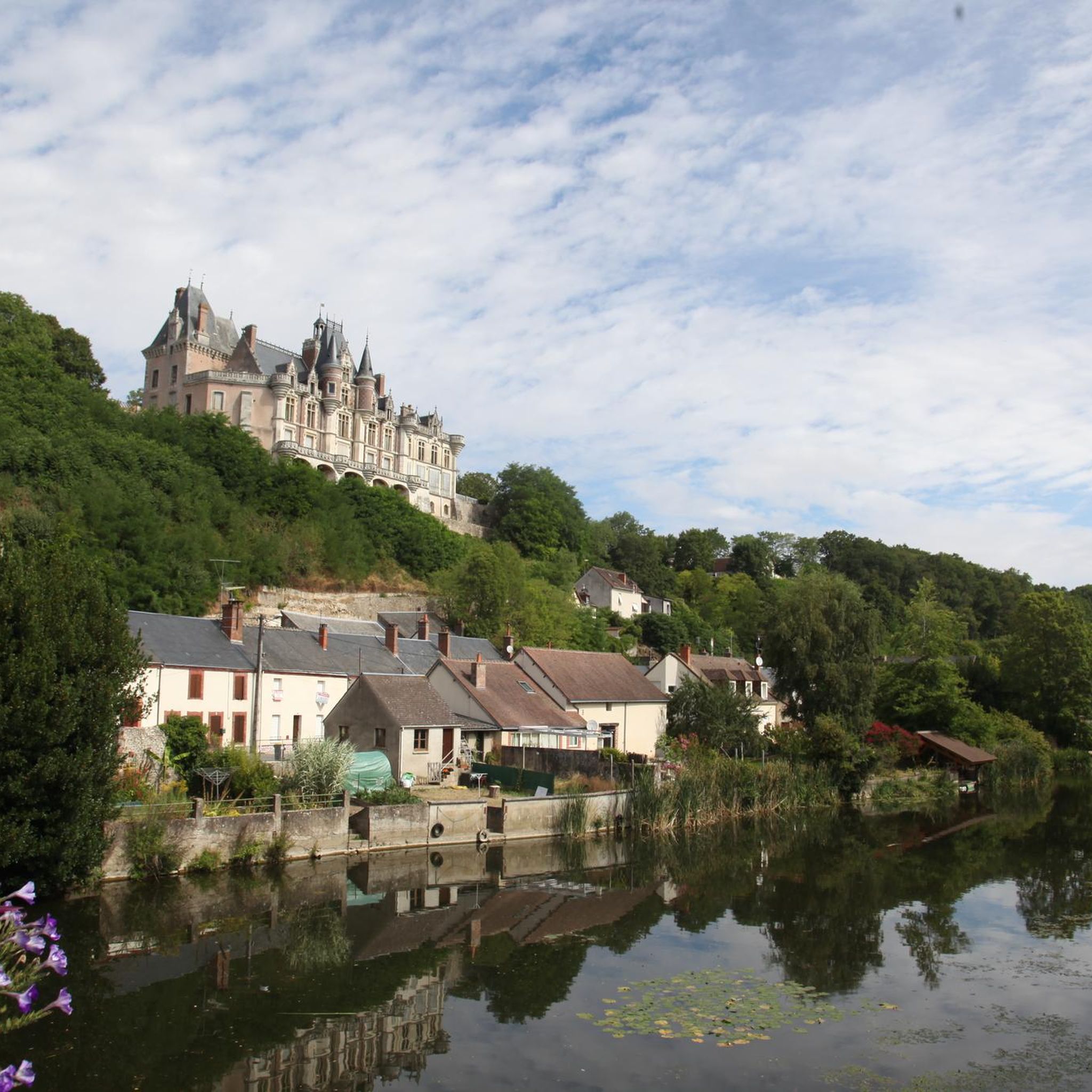
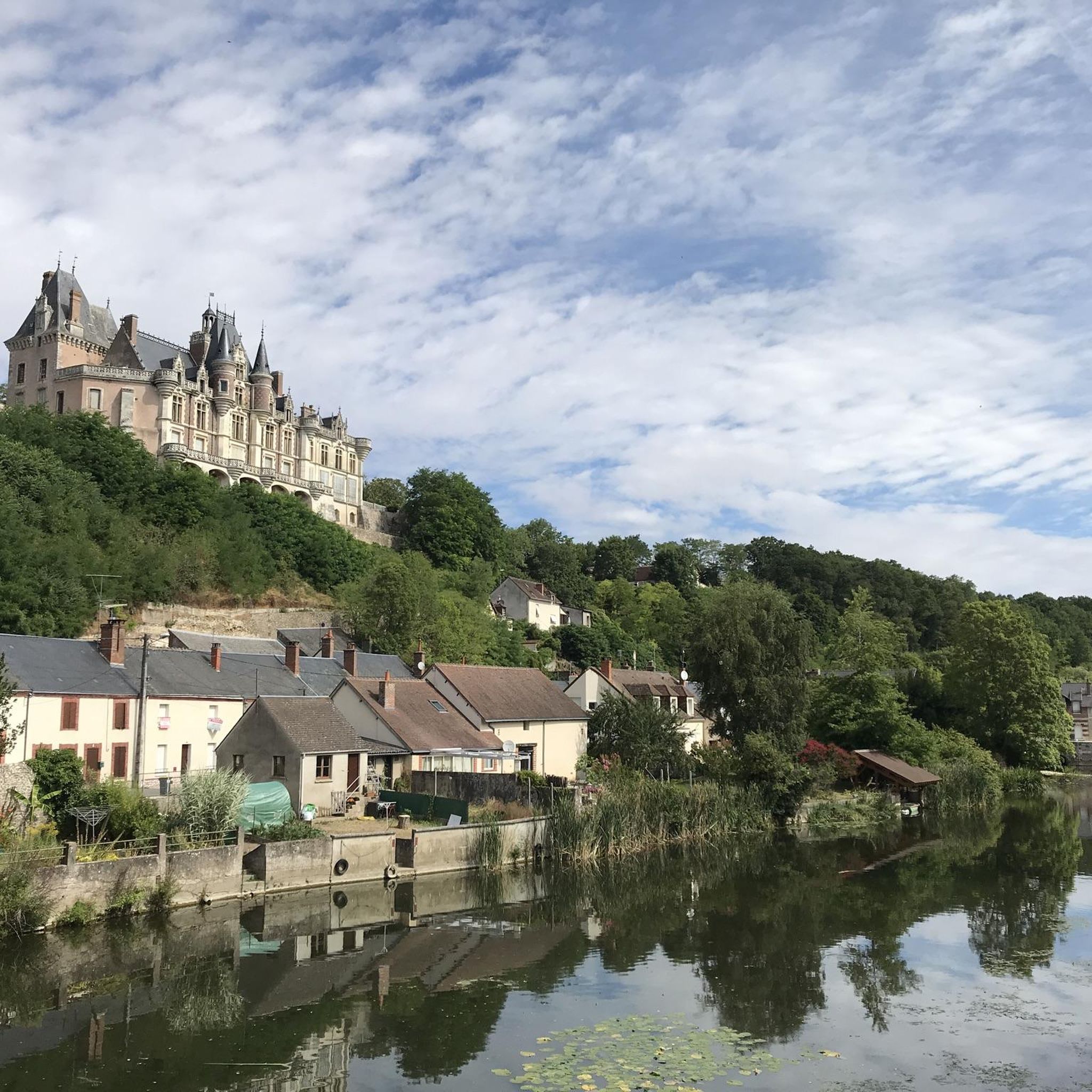
The imposing structure known as the "Château de Chateaudun" that reveals itself to visitors here is, of course, also available in other sports in the komoot system. For the corresponding hiking highlight, you'll find further relevant information and additional photos under the tips. If you're interested, see =>> https://www.komoot.com/de-de/highlight/936307
0
0

The church dates from the 12th century and was remodeled in the 15th or 16th century, its buttresses and bell tower date from the 19th century. It houses a wrought iron communion table from the 18th century.
0
0
The Saint-Barthélémy church dates from the 12th century but was restored and enlarged in the 17th and then in the 19th century. The elegant bell tower, formed of a square tower, becomes octagonal at 20 m high. Small loophole-type windows light the belfry. It is topped by a dome, itself topped by a campanile and a lantern. It is considered a case study by schools of architecture. This church also contains several movable objects classified as Historic Monuments including Christ on the Cross, a polychrome wooden statue from the 17th century, two oils on canvas from the 17th century, a funerary plaque from 1674 by Michel de Verthamon, Knight of Malta, in stone and marble (epitaph in Latin and coat of arms) and a bronze bell, tuned in F, from 1580.
0
0
Frequently Asked Questions
What kind of terrain can I expect when road cycling around Montigny-Le-Gannelon?
The terrain around Montigny-Le-Gannelon is characterized by the gently undulating profile of the Loir Valley. You'll find a mix of serene riverside paths and quiet rural roads, transitioning between the vast agricultural plains of Beauce and the slightly hillier, forested landscapes of Le Perche. This offers a balanced experience with both flat stretches and gentle ascents, suitable for various fitness levels.
How many road cycling routes are available in the Montigny-Le-Gannelon area?
There are over 140 road cycling routes available around Montigny-Le-Gannelon on komoot. These routes cater to different abilities, with approximately 50 easy routes, 87 moderate routes, and a few more challenging options.
Are there any beginner-friendly road cycling routes in Montigny-Le-Gannelon?
Yes, Montigny-Le-Gannelon offers several beginner-friendly road cycling routes. An excellent option is the Montigny Castle – Saint Hilaire Church loop from Cloyes-sur-le-Loir, which is an easy 45.9 km ride, perfect for those looking for a less strenuous experience along quiet roads.
What historical landmarks or attractions can I see along the road cycling routes?
Many routes in the region pass by significant historical sites. You can cycle past the impressive Château de Montigny-le-Gannelon, or explore routes that connect to nearby castles like the Château de Châteaudun. The Château de Châteaudun – Château de Meslay loop from Cloyes-sur-le-Loir is a great example, connecting historic châteaux through varied Loir Valley landscapes.
Are there any circular road cycling routes available?
Yes, many of the road cycling routes around Montigny-Le-Gannelon are designed as loops, offering convenient circular journeys. For instance, the Montigny Castle – Saint-Marc Church loop from Montigny-le-Gannelon is a moderate 47.4 km circular route that starts and ends in Montigny-le-Gannelon itself.
What is the best time of year to go road cycling in Montigny-Le-Gannelon?
The Loir Valley region generally offers pleasant cycling conditions from spring through early autumn. Spring brings blooming landscapes, while summer provides warm weather for longer rides. Autumn offers beautiful foliage. Always check local weather forecasts before heading out, as conditions can vary.
What do other road cyclists say about the routes in Montigny-Le-Gannelon?
The road cycling routes in Montigny-Le-Gannelon are highly rated by the komoot community, with an average score of 4.4 stars from over 30 reviews. Cyclists often praise the serene riverside paths, quiet rural roads, and the picturesque villages that make for a relaxed and scenic cycling experience.
Are there any routes that offer scenic viewpoints or natural features?
Absolutely. The Loir Valley itself is known for its picturesque scenery. Routes often provide views of the river, charming countryside, and agricultural plains. While not directly on a route, the nearby Grottes du Foulon offer an interesting geological feature in the wider area. For a direct castle view, consider the View of Montigny-le-Gannelon Castle highlight.
Can I find challenging road cycling routes in the area?
While the region is known for its gentle to moderately undulating profile, there are routes that offer more challenge. The Loir Valley provides a mix of flat stretches and gentle ascents, and some routes extend into the slightly hillier terrain of Le Perche, offering more elevation gain for experienced cyclists. There are 6 routes classified as difficult in the area.
Are there options for longer road cycling tours?
Yes, the region offers routes suitable for longer tours. For example, the Château de Châteaudun – Château de Meslay loop from Cloyes-sur-le-Loir is a substantial 90.9 km route, allowing for an extended ride through varied landscapes and past historic châteaux.
What are some other popular road cycling routes in the Montigny-Le-Gannelon area?
Besides the longest routes, local road cyclists also enjoy the Feudal Castle of Fréteval – Meslay Castle loop from Cloyes-sur-le-Loir, a moderate 67.2 km path passing historic castles. Another favorite is the Étang de Saint-Lubin loop from Cloyes-sur-le-Loir, a 53.6 km trail through rural landscapes.
Most popular attractions around Montigny-Le-Gannelon

Get inspired with the komoot mobile app


Explore more
Browse the best Road cycling routes in other regions.
