Attractions and Places To See around Arrou - Top 19
Best attractions and places to see around Arrou include a blend of historical landmarks, cultural sites, and natural features. This charming village in the Eure-et-Loir department of France is situated in the Haute Vallée du Loir, offering a tranquil, green environment. Visitors can explore historical architecture and enjoy outdoor leisure activities, particularly along the banks of the Yerre river. The area provides opportunities for cultural exploration and outdoor pursuits.
Best attractions and places to see around Arrou
- The most popular…
Last updated: June 17, 2026
Château de Montigny-le-Gannelon
Highlight • Castle
Montigny-le-Gannelon Castle dates from the Renaissance period; it was redesigned …
Translated by Google •
Tip by

Notre-Dame Church of Chapelle-Guillaume
Highlight • Religious Site
Translated by Google •
Tip by

Sign up now to discover places like this
Get recommendations on the best single tracks, peaks, & plenty of other exciting outdoor places.
Sign up for free
Saint Hilaire Church
Highlight • Other
Translated by Google •
Tip by
Saint John the Baptist Church
Highlight • Other
Translated by Google •
Tip by
Saint-Pierre Church
Highlight • Religious Site
After the Hundred Years' …
Translated by Google •
Tip by
Sign up for free to discover even more attractions around Arrou.
Sign up for free
Already have an account?
Start today with a free account
Your next adventure awaits.
Login or Signup



Tips from the Community

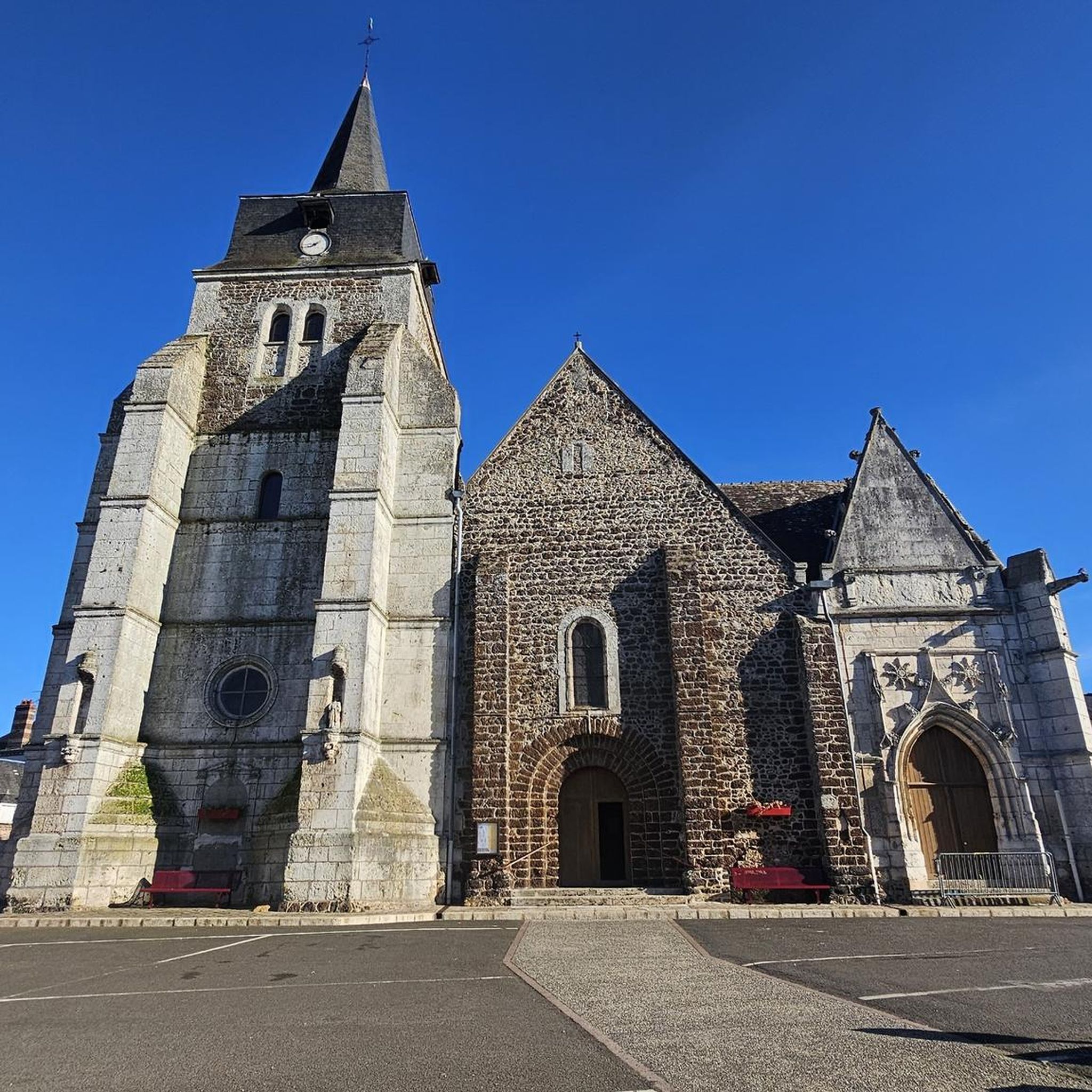
Placed under the patronage of Saint Hilaire, this parish was given by Gannelon de Montigny, lord of the place, to the abbey of Marmoutier around 1042. Its reconstruction probably dates from this period; it then became a priory. The church has a rectangular nave ending in a choir with a flat chevet. An examination of the masonry easily reveals two distinct periods of construction: the Romanesque period and the Renaissance. Built of flint rubble with rendering, the western part of the building appears to date from the 11th or 12th century. A limestone cornice supported by rather crude corbels underlines the base of the roof. To the south, two narrow Romanesque windows flared inwards light the nave. To the north, the bays were later reworked and enlarged. On this same side, a Romanesque doorway was walled up; It allowed the church to connect with a building whose traces of detachment remain. The bell tower was built to the north of the Romanesque nave, extending the western façade. The absence of a connection between the east and west walls of the bell tower and the north wall of the nave clearly indicates that it is an entirely later construction. However, its crowning is much later, as evidenced by its cornice, whose molding is in the classical style. Flanked by obliquely angled buttresses, it is covered with a saddleback roof. The eastern half of the church appears to be an extension built during the Renaissance period. Its ogee-shaped cornice and the decoration of the eastern gable, as well as the moldings of the buttress bands, attest to this dating. A vast rectangular choir then appears to have replaced a semicircular Romanesque apse; the eastern gable and the southern and northern façades were then pierced with networked bays. In the lower part of the north façade, projecting ashlars appear to have supported the roof of a lean-to building. To the south, a sacristy was built in the 19th century. Inside, the entire building is covered with a paneled vault with exposed tie beams and kingposts. The 18th-century high altar is surmounted by an Assumption of the Virgin inspired by Murillo's. For the restoration of the roofs and façades, the Sauvegarde de l'Art Français (French National Art Protection Agency) awarded a grant of €30,490 in 2001.
0
0
Before the 13th century there were two parishes, Saint-Sauveur and Saint-Gilles, in 1300 the bishop of Chartres united them into one by a charter of Berchères, because of the smallness of the two parishes. The church dates from the beginning of the 17th century. Rebuilt on the foundations of an old Romanesque church, its originality comes from its bell tower with saddle roof, its caquetoire and its paneled vault redone in 2003. At the initiative of the Prince Duke of Montmorency-Laval, it has contained the reliquary of Sainte-Félicité since 1838. Saint Félicité, whose relics are in Montigny-le-Gannelon, is a martyr whose life is unknown, whose body was taken from the sacred cemeteries of Rome. We have his body, the skull, the bones of his arms, fingers and feet. They were removed from the Saint-Cyriaque cemetery in 1828 and placed in their respective places on a body artistically modeled in wax and measuring more than 1.40 meters in length. A magnificent chase, of the shape and size of an altar tomb, all furnished with glazing and embellished with gilding received this precious deposit. Pope Leo XII donated it to the Duke of Laval, then Charles X's ambassador to Rome. On his death, he bequeathed it by will to the church of Montigny-le-Gannelon where the old historic castle of Laval-Montmorency is located. The venerated hunt is now placed under the main altar of which it forms the tomb.
0
0
Built in the 12th century, it is made of flint and cut stone. It originally had small narrow windows, slightly projecting buttresses, and a rounded apse. After the Hundred Years' War the need was felt to open two contiguous chapels on the epistle side. One of them is dedicated to the Blessed Virgin, it was the seigniorial chapel. In the 17th century the separation of the two chapels was removed. As an extension, the sacristy was built in the 18th century. On the southern part of the building we can notice the location of a small blocked door. According to tradition, it was “the door of the dead” giving access to the cemetery which adjoined the church until 1879. On the west side, two white bands called “liters” indicate that 2 personalities are buried inside the church. Between the chapel and the choir there is a statue of Saint Maur in polychrome wood. The Saint is invoked against rheumatism, sciatica, gout.
0
0
This 13th, 15th and 16th century church does not have a transept. It has a central shingled nave with aisles. The choir ends with a polygonal apse. The apse is decorated with glass roofs dating from 1541 representing various scenes from the Passion. These 16th century stained glass windows (bays 1 to 4) have been partially classified as historic monuments since 1908. Bays 1 and 2 were restored in the 17th century thanks to the Bourbon-Conti family, lords of Bazoche-Gouet from 1676 in 1719, the 4 in the 19th century, then in 1974, by Michel Petit, master glassmaker whose workshop is located in Thivars in Eure-et-Loir. Outside the choir, the stained glass windows are from the 19th century, made by two renowned master glassmakers, the Lorin workshops in Chartres and the Carmel stained glass factory in Le Mans, the first in a neo-Romanesque style, the second approaching the neo-Romanesque style. Gothic.
0
0
The robust grison pillars of the church of Chapelle-Guillaume reveal its distant roots in the beautiful country of Perche-Gouët, and even if it is often difficult to fix with precision the date of construction of a church, at least It seems obvious to her that she has been watching over the small village that surrounds her for many centuries – probably not far from ten… It owes her name to Guillaume Gouët. In any case, the last two hundred years have given it many alterations and restorations. Thus the bell tower that a hurricane had brought down was rebuilt in 1827, while the capital which adorned the entrance disappeared a few decades later, serving as a narthex, or more simply as a “caquetoire”. Everything here announces the joy of welcome and the simple peace that a place of prayer requires. The interior is distinguished by the great care taken in maintaining the warm furnishings: painted vault, gallery, benches, paneling, statues and choir woodwork. The altarpiece is illustrated by a pretty painting of the Annunciation. A great harmony emerges from the whole and invites prayer. There was also not far from there near the church a Notre-Dame priory dependent on Marmoutier, where Saint Martin resided.
0
0


The church of Saint-Sauveur-Saint-Gilles and the castle of Montigny-le-Gannelon Montigny-le-Gannelon are wonderful. You just have to go over the mountain. Montigny-le-Gannelon Castle dates from the Renaissance period; it was redesigned during the course of a restoration in the 19th century Neo-Gothic.
1
0
Frequently Asked Questions
What historical landmarks can I visit in Arrou?
Arrou and its surroundings are rich in history. You can explore the significant Saint Hilaire Church, classified as a historical monument, which dates back to the 11th or 12th century. Another notable site is the Saint-Jean-Baptiste Church of Courtalain, originally from the 12th century and rebuilt over time.
Are there any notable churches to see in the Arrou area?
Yes, several churches stand out. Besides the historical Saint Hilaire Church, you can visit the Notre-Dame Church of Chapelle-Guillaume, known for its robust grison pillars. The Saint Anne Church is a Romanesque building with a distinctive paneled vault. Also, the Notre-Dame Church of Yèvres is remarkable for its 52-meter-high spire and Norwegian fir paneled nave.
Can I visit any castles or fortresses near Arrou?
Yes, the area features historical fortifications. The Château de Courtalain, located in Arrou, has roots tracing back to the County of Chartres and was rebuilt in the 16th century. You can also find the Forteresse de Bois Ruffin in the Dunoise Beauce countryside, which features defensive walls.
What natural attractions are there in Arrou?
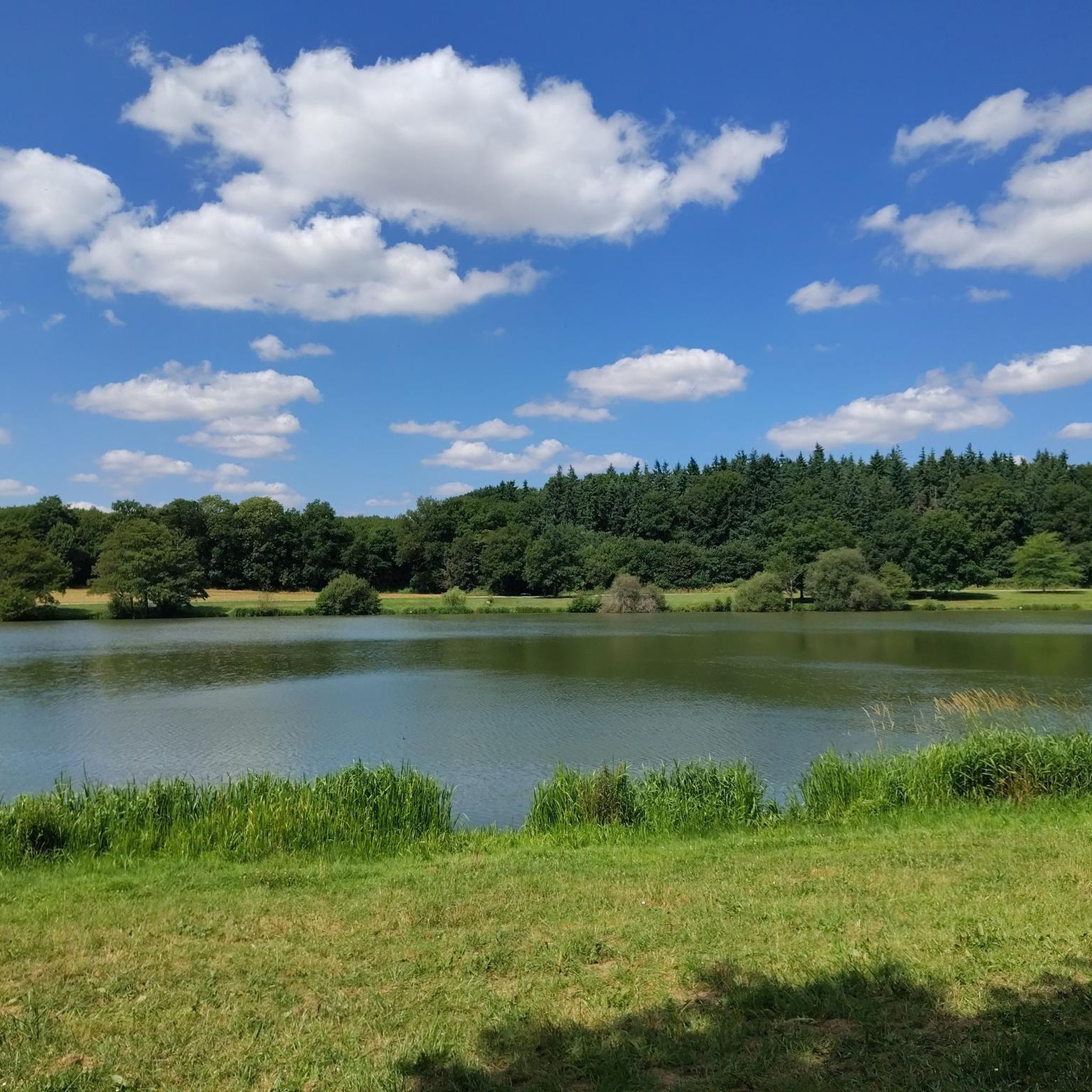
Arrou is known for its tranquil, green environment, particularly along the banks of the Yerre river. The main natural attraction is the Leisure Area of Arrou (Zone de loisirs d'Arrou), which offers a serene setting for relaxation and outdoor activities. You can find more details about this area on tourisme28.com.
Are there opportunities for outdoor activities like hiking or cycling near Arrou?
Absolutely. The region around Arrou is ideal for outdoor pursuits. The Leisure Area of Arrou provides opportunities for walks, bike rides, fishing, and horse-riding. For more structured routes, you can explore various hiking trails and cycling routes, ranging from easy to difficult, that start near Arrou.
Where can I go for a relaxing day outdoors in Arrou?
The Leisure Area of Arrou (Zone de loisirs d'Arrou) is perfect for a relaxing day. Situated on the banks of the Yerre river, it offers swimming spots, picnic areas, and a play area, making it suitable for all ages. You can enjoy walks, bike rides, or simply unwind by the river. A quiet municipal campsite is also located nearby.
Are there any specific hiking trails recommended around Arrou?
Yes, there are several hiking options. You can find easy trails like the 'Étang de la Balastière – Étang de Pêche Michel Hamet loop from Brou' or the 'Saint John the Baptist Church – 2 loop from La Bazoche-Gouet'. For a comprehensive list and details, refer to the Hiking around Arrou guide.
What cycling routes are available near Arrou?
The area offers various cycling routes for different skill levels. You can find difficult road cycling routes such as the 'Porte de Boisville – Church of Bonneval loop from Arrou' or more moderate touring bicycle routes like the 'Bois de la Salle – Château de Charbonnières loop from Unverre'. Explore the full range of options in the Road Cycling Routes around Arrou and Cycling around Arrou guides.
Are there family-friendly activities in Arrou?
Yes, Arrou is suitable for families. The Leisure Area of Arrou is equipped with a picnic area and a play area, offering a great space for children and adults to enjoy. The tranquil environment along the Yerre river is perfect for family walks and outdoor fun.
When is the best time to visit Arrou for outdoor activities?
Arrou's appeal lies in its tranquil, green environment, making it pleasant for outdoor activities during warmer months. Spring and summer generally offer the best weather for exploring historical sites, enjoying the leisure area, and undertaking hiking or cycling routes.
Are there dog-friendly options for outdoor exploration in Arrou?
Many of the natural areas and walking paths around Arrou, including those along the Yerre river and within the Leisure Area, are generally dog-friendly. It's always advisable to keep dogs on a leash and clean up after them to respect local regulations and other visitors.
What do visitors particularly enjoy about the attractions around Arrou?
Visitors appreciate the blend of historical landmarks, cultural sites, and natural attractions. The robust grison pillars of the Notre-Dame Church of Chapelle-Guillaume and the serene setting of the Leisure Area of Arrou are often highlighted. The overall tranquil, green environment and historical architecture make it an ideal destination for both cultural exploration and outdoor leisure.

Get inspired with the komoot mobile app


Explore more
Still not found the Highlight you’re looking for? See guides of the top attractions in other regions:
