The best road cycling routes around La Bazoche-Gouet
4.7
(10)
190
riders
73
rides
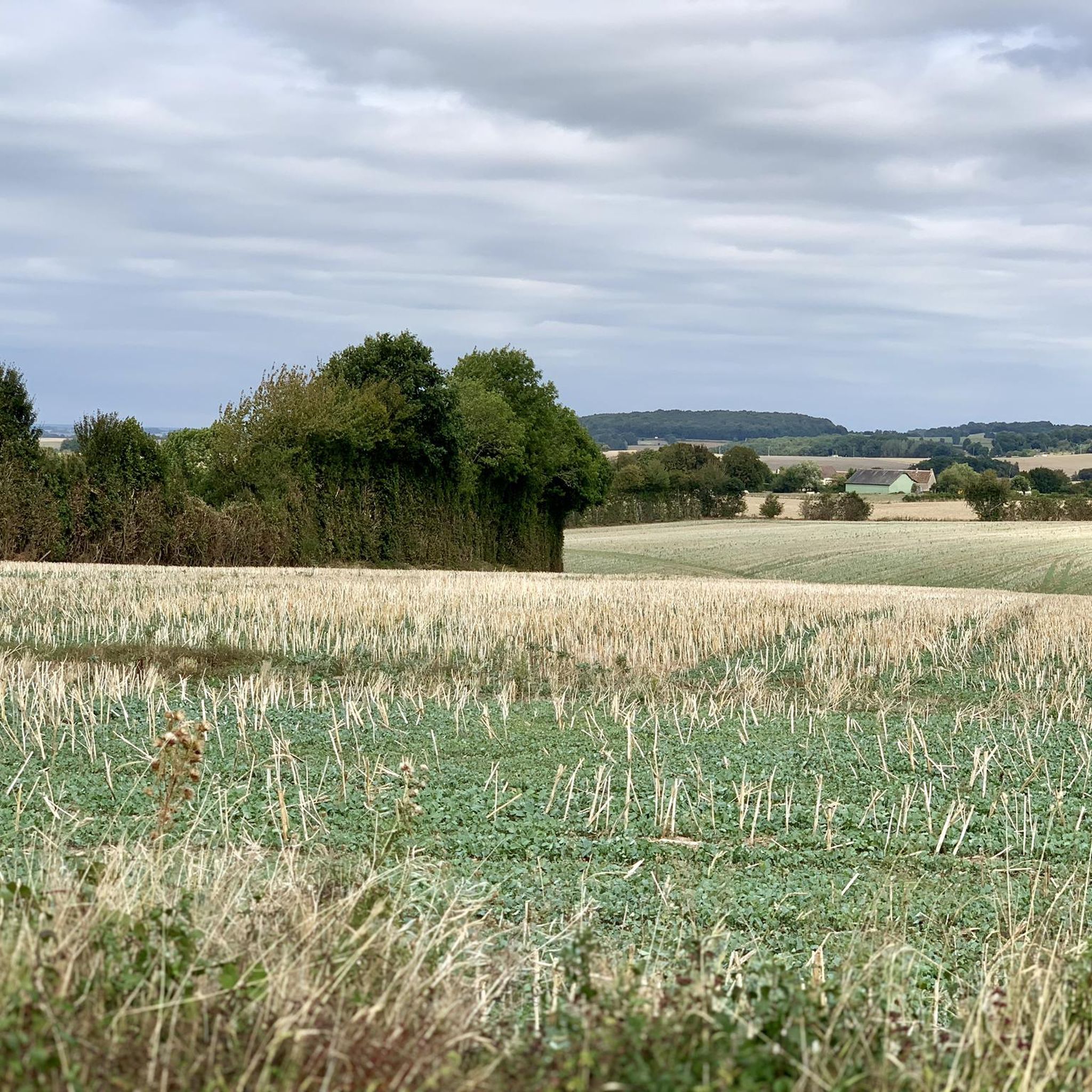
Road cycling around La Bazoche-Gouet offers routes through the Perche Natural Regional Park, characterized by rolling green hills and a landscape of fields and woodlands. The Yerre river meanders through pastures and green banks, providing scenic elements for road cyclists. The region's terrain includes traditional bocage, a patchwork of fields and small woods, with elevations generally under 200 meters, presenting as gentle hills. This area provides varied routes for exploring the French countryside by bike.
Best road cycling routes around…
Last updated: July 16, 2026
7
riders
Moderate road ride. Good fitness required. Mostly well-paved surfaces and easy to ride.
7
riders
82.3km
03:40
750m
750m
Moderate road ride. Good fitness required. Mostly well-paved surfaces and easy to ride.

Sign up for free
4.5
(2)
6
riders
Moderate road ride. Good fitness required. Some segments of this route may be unpaved and difficult to ride.
4.3
(3)
4
riders
25.8km
01:12
160m
160m
Easy road ride. Great for any fitness level. Mostly well-paved surfaces and easy to ride.
4
riders
41.0km
01:55
380m
380m
Moderate road ride. Good fitness required. Mostly well-paved surfaces and easy to ride.
Get access to more routes and recommendations from other explorers.
Sign up for free
Already have an account?
Our route recommendations are based on thousands of hikes, rides, and runs completed by other people on komoot.
Start today with a free account
Your next adventure awaits.
Login or Signup


Tips from the Community

In the Middle Ages, Saint-Avit-au-Perche was a priory of the abbey of Saint-Calais, founded by Avit's companion. Today's church dates from the very beginning of the 12th century. It consists of a five-bay nave ending in a semicircular apse. It is covered with chestnut shingles. Several original windows remain; others have been reworked (including the first window, on the north side). This can be seen in the shape of the keystones. A walled-up side door to the south can be seen from the outside. It has an enormous mitre lintel. Inside, it has been transformed into a niche housing Our Lady of Lourdes. The apse is flanked by projecting buttresses. Those at the corners of the façade are from the 15th century. The western portal in a pointed arch is a 15th-century renovation that was completely redone at the end of the 20th century.
0
0
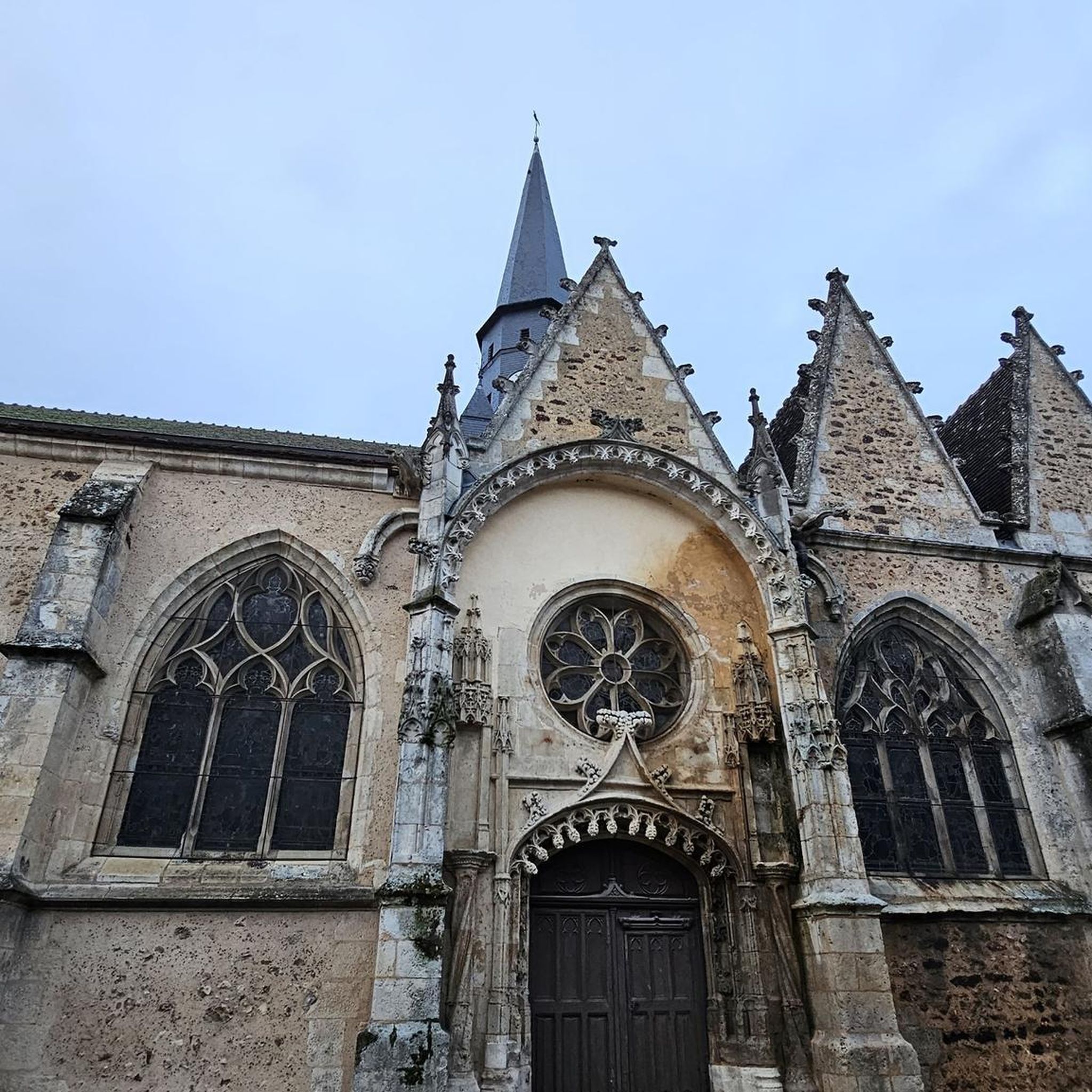
The Saint-Lubin church, built on a sloping site, is a vast building with juxtaposed constructions, bearing witness to renovations and additions up to the 19th century, the oldest distinguished by the presence of grison, the most recent by limestone and flint. The sanctuary was ceded in 1077 by the monks of Saint-Denis de Nogent-le-Rotrou to the monks of the Saint-Père de Chartres abbey. Built in the 11th-12th century, the nave extended by a semi-circular apse is the oldest part of the church, in Romanesque style. In the thickness of the north walls of the nave are still visible the grison bonds which bear witness to the original openings. The building was considerably enlarged in the 15th and 16th centuries by the construction of a large transept, formed of two chapels, and a south aisle forming an alignment of gables attached to the slopes decorated with leafy motifs and finished with chimeras. The construction of the north aisle, just begun, was not finished. On the outside, on the west wall of the chapel, we can see the beginning of a first bay (stone arch and walls removed that remained unfinished). On the gable of the north transept, the walled door can be seen from the pointed arch and the ornate pinnacles, characteristic of the end of the 15th century. In the center, two animals present a coat of arms. On each side of the door, niches with canopies once housed statues. Above, we can still see a coat of arms presented by two bearded figures and probably surmounted by God the Father. According to local tradition, all or part of the extensions were due to the generosity of Florimont Robertet, who owned the barony of Brou from 1509 until his death in 1527, and it was because of this that the work was interrupted. Occupied by the revolutionaries, the building became a ten-day temple in 1794; it was finally returned to worship in 1802. Burnt down by lightning in 1813, the upper part of the bell tower, which was a slender spire, was replaced by the construction of a square limestone tower pierced with louvers. On the southern part of the bell tower, a turret provides access to the bells. In the southern part of the nave, a door, now blocked and highlighted by a basket-handle arch topped with a pinnacle, provided access to the cemetery that once surrounded the church. The building can boast of having preserved very uniform oak furniture, most of which was made in the second half of the 18th century.
0
0
From its source to its confluence with the Ozanne, the Sainte-Suzanne covers 19.2 km and crosses 5 communes. From upstream to downstream: Authon-du-Perche; Beaumont-les-Autels; Coal pits; Les Altars-Villevillon; A glass.
0
0
Building built in the 15th century, ribbed vaulted, with straight apse; beginning of the 16th century, c. 1530, construction of the Sainte-Barbe chapel on the south side; Renaissance stained glass, not. Tree of Jesse (surviving fragments); 17th century altarpiece and high altar. History of protection: the classification order of April 25, 2003 replaces the classification order of February 11, 1911 and the registration orders on the supplementary inventory of historic monuments of January 20, 1926 and February 4, 2002.
0
0
the Saint-André church dates from the 11th century; it was a priory then dependent on the abbey of St.-Calais, but the current building was completely rebuilt around the walls and framework of the old building. The project was carried out in 1877. The construction of a transept, enlarged windows and a stone bell tower completely modified the old monument. The environment has also changed a lot. All traces of the old cemetery, transferred outside the village at the beginning of the 18th century, have disappeared. The furniture includes a stone baptistery, a statue of the Virgin and Child, a confessional and a Louis XV period bench. The beautiful wooden tabernacle decorated with a statue of Saint Lubin comes from the church which was located a few kilometers away, in Saint-Lubin-des-Cinq-Fonts, and of which only the choir, which has become a chapel, remains today. .
0
0
Saint John the Baptist is considered the pivotal figure of the Bible, between the Old and New Testaments: the last of the Prophets, he is the precursor of Christ, the messenger who announces Him... His mother - Elizabeth, is related to Mary and both women meet while they are both expecting their son. We can only refer to the Gospel of Luke (1, 39-45) which powerfully depicts this touching scene, and which the Church has celebrated every year since the 13th century under the name of Visitation (May 31). Jean, as an adult, will lead the harsh life of an ascetic in the desert. He preaches, teaches prayer and proposes a baptism of conversion, while announcing the coming of “one more powerful than he… who will no longer baptize only in water, but in the Holy Spirit…” He himself will baptize Jesus.
0
0
Between 1030 and 1046, a charter mentions the donation by a lady Berthe and her children to the Saint-Père abbey of Chartres, of the estate and the church of Chapelle-Royale. Part of the western facade of the Notre-Dame church and the eaves walls pierced with tiny Romanesque windows appear to date back to this foundation. Towards the end of the 15th century, between 1460 and 1500, four large windows with flamboyant tracery were opened in the choir; the glass windows, which dated from the 17th century, have disappeared with the exception of a medallion representing Christ on the cross with the Virgin and a holy woman at his feet. The building is a simple rectangle measuring 28 m by 10 m, covered with a wooden vault with tie beams; the entrance closest to the altar is fluted and has devouring monsters at its ends. In the north wall opened a door with a lowered arch, decorated with sculptures (cherubs and flowers), which was walled up. A small niche, made in the pillar next to this door, once housed a statue of Saint Blaise. On the roof of the nave rises the octagonal spire of the bell tower, made of wood covered with slate. The Safeguarding of French Art contributed in 1992 for 10,000 F to the repair of the roof damaged by a storm.
0
0
Built in stone in the 11th century, this small church is considered one of the oldest in Perche. Romanesque windows, frescoes and medieval frames tell its long history. It is the place of a pilgrimage to Saint-Fiacre. Remarkable interior decor, wall paintings. The church is located in a small cemetery, near a shady pond. The bare architecture of the church recalls its ancient origin. Built after 1059, on the remains of a primitive church, you can still observe the Romanesque windows blocked during the construction of the new 15th century flamboyant style windows. The very beautiful framework is then installed, then the Renaissance basket-handle portal. The fresco represents “The Tale of the Three Dead and the Three Living”, a theme widespread in the 15th century, following the great epidemics. Other paintings have just been discovered. The church contains a set of polychrome wooden statues and 17th century furniture. The statue of Saint Fiacre is the subject of a pilgrimage every year, on the Sunday closest to August 30.
0
0
Frequently Asked Questions
How many road cycling routes are available around La Bazoche-Gouet?
There are over 70 road cycling routes in the La Bazoche-Gouet area, offering a variety of options for exploring the Perche Natural Regional Park by bike.
What kind of terrain can I expect on road cycling routes near La Bazoche-Gouet?
The terrain around La Bazoche-Gouet is characterized by rolling green hills and traditional bocage, a patchwork of fields and woodlands. You'll find gentle ascents, with elevations generally under 200 meters, and scenic stretches along the meandering Yerre river.
Are there road cycling routes for beginners or more experienced riders in La Bazoche-Gouet?
Yes, the area caters to various skill levels. You'll find 22 easy routes perfect for beginners, 50 moderate routes for those seeking a bit more challenge, and even one difficult route for experienced cyclists looking for a demanding ride.
What are some notable landmarks or historical sites I can see along the road cycling routes?
Many routes pass by historical and cultural points of interest. You might encounter ancient manors and châteaux, or religious sites such as the Notre-Dame Church of Chapelle-Guillaume, known for its robust grison pillars. The broader region also features sites like the Château de Montmirail, which can be part of longer routes like the Stage 1 of the Véloscénie – Château de Montmirail loop from Arville.
Are there any circular road cycling routes available?
Yes, many routes in the area are designed as loops, allowing you to start and finish in the same location. For example, the Roadbike loop from Soizé is a popular option, traversing the peaceful countryside.
What do other road cyclists enjoy most about cycling in La Bazoche-Gouet?
The area is highly rated by the komoot community, with an average score of 4.6 stars from over 6 reviews. Cyclists often praise the peaceful countryside, the varied terrain of rolling hills and bocage, and the scenic views along the Yerre river.
What is the best time of year for road cycling in La Bazoche-Gouet?
The Perche Natural Regional Park is beautiful throughout the warmer months. Spring and autumn offer pleasant temperatures and vibrant landscapes, while summer provides longer daylight hours for extended rides. Always check local weather conditions before heading out.
Are there family-friendly road cycling routes in the La Bazoche-Gouet area?
Yes, with 22 easy routes available, there are plenty of options suitable for families or those looking for a more relaxed ride. These routes typically feature gentler gradients and less traffic, allowing for an enjoyable experience for all ages.
Can I find routes that follow the Yerre river?
Absolutely. The Yerre river meanders through pastures and green banks, providing refreshing natural elements to many routes. The Sainte-Suzanne stream – Saint John the Baptist Church loop from Authon-du-Perche is a great example of a route that offers views of the river.
Are there any routes that offer a good mix of natural beauty and historical interest?
Many routes combine both. For instance, the Saint John the Baptist Church – Sainte-Suzanne stream loop from Saint-Avit allows you to experience the natural beauty of the stream while passing by historical churches, characteristic of the Perche region.
What is the typical duration for road cycling routes in this region?
Route durations vary widely depending on distance and difficulty. Shorter, easy routes like the Roadbike loop from Authon-du-Perche can be completed in about 1 hour 10 minutes, while longer, moderate routes might take 3 hours or more, such as the Stage 1 of the Véloscénie – Château de Montmirail loop from Arville.
Most popular attractions around La Bazoche-Gouet

Get inspired with the komoot mobile app


Explore more
Browse the best Road cycling routes in other regions.
