Top 9 Mountain Passes around Larbont
Mountain passes around Larbont offer routes through the Pyrenees Ariégeoises Natural Regional Park. This area features diverse terrain, from forested trails to open mountain roads. The landscape includes various elevations, providing different perspectives of the surrounding natural environment. Larbont is situated in a region known for its mountain passes, which are often used for cycling and hiking.
Best mountain passes around Larbont
- The most popular mountain pass is Col de la Crouzette (1245 m), a mountain pass that features…
Last updated: June 26, 2026
Col de la Crouzette (1245 m)
Highlight • Mountain Pass
Translated by Google •
Tip by

Ascent to the Col de Peguere
Highlight (Segment) • Mountain Pass
Translated by Google •
Tip by

Sign up now to discover places like this
Get recommendations on the best single tracks, peaks, & plenty of other exciting outdoor places.
Sign up for free
Col de Légrillou (938 m)
Highlight • Mountain Pass
Translated by Google •
Tip by

Col de Péguère
Highlight • Mountain Pass
Translated by Google •
Tip by

Col de Portel (1432 m)
Highlight • Mountain Pass
Translated by Google •
Tip by

Sign up for free to discover even more mountain passes around Larbont.
Sign up for free
Already have an account?
Start today with a free account
Your next adventure awaits.
Login or Signup


Tips from the Community

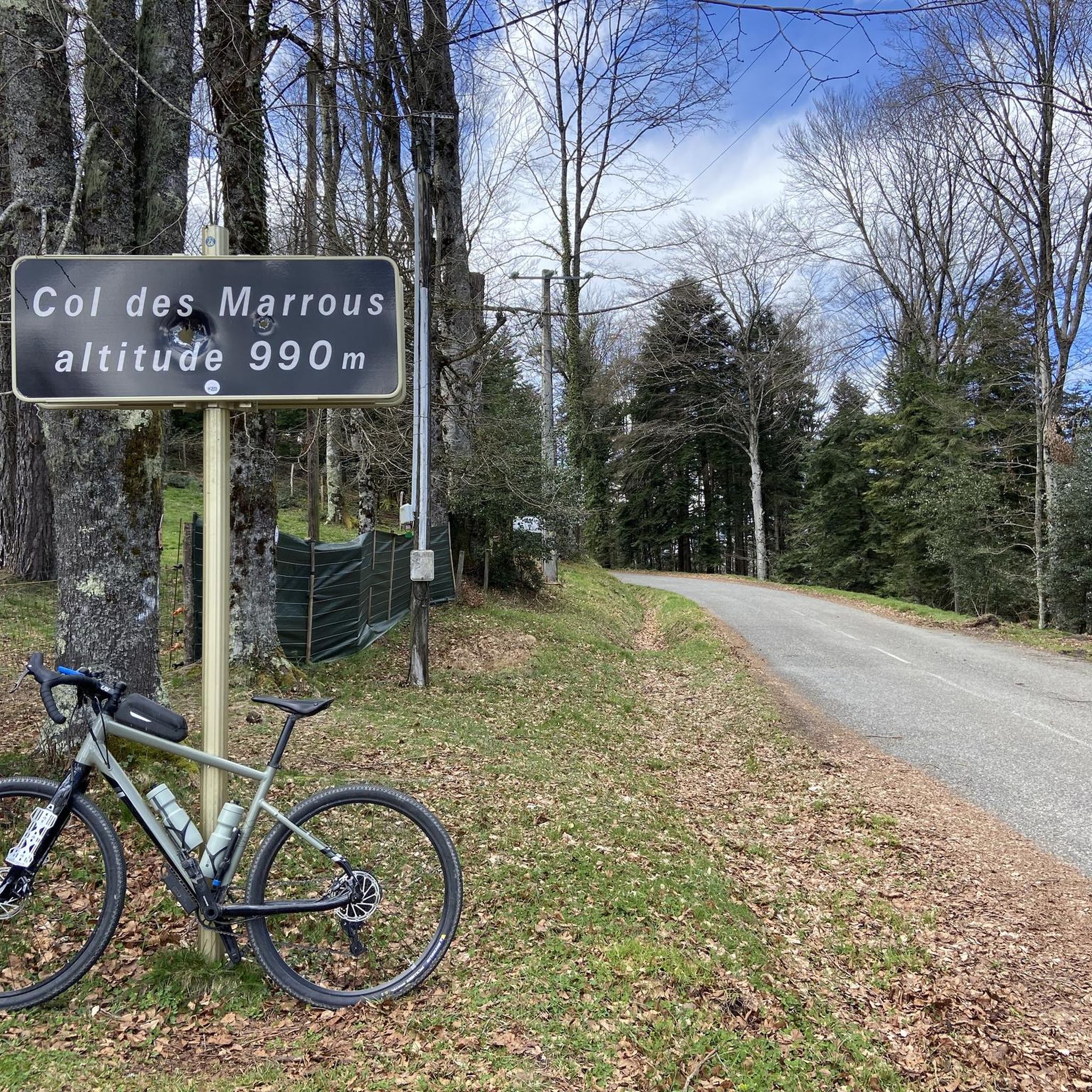
I climbed it from its easier side, the one that starts from Foix and stretches for 28 kms, crossing the Col de Marrous. It's a steady climb, with a few tough kilometers, and very pleasant. It's the side used by the Tour de France to descend it. The best thing about the Mur de Peguère are the views from its summit.
0
0
I can only speak about my experience descending it from the south side, the one that starts in the village of Biert. It's simply a great pass, with a very tough final section, very similar to its close brother Mur de Peguère. With hardly any traffic, it has the appeal that the road is very narrow and very winding, which helps mentally.
0
0


Very surprising, quite and beautiful area, didn't see cars in july for maaaany km, just cyclists.
0
0

Be careful, since yesterday, June 19th, the descent to Rivèrenert has been freshly graveled and dangerous. I had a rear puncture due to small, sharp gravel sticking to the tire when braking. So, don't go crazy on this descent, friends.
2
0
Because around 12pm and >31°C, the climb from Biert is mostly in the shade, and this pass generally ends a series of small linked passes (like Portech, Catchaudégué or La Core, Saraillé, etc.). And the challenge of the last 3 km is worth experiencing to strengthen your mental strength. Get to your pedals
0
0

A very pretty little pass, away from the traffic.
1
0

The Col de Péguère, called Mur de Péguère since the Tour de France, is a Pyrenean road pass in the Arize massif, located on the border of the municipal territories of Boussenac and Sentenac-de-Sérou, in Ariège.
0
0
Frequently Asked Questions
Where is Larbont located and what kind of mountain passes can I expect?
Larbont is situated in the Pyrenees Ariégeoises Natural Regional Park, a region known for its mountain passes. You can expect diverse terrain, from forested trails to open mountain roads, offering various perspectives of the natural environment. The passes are popular for both cycling and hiking.
What are some of the most notable mountain passes around Larbont?
Among the notable passes, you'll find Col de la Crouzette (1245 m), known for its narrow, quiet road, and Péguère Pass, which has played a significant role in the Tour de France. Another option is Col de Légrillou (938 m), nestled in the heart of the Ariège forest.
Are there challenging climbs for cyclists in the Larbont area?
Yes, the area offers challenging climbs, such as the Mur de Péguère Climb. This section of the road to Péguère Pass features gradients up to 18% in places, making it a significant challenge even for experienced cyclists, rewarded with splendid mountain views.
What kind of views can I expect from the mountain passes?
The mountain passes around Larbont offer scenic viewpoints. For instance, Col de Portel (1432 m) provides very nice views of the Pyrenees. Generally, you can expect breathtaking landscapes, from pastures and forests to expansive mountain vistas.
What outdoor activities are available near the mountain passes around Larbont?
Beyond exploring the passes themselves, the region around Larbont is excellent for various outdoor activities. You can find numerous routes for MTB trails, road cycling, and gravel biking, catering to different difficulty levels.
Are there any specific tips for cycling the passes around Larbont?
For passes like Péguère Pass, cyclists note it's a must for Tour de France fans. The climb from Foix is long but easier, while the approach from Massat is short and steep. Be aware that some descents, like from Col de la Crouzette towards Rivèrenert, can have loose surfaces and narrow sections, so caution is advised.
What is the best time of year to visit the mountain passes in the Pyrenees Ariégeoises Natural Regional Park?
The best time to visit for hiking and cycling is typically from late spring to early autumn (May to October) when the passes are generally clear of snow and the weather is most favorable. During winter, some higher passes may be closed or require specific equipment due to snow and ice.
Are there any less-known or quieter mountain passes to explore?
Yes, Col de la Crouzette (1245 m) is described as a less known but attractive route with a narrow, quiet road. Similarly, Col de Légrillou (938 m) is considered a wild pass in the heart of the Ariège forest, offering tranquility and a breath of fresh air.
Can I find forest roads or trails near the passes?
Absolutely. Col de Légrillou (938 m) serves as a gateway to a forest road that crosses the national forest of the Consulate of Foix, providing a pleasant and tranquil experience through the woods.
What do visitors appreciate most about the mountain passes around Larbont?
Visitors particularly enjoy the challenging climbs, the stunning views of the Pyrenees, and the opportunity to cycle iconic routes like those associated with the Tour de France. The tranquility of less-known passes and the diverse natural environment are also highly valued.
Are there options for intermediate level trails around the mountain passes?
Yes, the area around Larbont offers a variety of routes, including intermediate trails for both cycling and hiking. Many passes, such as Col de la Crouzette and Col de Portel, are categorized as intermediate, providing a good balance of challenge and accessibility.
Most popular routes around Larbont
Most popular attractions around Larbont

Get inspired with the komoot mobile app


Explore more
See even more epic mountain passes by checking out these guides around Larbont:
