Attractions and Places To See around Le Crestet - Top 20
Best attractions and places to see around Le Crestet include historical landmarks, natural features, and cultural sites. This region offers a variety of landscapes, from medieval villages perched on rocky hills to river valleys and mountain passes. Visitors can explore ancient castles, churches, and traditional village features, alongside opportunities for outdoor activities. The area provides panoramic views of surrounding mountains and plains.
Best attractions and places to see around Le Crestet
- The most popular attractions is Buisson Pass, a…
Last updated: October 10, 2026
Old Lamastre train station
Highlight • Historical Site
Translated by Google •
Tip by

Doux Gorges
Highlight (Segment) • Gorge
Translated by Google •
Tip by

Sign up now to discover places like this
Get recommendations on the best single tracks, peaks, & plenty of other exciting outdoor places.
Swimming in the Gorges du Doux
Highlight • Other
Translated by Google •
Tip by

Buisson Pass
Highlight • Mountain Pass
Translated by Google •
Tip by

King's Bridge
Highlight • Bridge
Showing Translation
Tip by

Sign up for free to discover even more attractions around Le Crestet.
Already have an account?
Start today with a free account
Your next adventure awaits.

Tips from the Community

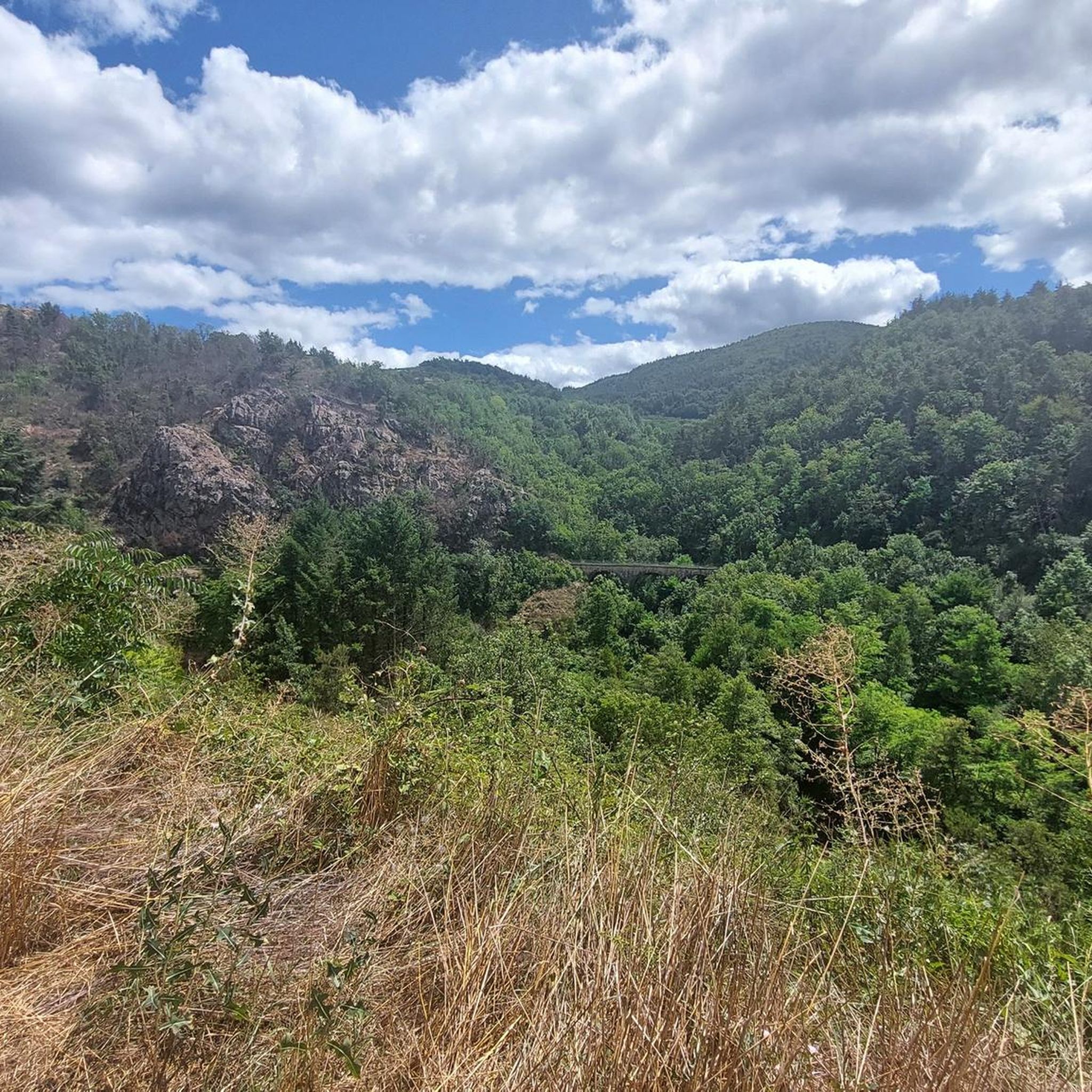
The Gorges du Doux take their name from the river that flows through them. The name is misleading: the river and the gorges have a wild, even tumultuous, appearance! This valley amazes you with its diversity: river, forest, terrain, pastures... This exceptional area has also been classified as a Sensitive Natural Area since 2015. Discover different atmospheres depending on where you are! In the middle of the valley, stop in the charming village of Boucieu le Roi and walk to the banks of the Doux river. It's hard to imagine that this modest stream can overflow its banks, but you should always be wary of still waters: the floods of the Doux are terrible! Moreover, it is said that the name "doux" (meaning "gentle" or "mild") was given to moderate the relentless nature of the river...
0
0
The bridge called the King's Bridge was erected at the beginning of the 13th century. Indeed, in 1291, Philip the Fair officially declared the foundation of Boucieu and thus created a co-lordship with the lord Geronton de Valmordane. Boucieu le Roi was endowed with a charter of franchise (tax exemption for its inhabitants) and a bailiwick (court of justice). The charter of franchise would attract numerous merchants and notables. Access routes were therefore paramount, hence the construction of this 3-arch bridge. It would later be widened in 1773. https://www.ardeche-hermitage.com/fr/catalogue/detail/pont-du-roi-129249/
1
0
Board the Mastrou and discover our entire line, from the T. St Jean de Muzols station to Lamastre. The railway is the only way to admire the wild landscapes of the Doux Valley, a river it follows for 28 kilometers, crossing bridges, viaducts, and tunnels. From the Gorges du Doux to the Ardèche plateau, passing through orchards and chestnut groves, you won't miss a thing in the Ardèche verte! https://www.trainardeche.fr/
0
0
The Gorges du Doux owe their name to the river that flows through them. The name is misleading: the river and the gorges have a wild, even tumultuous aspect! This valley will amaze you with its diversity: river, forest, relief, pastures… This exceptional space has also been classified as a sensitive natural area (Espace Naturel Sensible) since 2015. Discover different atmospheres depending on where you are! In the middle of the valley, stop in the characterful village of Boucieu le Roi and walk to the banks of the Doux river. It is hard to imagine that this modest watercourse can overflow its banks, but one must always be wary of still waters: the floods of the Doux are terrible! Besides, it is said that the name "doux" (soft) was given to moderate the relentless character of the river…
0
0


A must-see even if you don't take the train
0
0

The arrival of the Ardèche Train “Le Mastrou”
0
0

Old steam locomotives also run from this station
1
0
Frequently Asked Questions
What historical sites can I explore in and around Le Crestet?
Le Crestet is rich in history. Within the village, you can explore the breathtaking ruins of the Medieval Castle, dating back to the ninth century, and the eleventh-century Église Saint-Sauveur-et-Saint-Sixte, which showcases Romanesque, Gothic, and Renaissance styles. Don't miss the village of Colombier-le-Vieux, which features a 13th-century castle and a 16th-century fortified house. Another significant historical site is the Medieval Gate of Désaignes, part of a charming village with ramparts and an old fortress.
Are there any unique cultural attractions in the area?
Yes, the Stahly Foundation (Art Centre) in Le Crestet offers a unique cultural experience. It was the home and workshop of sculptor François Stahly and weaver Claude, featuring granite sculptures, wooden carvings, and Mexican art. This Contemporary Art Centre hosts artists-in-residence who explore the theme of art and nature.
Where can I find the best panoramic views around Le Crestet?
From various points in Le Crestet village, especially near the château ruins, you can enjoy breathtaking panoramic views. These vistas include the Ouvèze plain, the dramatic Dentelles de Montmirail, the majestic Mont Ventoux, and the Baronnies mountain range.
What kind of outdoor activities are available near Le Crestet?
The area around Le Crestet is excellent for outdoor enthusiasts. You can find numerous routes for mountain biking, horse riding, and walking. For cyclists, the Buisson Pass offers a challenging 13 km ascent. The "Chemin des Fontaines" is a popular walking circuit from Crestet to Vaison-la-Romaine, winding through forests and vineyards. For more specific routes, explore the running trails, gravel biking routes, and road cycling routes available in the region.
Are there any family-friendly attractions or activities?
Families will enjoy the Old Lamastre train station, which is the arrival point for the Ardèche train, "Le Mastrou." This old steam locomotive offers a nostalgic journey through the Gorges du Doux. The Trail along the Sumène is also family-friendly, offering a natural experience along the river with alternating shaded and sunny sections, suitable for walking or cycling.
Where can I experience the local natural beauty?
Beyond the panoramic views, you can immerse yourself in nature along the Trail along the Sumène, a path that follows the river through shaded forests and open segments. The area is also characterized by its proximity to the Dentelles de Montmirail and Mont Ventoux, offering stunning natural backdrops for exploration.
What is the significance of Notre-Dame de Prébayon and Source de Malézieux?
Following the Chemin de La Verrière, you'll find the remains of Notre-Dame de Prébayon, an ancient, pre-Romanesque convent, and the Source de Malézieux. This holy spring, with a thin stream trickling past the altar, is traditionally credited with healing eyes and sight. A pilgrimage to the chapel is organized every Easter Monday.
What are some notable architectural features within Le Crestet village?
Le Crestet village itself is an architectural gem. As you explore its narrow cobbled streets, you'll discover charming arcades, vaulted walkways, and well-preserved historical features like the Beautiful Fountain (1843), the old washhouse, and an ancient well, all offering a glimpse into the village's past.
Can I find cycling routes with varying difficulty levels?
Yes, the region offers a range of cycling routes. The Buisson Pass, for instance, is an intermediate climb with an average gradient of 2.9% and maximum gradients of 7.7%, making it a notable feature for cyclists, including those participating in the Ardéchoise. For more options, check the Road Cycling Routes around Le Crestet guide, which includes routes of varying difficulty.
What makes the Old Lamastre train station a special attraction?
The Old Lamastre train station is special because it serves as the arrival point for the historic Ardèche train, "Le Mastrou." This train uses old steam locomotives, offering a unique journey back in time through the picturesque Gorges du Doux. It's possible to bring bicycles on the trip, but booking tickets in advance is recommended, especially during summer.
Are there any hidden gems or lesser-known spots to discover?
Beyond the main attractions, exploring the narrow, winding streets of Le Crestet village itself can reveal many hidden gems, from quaint arcades to unexpected viewpoints. The path to Notre-Dame de Prébayon and the Source de Malézieux, while historically significant, offers a more serene and less-traveled experience into the region's spiritual past and natural beauty.
Most popular routes around Le Crestet

Get inspired with the komoot mobile app


Explore more
Still not found the Highlight you’re looking for? See guides of the top attractions in other regions:
