The best MTB trails around Escales
4.6
(181)
1,113
riders
118
rides
Mountain bike trails around Escales offer diverse terrain within the Aude department of France, characterized by the rolling Corbières hills and dense woodlands like the Forêt de Fontfroide. The region features varied elevations, from the gentle paths along the Canal du Midi to more challenging routes through natural gorges. This landscape provides a range of mountain biking experiences, suitable for different skill levels.
Best mountain bike trails around Escales
- The most popular mountain bike trail is View over the Corbières…
Last updated: June 20, 2026
4.3
(11)
98
riders
32.3km
03:16
710m
710m
Hard mountain bike ride. Good fitness required. Advanced riding skills necessary. Some portions of the route may require you to push your bike.
4.3
(4)
18
riders
21.9km
01:59
340m
340m
Moderate mountain bike ride. Good fitness required. Suitable for all skill levels.

Sign up for free
4.0
(2)
6
riders
36.0km
02:36
390m
390m
Moderate mountain bike ride. Good fitness required. Advanced riding skills necessary.
4.5
(2)
5
riders
31.4km
02:18
150m
150m
Moderate mountain bike ride. Good fitness required. Suitable for all skill levels.
5.0
(1)
11
riders
9.83km
00:43
40m
40m
Easy mountain bike ride. Great for any fitness level. Suitable for all skill levels.
Get access to more routes and recommendations from other explorers.
Sign up for free
Already have an account?
Our route recommendations are based on thousands of hikes, rides, and runs completed by other people on komoot.
Start today with a free account
Your next adventure awaits.
Login or Signup

Tips from the Community

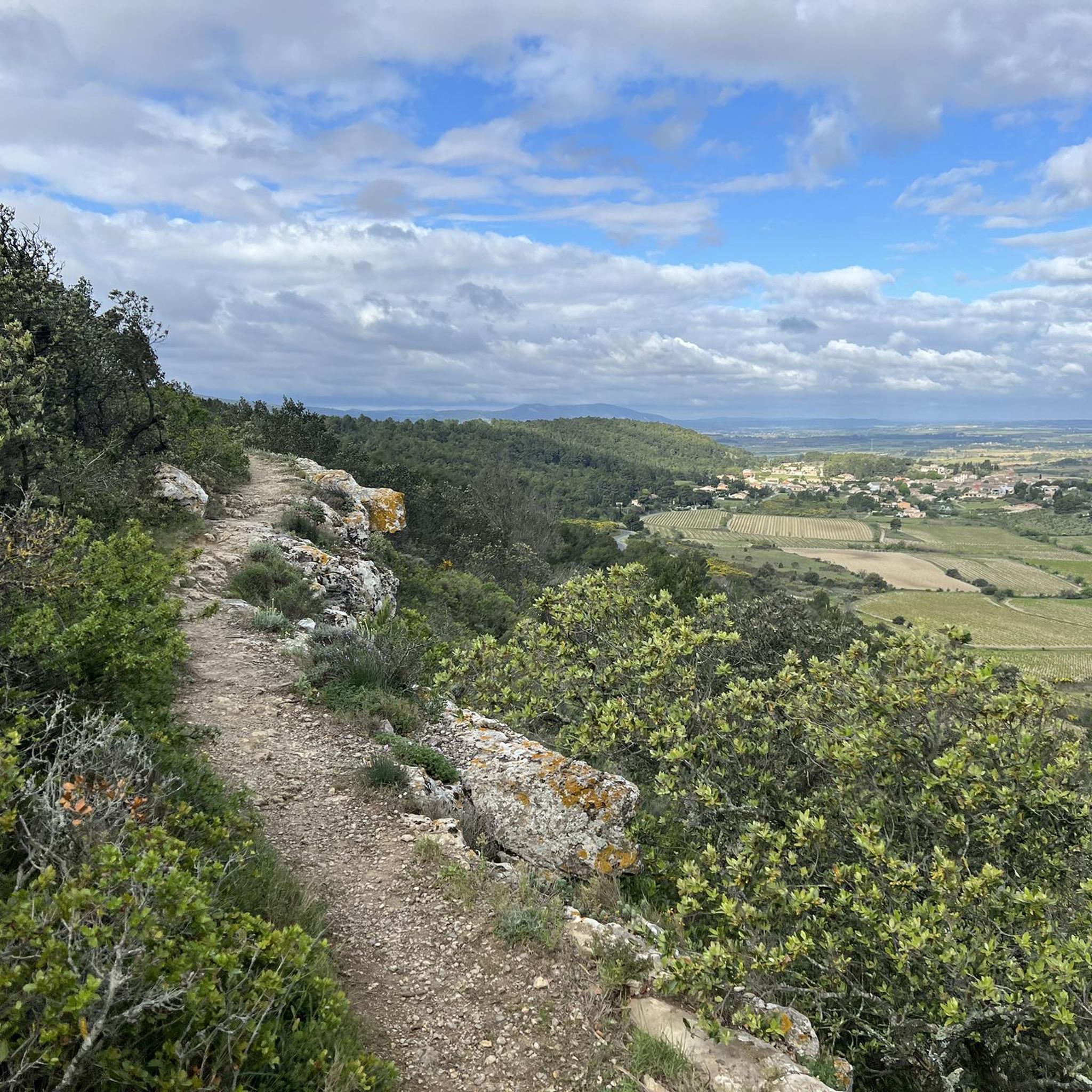
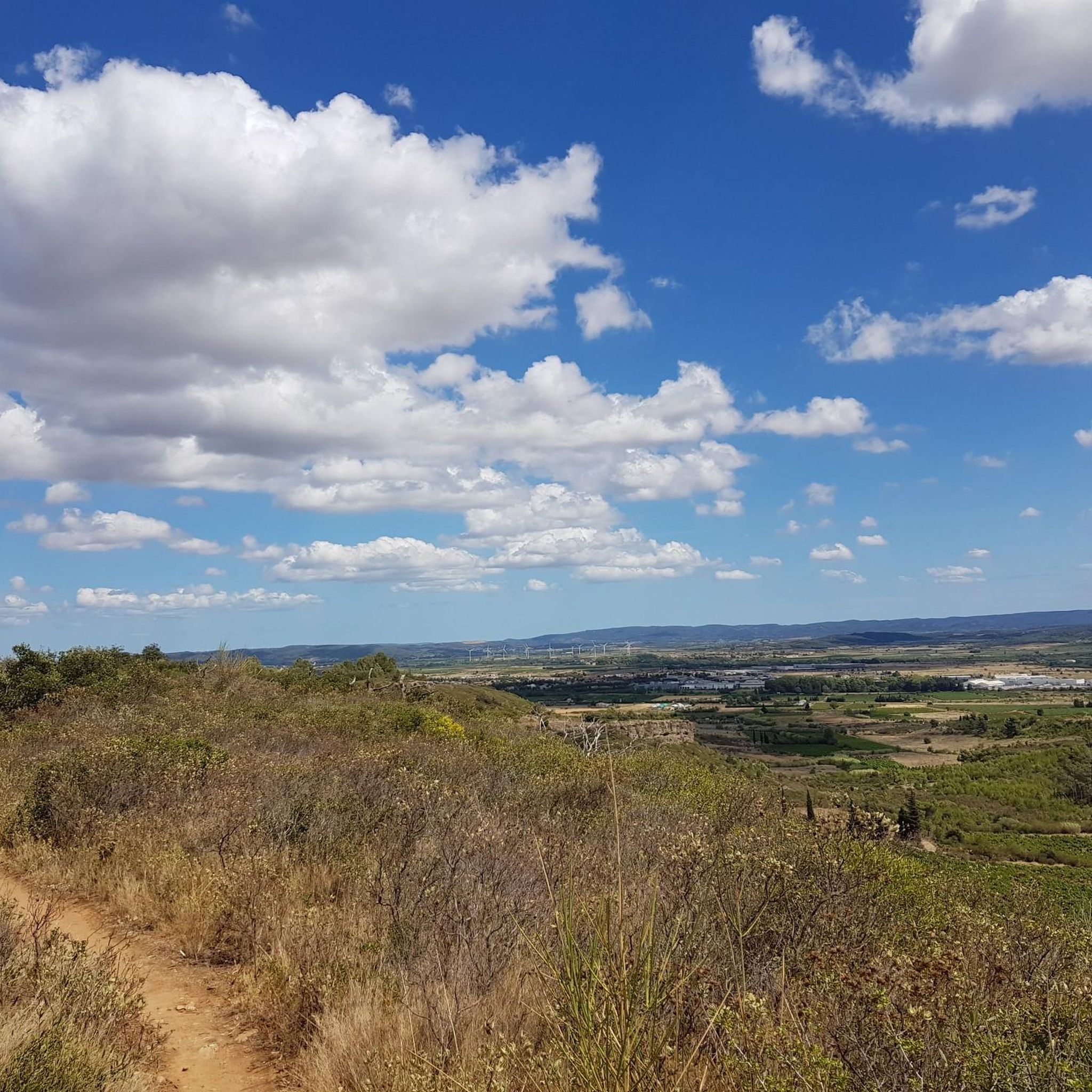
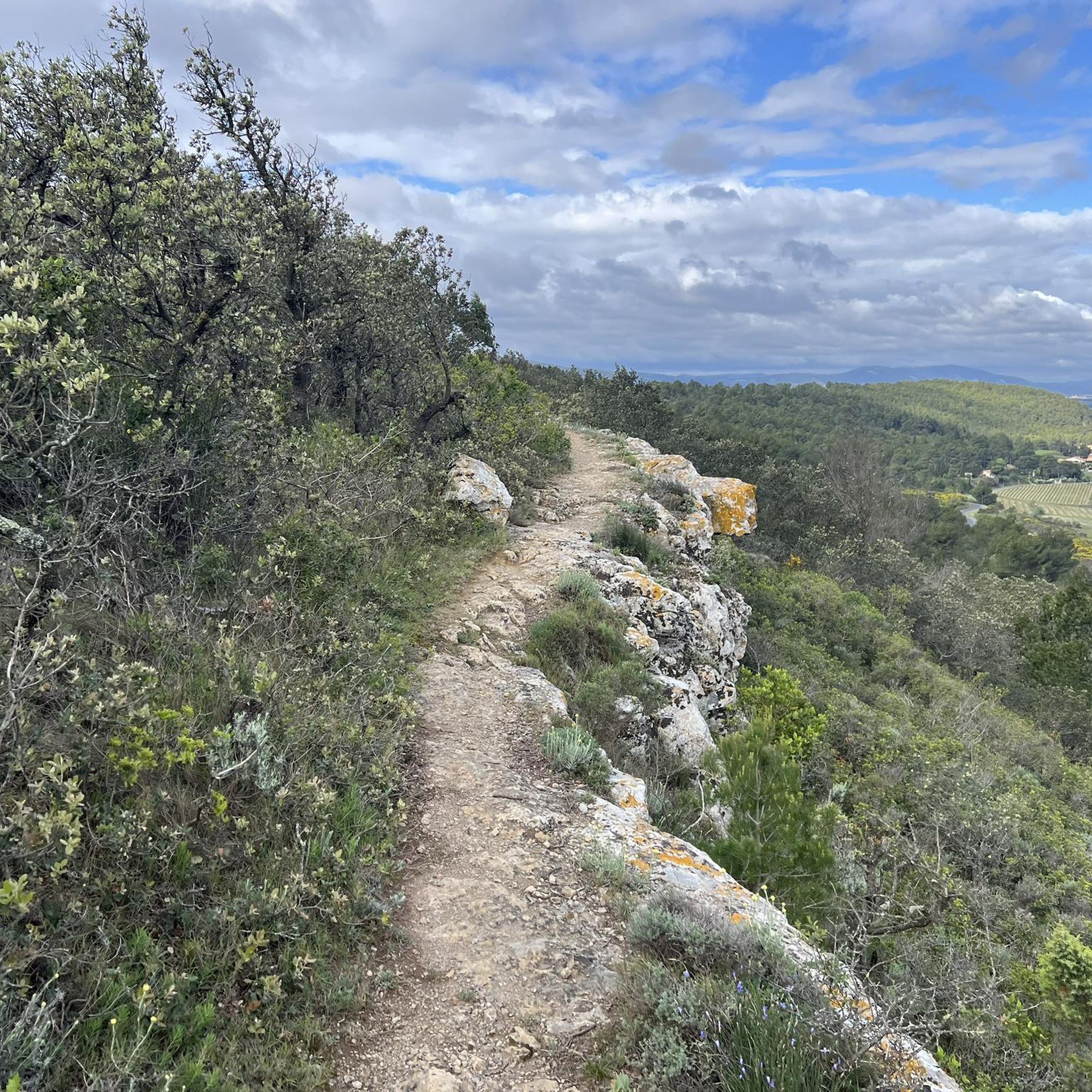
The lookout post in the pine forest, "the firefighters' eyes" in Boutenac. Many gravel tracks. Start on a paved track, then follow a departmental road for 1 km. Climb to the lookout post over 4.5 km, then descend via a gravel track. Beautiful panoramic views, though a bit challenging. Not much shade and exposed to the north wind. The highest point is the lookout post at the summit of the pine forest massif (273 m). This tower, overlooking the landscape, allows for surveillance of the woods and far beyond.
0
0

The bridge is in Homps
0
0
Naudy Tunnel This is the centerpiece of the pond's irrigation canals. On October 20, 1849, the construction of a water intake was authorized for irrigation and sealing the pond's soil. Work began the same year. The tunnel was inaugurated on November 19, 1851. The canal measures 2,135 meters. The passage under the Canal du Midi has not required any repairs to this day. Less than a year after the tunnel was dug, on April 28, 1852, the estate was sold to a private company. The new owners attempted large-scale rice cultivation and achieved good results, but this crop was abandoned in 1860 because malaria fever led to petitions, protests from the mayors of the surrounding villages, and successive lawsuits. More information on the website: http://aiguesvives11.org/etang_marseillette/carac_etang.htm (Puichéric Town Hall)
0
0
Second Period In 1759, Roudil de Berriac, Lord of Ranchin and Mayor of Carcassonne, committed to draining the Marseillette Pond within eight years. In 1760, he obtained exclusive rights to drain the pond through a decree of King Louis XV's Council. The pond was acquired in 1778 by an engineer and member of the Toulouse Academy of Sciences, Monsieur de Garipuy, who had traveled to Holland to study the drainage project. Upon his death, the pond was purchased by Madame Riquet de Caraman on behalf of the owners of the Canal du Languedoc. In 1789, the pond became state property. Map of the Marseillette Pond Third Period In 1804, the pond was resold on the condition that the drainage be completed within four years. It was then acquired by Mrs. Lawless, an Irish woman. She had the Aiguille channel re-dug and widened and the Plains aqueduct rebuilt over three arches. Three other channels were opened inside the pond, together forming a length of 8,977 meters. These drainage channels are the ones that still exist today. Mrs. Lawless had 18 farmsteads built on the 2,000 hectares. In 1834, wheat, oats, and barley were harvested in the pond, but the owner was ruined. In 1844, the estate was expropriated in favor of the French Mortgage Fund. Saline efflorescence was killing the vegetation. Water was lacking; the land would have to be submerged to desalinate it. The idea was to divert some of the water from the Aude River, which flows two kilometers away, into the pond. But the Aude and the pond are separated by a plateau 30 to 45 meters high and this obstacle seems insurmountable.
0
0
The dried-up pond of Marseillette is an atypical site in our region. To learn about and understand it, we must go back to the Tertiary period. At that time, the sea covered the area. As it retreated, it left ponds behind. This one must have been particularly important, as it would still exist if it hadn't been drained by humans during the 19th century. Irrigation canals run through the pond, giving it a unique character. Today, the pond's main crops are vines, apples, and rice, crops celebrated at the annual Aigues-Vives fair in October. It is even said that the salt, always present underground, contributes to giving these products the subtle flavor that makes them unique... Near the Canal du Midi, its paths will lead you to the Aiguille Lock (Puichéric), a remarkable site where you can admire the sculptures of Joël Barthes. The Marseillette Pond ASA manages the maintenance work necessary for the proper functioning of the kilometers of irrigation canals and the Naudy tunnel. The pond covers the territory of the municipalities of Marseillette, Puichéric, Aigues-Vives, and Saint Frichoux. Drainage, First Period In 1585, the first attempt to drain the 2,000 hectares of stagnant water, where mosquitoes, vectors of many diseases, were teeming, failed (due to wars). In 1605, on the advice of Sully and Olivier de Serres, the first agricultural encyclopedist, the royal decree mandating the drainage of the pond was issued. Work did not truly begin until 1628, under the reign of Louis XIII, advised by Richelieu. A trench running through Puichéric allowed the water to drain into the Aude River: this was the Rigole de l'Étang. In 1638, Théophile Ranchin completed the drainage of this lower part of the basin, but maintenance of the canals was neglected and cultivation was abandoned following a plague epidemic and a war, and most of the land was once again flooded. Between 1644 and 1647, the Ranchins built the Château de Fonfile on the banks of the pond, where they settled to oversee the simultaneous drainage and cultivation work. The dried-up pond was partially cultivated, but a supply of fresh water other than rainwater would have been necessary to make the land truly cultivable. In 1677, Daniel de Ranchin had virtually abandoned the pond.
0
0

The pond covers an area of 2,000 hectares and is shared between the communes of Marseillette, Aigues-Vives, Saint-Frichoux, and Puichéric. It once supplied the region with fish. As early as the 12th century, talk began of draining this stagnant body of water, a source of death and misery for Marseillette and the surrounding villages, which were becoming depopulated. In 1605, Henry IV issued a royal decree to drain the pond. But it wasn't until 1804, when it was purchased by an Irish woman, Madame de Lawless, that it was drained, thanks to a vast project. The pond was then cultivated and developed to utilize the waters of the Aude River, with an original irrigation system consisting of perpendicular canals allowing the flooding of the land. Today, vines, apples, and rice are the main crops grown there. Its calm and flat paths are very pleasant for hiking or cycling, in a typical landscape.
0
0

Frequently Asked Questions
How many mountain bike trails are available around Escales?
There are over 100 mountain bike trails around Escales, offering a wide variety of experiences. These include 22 easy routes, 64 moderate routes, and 14 difficult routes, catering to all skill levels.
What kind of terrain can I expect on mountain bike trails in the Escales region?
The Escales region, located in the Aude department of France, offers diverse terrain. You'll find rolling Corbières hills, dense woodlands like the Forêt de Fontfroide, and paths along the Canal du Midi. The broader Aude region is known for deep gorges, golden vineyards, and shady pine forests, providing a mix of challenging climbs and scenic, flatter sections.
Are there any family-friendly mountain bike routes in Escales?
Yes, Escales offers several family-friendly mountain bike routes, particularly along the Canal du Midi, which provide easier, flatter paths. For example, the region has 22 easy routes suitable for less experienced riders or families looking for a relaxed outing.
What are some notable landmarks or points of interest along the mountain bike trails?
Many routes offer scenic views and pass by interesting landmarks. You can cycle past the Canal du Midi Bridge, enjoy a View over Paraza, or see the impressive Argent-Double aqueduct and spillway. The Aiguille Lock - Canal du Midi and the Paraza canal bridge are also points of interest along some routes.
Are there any circular mountain bike routes available?
Yes, many routes in the Escales area are circular, allowing you to start and end at the same point. A popular moderate option is the Mountainbike loop from Conilhac-Corbières, which covers 13.5 miles (21.7 km) through varied countryside.
What is the best time of year for mountain biking in Escales?
The Aude region, where Escales is located, generally offers good conditions for mountain biking for much of the year. Spring and autumn provide pleasant temperatures and vibrant landscapes. Summer can be warm, making early morning or late afternoon rides ideal. Winter riding is possible, but conditions can vary, especially in higher elevations.
What do other mountain bikers enjoy most about the trails in Escales?
The trails in Escales are highly rated by the komoot community, with an average score of 4.7 stars from over 160 reviews. Riders often praise the diverse terrain, from the rolling Corbières hills to the peaceful paths along the Canal du Midi, and the expansive views across the landscape.
Are there any challenging mountain bike trails for experienced riders?
Absolutely. For experienced riders seeking a challenge, the region offers difficult routes with significant elevation gain. A notable option is the View over the Corbières loop from Conilhac-Corbières, a 20.1-mile (32.3 km) trail with over 700 meters of elevation gain, offering expansive views.
Can I find routes that combine vineyards and rural paths?
Yes, the Escales area is known for its vineyards and rural landscapes. The Chapelle stSimeon – Montauriol loop from Lézignan-Corbières is a great example, leading you through vineyards and rural paths over 22.4 miles (36.1 km).
Are there any routes that explore the Canal du Midi?
Yes, the Canal du Midi is a prominent feature of the region, offering scenic and generally flatter routes. The Argent-Double Spillway – Canal du Midi Bridge loop from Homps is a moderate 31.3 km route that highlights this beautiful waterway.
What is the typical duration for a mountain bike ride in Escales?
Ride durations vary significantly based on the trail's length and difficulty. For example, a moderate route like the Mountainbike loop from Conilhac-Corbières typically takes around 2 hours, while a more challenging one like the View over the Corbières loop from Conilhac-Corbières can take over 3 hours.
Most popular attractions around Escales

Get inspired with the komoot mobile app


Explore more
Browse the best MTB trails in other regions.
