Attractions and Places To See around La Framboisière - Top 20
Best attractions and places to see around La Framboisière offer a blend of historical landmarks and natural landscapes. Located in the Eure-et-Loir department, this commune serves as a base for exploring the rich offerings of the surrounding Perche region. Visitors can discover historic castles and immerse themselves in the tranquility of the Senonches Forest and the broader Perche Natural Regional Park. The area provides opportunities to explore significant cultural sites and diverse natural features.
Best attractions and places to see…
Last updated: July 1, 2026
Château de Senonches
Highlight • Castle
Translated by Google •
Tip by

Ferté-Vidame Castle
Highlight • Other
Translated by Google •
Tip by
Sign up now to discover places like this
Get recommendations on the best single tracks, peaks, & plenty of other exciting outdoor places.
Sign up for free
Ruins of the Château de La Ferté-Vidame
Highlight • Castle
Translated by Google •
Tip by

View of the Château de Saint-Simon⚜️🏰✨
Highlight • Historical Site
Translated by Google •
Tip by
Saint Nicholas Church - La Ferté-Vidame
Highlight • Religious Site
SAINT NICOLAS
(17th century)
The town of La Ferté-Vidame takes its name from the Latin Firmitas Castrum which means the fortified villa belonging to the vidame'.
Its primitive church …
Translated by Google •
Tip by

Sign up for free to discover even more attractions around La Framboisière.
Sign up for free
Already have an account?
Start today with a free account
Your next adventure awaits.
Login or Signup

Tips from the Community

The castle of Senonches. You will find an information point inside.
0
0
Possibility of taking a walk in the park adjoining this beautiful ruin.
0
0
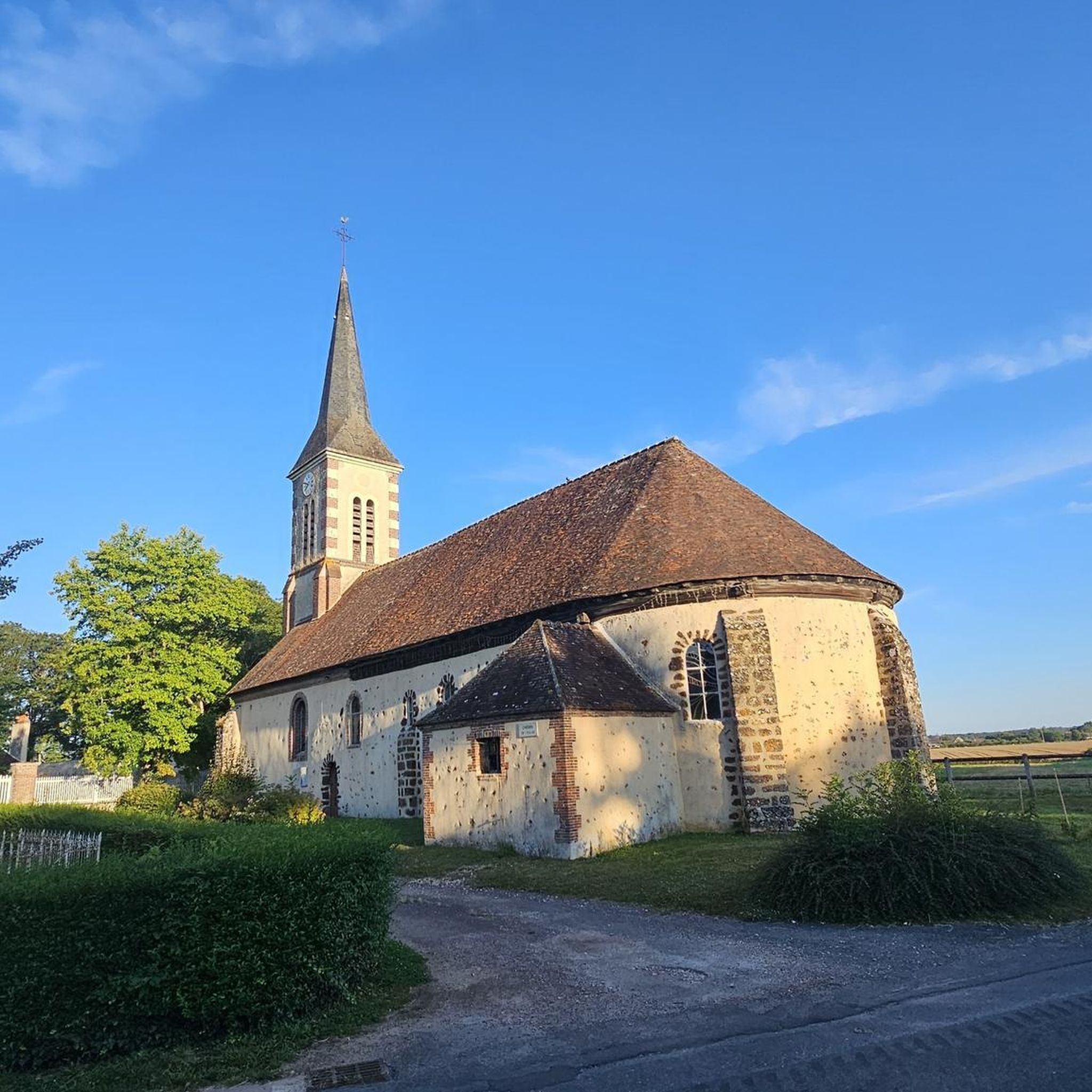
CHURCH SAINT NICOLAS (17th century) The town of La Ferté-Vidame takes its name from the Latin Firmitas Castrum which means the fortified villa belonging to the vidame'. Its primitive church existed from the 12th century. We find it mentioned in a charter dated 1136 under the name “Ecclesia Sancti Nicolai de Firmitate”. Under the Ancien Régime, the rectory which was at the disposal of the abbot of Saint-Vincent-des-Bois became an annex of the parish of Lamblore. This particular situation of a chief town of a castellany belonging to a rural parish is explained by the detachment of the original parish from the territory around the castle. Successor to the Huguenot heirs, Claude de Rouvroy de Saint-Simon, proclaimed by the grace of Louis XIII duke and peer of France, acquired the La Ferté estate in 1632. In order to erase all traces of Protestantism, of which the church had become over the centuries a very active platform, the Duke of Saint-Simon ordered in 1658 the demolition of the original church to replace it on the same site with the current building. The work was carried out promptly. On November 1, 1659, the Saint-Nicolas church was blessed by Messire Louis Oudard de Germens, canon priest of Chartres. Classic in style with its homogeneous and ordered composition, the church was built according to a plan in the shape of a Latin cross. Its construction was inspired by the drawings of the famous Italian architect, Andrea di Pietro Palladio, whose sketches Duke Saint-Simon had brought back from Spain. The architecture remains faithful to the marriage of stone and brick while giving this alternation a fanciful touch. Very majestic, the facade is built according to the Italian pattern (bossed pilasters, superposition of orders, pediment, volutes), a style also in vogue in France since 1630. The arms of the Saint-Simon family were engraved on a stone at the pediment of the portal and on two others on either side of the portal. They were burned during the Revolution. Today, only the date engraved on the frieze remains: 1659. 16 59 Square in plan, the bell tower, which adjoins the church in the northern part, is topped with a dome surmounted by a lantern. Two bells are housed in the bell tower: one dates from 1762, the second from 1813. The history of the church is closely intertwined with that of the lords of the parish, including the families Saint-Simon, Laborde, Bourbon-Penthievre and Bourbon-Orléans remain the most famous. Grandstands accessible from the outside and opening onto the side chapels recall their presence. In 1743, at the request of Louis de Saint-Simon, a great memoirist, the family vault was built in the Chapel of the Resurrection. A slab on the ground marks the location of the grave. Unfortunately, during the Revolution, the tombs were desecrated, the bones of the benefactors were extracted from the vault and scattered in a common grave dug at the apse of the church. The church was the subject of significant restorations at the end of the 18th century and the beginning of the 19th century, including the interior ornamentation of the building which is a manifestation of the neo-classical style.
2
0

The castle park is a great spot for a break. Access to the park is free.
0
0

The castle of La Ferté-Vidame impresses with its ruins, the only remains of its destruction during the French Revolution. Its park is also pleasant to visit.
2
0

A report on the castle and its history https://www.dailymotion.com/video/x7ypeas
0
0

On the edge of the Perche, the Senonches castle, whose oldest remains date from the 12th century, had illustrious owners until the Revolution: from the lords of Thimerais to “Monsieur”, brother of King Louis XVI.
0
0

The Château de Senonches is a medieval castle which dates from the 12th century and which is classified as a historic monument. It is surrounded by the Senonches forest, one of the largest and most diverse forests in Perche. You can explore the castle and its museum, which presents the ecology, history and industry of the forest.
2
0
Frequently Asked Questions
What historical landmarks can I explore near La Framboisière?
The region around La Framboisière is rich in history. You can visit the historic Château de Senonches, which features an 11th-century foundation and a 12th-century keep. Another significant site is the Ferté-Vidame Castle, known for its extensive park and the ruins of the Château de Saint-Simon, once home to the Duke of Saint-Simon. The nearby village of La Saucelle also holds historical significance as an early Knights Templar settlement.
Are there opportunities for hiking and walking near La Framboisière?
Yes, La Framboisière is ideally situated on the edge of the extensive Senonches Forest, offering numerous hiking and walking opportunities. You can find various routes, including circuits that explore 'strange trees' and follow the Biquet valley. The broader Perche Natural Regional Park also provides a peaceful countryside setting for walks. For specific routes, consider exploring the hiking trails around La Framboisière, which include options like the 'Château and Senonches Forest Loop' and 'Framboisière loop'.
What natural attractions are there to see around La Framboisière?
Beyond the Senonches Forest itself, you can discover several natural highlights. The Froux Peat Bog, located within the forest, is a site of ecological value, preserving rare plant and animal species. Other serene spots include the romantic Forestiers Pond, ideal for wildlife observation, and L'Étang de la Bénette, managed for its exceptional flora and fauna. Don't miss the majestic Chêne de la Framboisière (Oak of La Framboisière) found along forest trails.
Can I find family-friendly activities or attractions in the area?
Many of the natural sites and historical landmarks can be enjoyed by families. Exploring the Senonches Forest offers easy walking paths suitable for children, and the expansive park of the Ferté-Vidame Castle provides open spaces. The Château de Senonches is listed as family-friendly, offering a glimpse into history within a natural setting.
What is the best time of year to visit La Framboisière for outdoor activities?
The Perche region, including La Framboisière, is beautiful throughout the warmer months, from spring to autumn. Spring brings blooming nature, while summer offers pleasant weather for hiking and exploring. Autumn is particularly scenic with vibrant fall foliage in the Senonches Forest. While winter hiking is possible, some natural sites might be less accessible or less vibrant.
Are there cycling routes available near La Framboisière?
Yes, the area offers various cycling opportunities, from leisurely rides through the countryside to more challenging routes. You can find several options, including the 'Forests and beautiful homes' route or shorter loops like 'Château de Senonches – Notre-Dame Church of Senonches loop'. Explore more options on the cycling guide for La Framboisière.
What is special about the Ferté-Vidame Castle and its park?
The Ferté-Vidame Castle is notable for the impressive ruins of an 18th-century castle and its vast 860-hectare park. The park is significant as it features the last French-style garden created in France, complete with a 1.5-kilometer perspective. It was once the residence of the renowned memoirist Louis de Rouvroy, Duke of Saint-Simon, and invites reflection on history and nature.
Where can I observe wildlife near La Framboisière?
The Senonches Forest and its various ponds are excellent for wildlife observation. The Forestiers Pond is particularly noted as an ideal spot to see animals, especially in the evening when they come to drink. The Froux Peat Bog and L'Étang de la Bénette are also managed for the preservation of their diverse ecosystems, offering chances to spot protected species.
Are there any religious buildings of interest in the vicinity?
Yes, the Saint Nicholas Church in La Ferté-Vidame is a notable religious building. Dating back to the 17th century, it was built on the site of a primitive 12th-century church. Its classical style, inspired by architect Andrea di Pietro Palladio, and its history intertwined with the local lords, make it an interesting visit.
What kind of running trails are available around La Framboisière?
For runners, the Senonches Forest provides a scenic backdrop for various trails. You can find moderate routes like the 'Senonches Forest Loop' or the 'Running loop from La Framboisière'. These trails offer a great way to experience the natural beauty of the area while getting exercise. More options are detailed in the running trails guide for La Framboisière.
What makes the Château de Senonches a significant attraction?
The Château de Senonches is a medieval castle with foundations from the 11th century, a 12th-century keep, and main buildings from the 14th and 17th centuries. It is a listed historical monument and is surrounded by the vast Senonches Forest. Visitors can explore its history and the museum within, which showcases the ecology, history, and industry of the forest.
Where can I find local markets or experience regional life near La Framboisière?
While La Framboisière itself is small, you can explore local markets in nearby towns such as Senonches and La Loupe. These markets offer a taste of regional life and an opportunity to discover local produce and crafts.
Most popular routes around La Framboisière
Most popular attractions around La Framboisière

Get inspired with the komoot mobile app


Explore more
Still not found the Highlight you’re looking for? See guides of the top attractions in other regions:
