Attractions and Places To See around Manonville - Top 20
Best attractions and places to see around Manonville include a mix of historical sites and natural features. Located within the Parc naturel régional de Lorraine, the area offers diverse landscapes. Visitors can explore historical landmarks and points of interest that reflect the region's heritage. The surroundings of Manonville provide various attractions for those interested in history and nature.
Best attractions and places to see around Manonville
- The most popular attractions is Chapel of Our Lady of the Airs, a…
Last updated: October 10, 2026
Carmelite Cross
Highlight • Other
Translated by Google •
Tip by

Le Pétant National Necropolis
Highlight • Historical Site
Translated by Google •
Tip by

Sign up now to discover places like this
Get recommendations on the best single tracks, peaks, & plenty of other exciting outdoor places.
Andilly German military cemetery
Highlight • Historical Site
Translated by Google •
Tip by

Notre-Dame des Airs Chapel, Dieulouard
Highlight • Other
Translated by Google •
Tip by

Villevaux Mill
Highlight • Other
Translated by Google •
Tip by

Sign up for free to discover even more attractions around Manonville.
Already have an account?
Start today with a free account
Your next adventure awaits.
Tips from the Community

Building located on the path of St James of Compostela overlooking the Moselle valley, at the entrance of Dieulouard. At its summit, one can see the statue of "Notre Dame des airs" by Malot, and on one of the faces, the stone statue of a "Poilu" (French soldier) sculpted by Huel and then added. Above the door, the motto Dieu Lou Wart (God protect him) gave the town of Dieulouard its name. At its feet, one can contemplate the entire panorama of the valley.
0
0

The Andilly German War Cemetery is located 10 kilometers north of Toul and three kilometers outside of Andilly (Meurthe-et-Moselle). With 33,085 dead soldiers, it is the largest German World War II military cemetery in France. At the beginning of September 1944, Allied troops were pressing toward Germany. From the Rhône Valley to the Vosges Mountains and the Rhine Valley, fighting against the retreating German troops caused enormous losses on both sides. In 1944, the Americans established a temporary cemetery here for their nationals as well as for fleeing German troops who had fallen in combat. This temporary cemetery contained 5,000 graves. After the war, the Americans relieved their soldiers and reburied them in the American War Cemetery in Saint-Avold. Andilly then became a German military cemetery, where 5,000 victims were buried at the time. From Saint-Avold, 575 German soldiers were buried, and from Épinal-Dinozé, 4,891 died in the Andilly area. In total, the death toll at Andilly rose to 11,000. Following the Franco-German agreement on military graves in 1954, the Volksbund Deutsche Kriegsgräberfürsorge (German Military Graves Maintenance Service) was commissioned by the German government to develop this military necropolis for the victims of World War II in the early 1960s. Its members and benefactors funded its maintenance with their contributions and donations. Starting in 1957, the Volksbund began searching for and gathering in Andilly the bodies of German soldiers who had fallen west of Metz and in eleven departments: Nièvre, Saône-et-Loire, Côte-d'Or, Haute-Marne, Jura, Doubs, Haute-Saône, Vosges, Territoire de Belfort, Meuse, and Meurthe-et-Moselle. There were 2,000 unknown dead German soldiers in the Vosges who were transferred to Andilly. Thus, with 33,085 graves, the largest German military necropolis for the Second World War in France was created. In the spring of 1961, the cemetery was transformed from a garden perspective. The result was a solemn plot surrounded by bushes and trees. The cemetery was opened to the public in 1962.
0
0

Beautiful chapel with wonderful view
0
0

Over an area of 6.2 ha, the necropolis brings together the bodies of 13,519 soldiers who died for France during the two world conflicts. In the upper part is the cemetery of the 14-18 conflict. It was created in 1915 following the battles at Bois-le-Prêtre and developed between 1920 and 1936. It brings together the bodies of 5,199 French soldiers and 1 Serb. In the lower part is located the military cemetery of the Second World War and a Captivity Memorial which houses the bodies of prisoners of war who died in captivity. 8200 French, 105 Soviets, 12 Poles in four ossuaries.
0
0
Memorial to the bloody Battles of Bois-le-Prêtre during the First World War. Initially a simple wooden cross which marked the highest point of the forest massif at 372 meters above sea level, a strategic point, it returned to its place of origin shortly after the war and was enshrined in the stone monument commemorating this battle which was inaugurated on September 23, 1923 by Raymond Poincaré.
0
0

beautiful plateau, great view of the Moselle valley, plenty of picnic benches
1
0

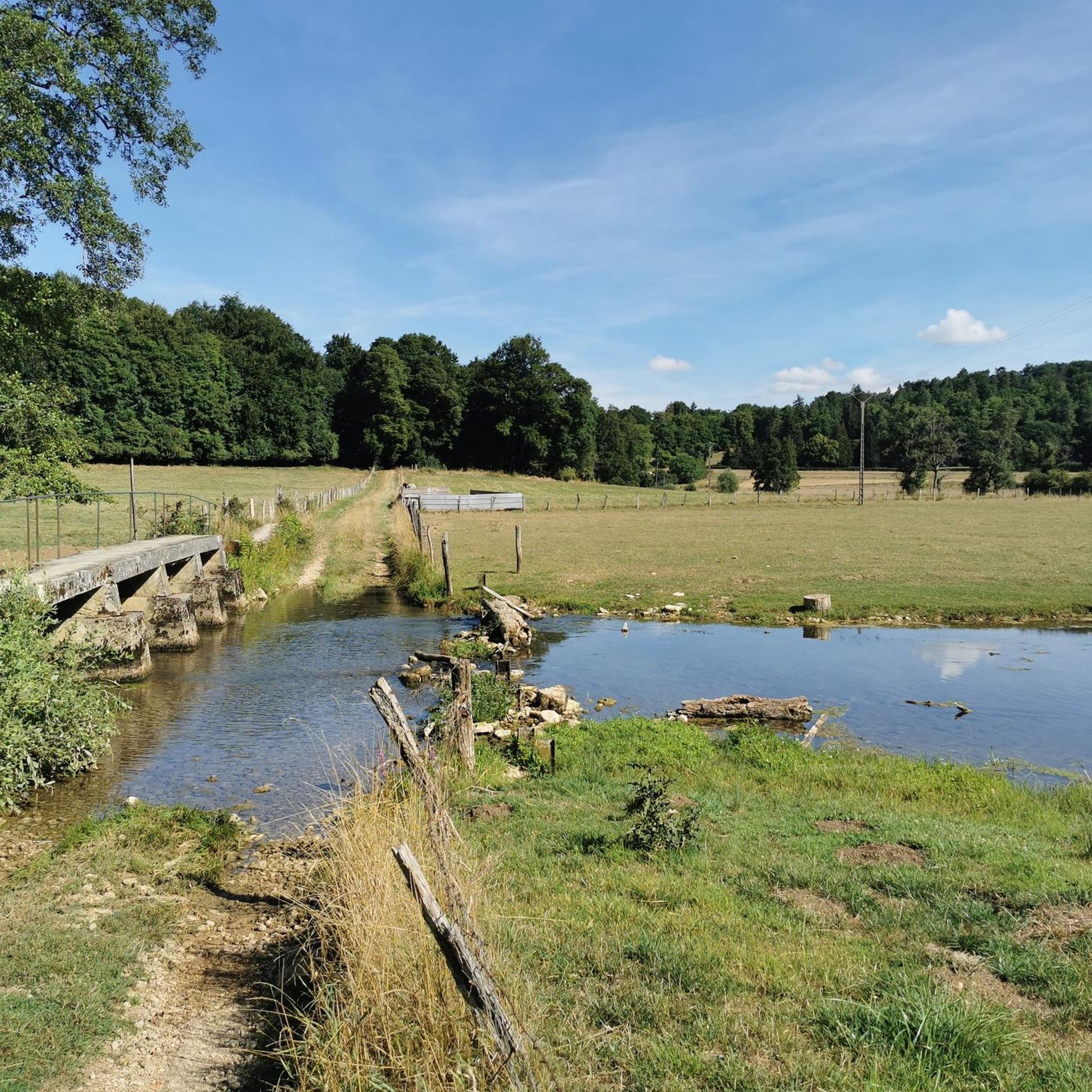
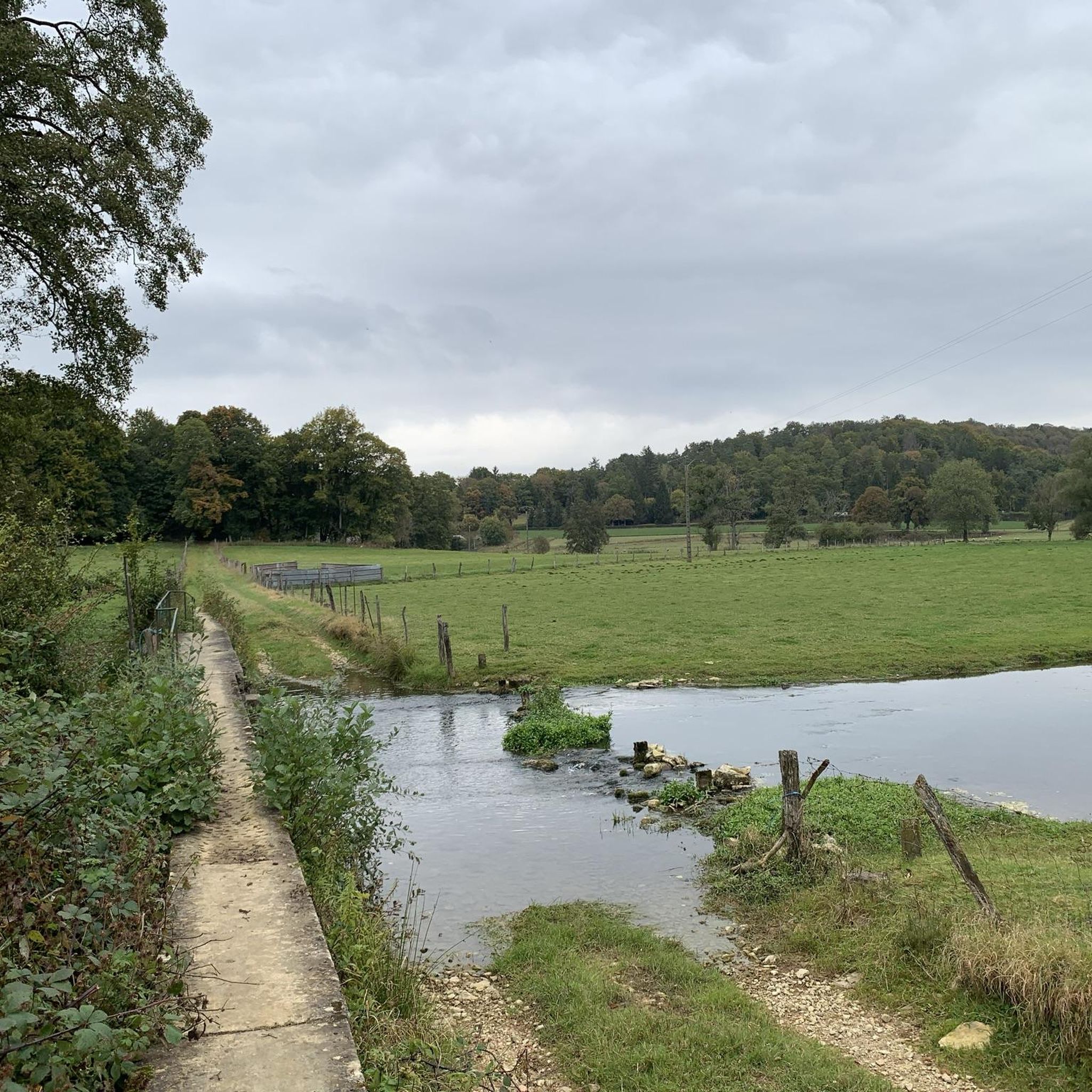
During periods of heavy rain this section can be difficult due to flooding.
3
0

From here begins a large forest area in which there are also remains of destroyed villages.
0
0
Frequently Asked Questions
What historical sites can I visit in and around Manonville?
Manonville and its surroundings are rich in history. You can explore the Church of St-Laurent in Manonville, which houses several historical monuments including a 16th-century stone tomb and 18th-century altars. The Château de Manonville, dating back to the 13th century, also offers a glimpse into the region's past. Further afield, consider visiting the Dieulouard Castle and Church, a significant historical and religious site, or the Carmelite Cross and Le Pétant National Necropolis, both poignant World War I memorials where remnants of battles are still visible.
Are there any natural attractions or parks near Manonville?
Yes, Manonville is located within the vast Parc naturel régional de Lorraine, a regional natural park known for its diverse landscapes. This park features limestone grasslands, forest valleys, saline ponds, and numerous lakes and rivers. Notable sites within the park include the Butte de Montsec and the popular Lac de Madine, offering various recreational opportunities. You can also visit the Villevaux Mill, an old mill situated in a beautiful valley, preserved for its natural environment.
What are some family-friendly activities or attractions in the Manonville area?
Several attractions around Manonville are suitable for families. The Chapel of Our Lady of the Airs offers magnificent views and picnic tables, perfect for a family outing. The Dieulouard Castle and Church is also considered family-friendly, and the Le Pétant National Necropolis, while thought-provoking, is accessible for families. The broader Parc naturel régional de Lorraine provides ample opportunities for outdoor exploration and nature walks.
Where can I find scenic viewpoints near Manonville?
For impressive views, head to the Chapel of Our Lady of the Airs. It offers a magnificent panorama of the Moselle valley. Additionally, the Butte de Montsec within the Parc naturel régional de Lorraine is known for its historical significance and scenic vistas.
Are there hiking trails available near Manonville's attractions?
Absolutely. The area around Manonville offers a variety of hiking trails. For example, near the Villevaux Mill, you can find easy to moderate loops like the "Villevaux Mill – Le Trou du Gros Bois loop from Rogéville" or the "Villevaux Mill – Old wash-house loop from Gézoncourt." You can explore more hiking options in the region by visiting the Hiking around Manonville guide.
What cycling routes are available around Manonville?
Manonville is a great starting point for cycling. You can find various road cycling routes, such as the "Little Lorraine Switzerland loop from Noviant-aux-Prés" or the "Château de Pierrefort – Château de Manonville loop from Rosières-en-Haye." For touring bicycles, options include the "Pierrefort Castle – Villevaux Mill loop from Mamey." Discover more detailed routes in the Road Cycling Routes around Manonville guide and the Cycling around Manonville guide.
What is the significance of the Church of St-Laurent in Manonville?
The Church of St-Laurent in Manonville is a significant historical landmark. It houses several officially recognized "Monuments historiques," including a 16th-century stone tomb of Adolphe de Beauvau, two 18th-century side altars featuring a sculpture of Saint Nicholas, an 18th-century polychrome wooden crucifix, and a gilded wooden reliquary from around 1760. These items offer a deep dive into the region's religious and artistic heritage.
Can I visit the Château de Manonville?
The Château de Manonville, with its origins in the 13th century, has a rich history. While its defensive features on the north side have been lost, you can still observe its square layout and circular towers. Today, the château also serves as a venue for receptions and rural gites, offering a unique way to experience this historic site.
What is the Parc naturel régional de Lorraine and what does it offer?
The Parc naturel régional de Lorraine is a vast regional natural park established in 1974, covering over 210,806 hectares. It's known for its diverse natural landscapes, including limestone grasslands, forest valleys, saline ponds, wet meadows, and numerous lakes and rivers. It's an ideal place for nature lovers, offering opportunities for hiking, cycling, and observing local flora and fauna. Significant areas within the park include the Meuse and Moselle hills, the Woëvre plain, and the "pays des étangs" (land of ponds).
What do visitors enjoy most about the attractions around Manonville?
Visitors particularly appreciate the blend of historical significance and natural beauty. The Chapel of Our Lady of the Airs is loved for its magnificent views and pleasant picnic spots. The Villevaux Mill is noted for its beautiful valley setting, and the World War I memorials like the Carmelite Cross are found to be impressive and thought-provoking, with visible remnants of trenches.
Are there any specific tips for visiting the Villevaux Mill?
The Villevaux Mill is a charming 17th-century building located in a beautiful valley. It was donated to the department to preserve its natural environment. A key tip for visitors is to be aware that during periods of heavy rain, this section can be difficult to access due to potential flooding.
What is unique about the Dieulouard Castle and Church?
The Dieulouard Castle and Church is a historical and religious site that also serves as a practical stop for pilgrims on the Way of St. James, offering a stamp point in the church. The village of Dieulouard itself provides amenities like bars, restaurants, and a bakery, and has convenient train connections, making it a good base for exploring the area.

Get inspired with the komoot mobile app


Explore more
Still not found the Highlight you’re looking for? See guides of the top attractions in other regions:
